

BELA LUGOSI – DRACULA (1927) Broadway Count Dracula Florence Vandamm Photo
Limited Edition Photograph (learn more)
In stock
Before Bela Lugosi’s Count Dracula became one of the immortal images of motion-picture horror, the character was already taking shape on the Broadway stage—and this extraordinary 1927 theatrical photograph by Florence Vandamm preserves that transformation in progress.
Dressed in white tie and tails with his enormous black cape dramatically extended behind him, Lugosi assumes a commanding, almost startlingly cinematic stance as Count Dracula—a historically fascinating image that allows the serious collector to see the theatrical foundations of the characterization he would make internationally famous on screen only a few years later.
Look at the stance.
Lugosi leans dramatically backward while extending one arm across the composition, his cape spreading behind him like an enormous dark wing.
The formal evening clothes establish Dracula as an aristocrat.
The body language tells us something considerably more dangerous.
This is not merely Bela Lugosi dressed as Dracula.
He is already performing Dracula.
Before Hollywood Immortalized the Count
Bela Lugosi appeared as Count Dracula in the 1927 Broadway production of DRACULA, the stage adaptation derived from Bram Stoker’s novel through the theatrical versions by Hamilton Deane and John L. Balderston.
The production opened at New York’s Fulton Theatre in October 1927, years before Lugosi’s performance in Universal Pictures’ DRACULA (1931) transformed him into an international horror icon.
That chronology gives this photograph exceptional historical significance.
The familiar ingredients are already present.
The immaculate evening clothes.
The dark cape.
The aristocratic bearing.
The controlled physicality.
And above all, Lugosi’s extraordinary ability to make Dracula appear simultaneously elegant and threatening.
The photograph is particularly compelling because it does not feel like a conventional static theatrical portrait.
There is movement throughout the composition.
Lugosi’s torso angles backward.
One leg anchors his body while the other extends outward.
His arm reaches forcefully across the frame.
The cape expands behind him.
Even the surrounding theatrical environment contributes to the illusion that we are watching a dramatic moment rather than studying a posed photograph.
It almost looks like a frame extracted from the later movie.
But it isn't.
And for the collector, that is precisely why it matters.
This image belongs to the period when Lugosi was establishing Dracula on the American stage.
The famous Universal film had not yet transformed his interpretation into one of the most recognizable screen characters in popular culture.
There was no established cinematic Bela Lugosi Dracula image for this photograph to imitate.
Instead, we are looking backward toward the source.
The stage came first.
That changes the way a knowledgeable collector experiences the photograph.
The cape is no longer simply an iconic Dracula cape.
The evening clothes are no longer merely familiar costume.
The commanding posture is no longer simply “classic Lugosi.”
They become evidence of a characterization already developing before Hollywood preserved it on film.
That provides an extraordinarily powerful WHY.
A collector can own magnificent photographs from DRACULA (1931).
Those preserve the screen legend.
But this photograph preserves something different:
THE LEGEND BEFORE THE MOVIE.
Florence Vandamm’s theatrical photography adds another important dimension. Rather than isolating Lugosi against a featureless portrait background, the image retains enough of the stage environment to give the photograph a sense of place and performance.
We are not merely being shown what Bela Lugosi looked like.
We are being shown Bela Lugosi as a working theatrical Dracula.
That distinction elevates the image beyond conventional celebrity portraiture.
And the visual resemblance to the Dracula persona familiar from later popular culture is extraordinary.
The collector recognizes him instantly.
Yet the date forces us to reconsider what we're seeing.
Four years before Universal’s DRACULA.
Before generations of audiences encountered that famous voice and hypnotic stare in movie theaters.
Before countless posters, photographs, toys and illustrations turned Lugosi’s Dracula into a universal cultural image.
He is already standing there.
Cape extended.
Evening clothes immaculate.
Body poised theatrically.
Count Dracula has arrived.
For collectors of Bela Lugosi, DRACULA, Broadway history and classic horror, that makes this photograph considerably more than an attractive image of an iconic actor.
It represents a surviving visual connection between theatrical history and cinematic immortality.
The Broadway Dracula and the Universal Dracula are not two unrelated creations.
One precedes the other.
And photographs such as this allow us to see that evolution rather than merely read about it.
That is what makes archival photography so compelling.
Sometimes a photograph preserves a beautiful face.
Sometimes it preserves a famous scene.
And occasionally, it preserves the moment before an icon becomes an icon.
Preserved within the KissMeMonster photographic archive, this extraordinary black-and-white theatrical image has been carefully restored to retain the dramatic tonal detail of Bela Lugosi’s sweeping cape, formal evening clothes, commanding physical stance and surrounding stage environment—preserving a historically significant visual record of Lugosi’s Broadway Count Dracula before his legendary screen interpretation entered cinematic history.
Product Enquiry
Kodak Professional Endura Paper
Kodak Endura papers provide an incredible amount of detail and smooth transition of tones. Designed for the professional photographer in mind, looking for a more traditional photo print style, Kodak Endura provides an extended print life and color gamut almost at the level of a high end fine art paper print.
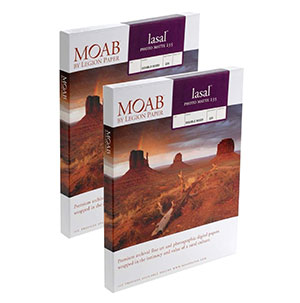
Archival Matte Paper
Archival Matte Paper, also known as Moab Lasal Photo Matte, is our house stock fine art paper and is an economical favorite for fine art reproductions and photo prints. It features a smooth surface, heavy weight (230 g, 9.5-mil), neutral white, matte paper engineered for accurate color reproduction that provides high contrast and high-resolution output. This paper is acid-free, making it the perfect choice for both photography & fine art reproductions.
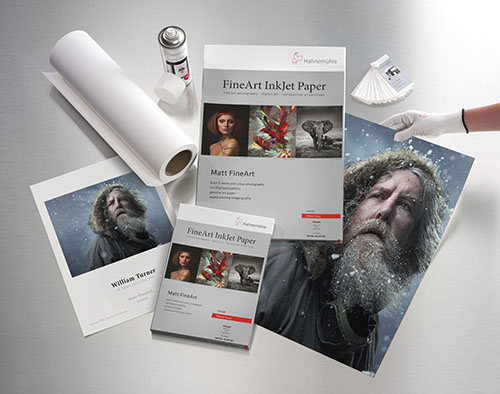
Giclee William Turner Paper by Hahnemühle
The William Turner by Hahnemühle is one of the most popular papers used in the Giclee printing industry. This is a 310g natural white mould made natural line paper with 100% rag content making it highly archival. It has a slight coarse texture which gives photos and artwork an elegant look. These fine art paper prints (also known as Giclee) are ordered by galleries, individual artists and photographers. The papers and inks are not only archival but use some of the most accurate print technology for full color prints.
- Giclee prints use very expensive archival pigmented inks.
- Highest level of color gamut available in printing (12 color printing).
- Exceptional black & white printing.
- Fade resistant, pigmented inks which provide a superior color range compared to other types of inks. Widely preferred in fine art and photography circles.
- We ONLY use professional grade fine art and photo paper that resist yellowing and aging.
Framing
We offer wood and metal frames, custom cut & joined to order. Each framed print includes hanging hardware and foamcore backer.
Matting
We use conservation grade 100% virgin alpha-cellulose 2 ply mats with white core. Acid-free and lignin-free, these are both face resistant and meet all conservation quality standards set by the Fine Art Trade Guild. Mats are digitally cut for ultimate precision. The window will be 1/8″ smaller than the print dimensions.
Glazing (Acrylic Glass)
We offer custom cut panes of shatter-proof, acrylic glass, to protect your valuable artwork and prints.
Premium Clear
Framing grade clear acrylic is shatter resistant and lightweight.
Reflection Control
With its matte finish, Tru Vue Reflection Control® Acrylic scatters light to diminish unwanted glare.
Conservation Clear
Tru Vue Conservation Clear® Acrylic is a framing industry staple, blocking up to 99% of UV rays for ultimate protection.
Conservation Reflection Control
Tru Vue Conservation Reflection Control® Acrylic scatters and diffuses light to reduce unwanted glare. Blocks up to 99% of UV rays.
Related products
-

PETER CUSHING – THE CURSE OF FRANKENSTEIN (1957) Black Gloves Portrait
$30.00 -
INGRID PITT – COUNTESS DRACULA (1971) Countess Elizabeth Báthory Portrait
$38.00 -
YUTTE STENSGAARD – LUST FOR A VAMPIRE (1971) Castle Steps Rare Hammer Photo
$38.00 -
FAY WRAY – KING KONG (1933) Ann Darrow Torn Dress Publicity Portrait
$30.00