

BELA LUGOSI & HELEN CHANDLER – DRACULA (1931) Gothic Castle Staircase Photo
Limited Edition Photograph (learn more)
In stock
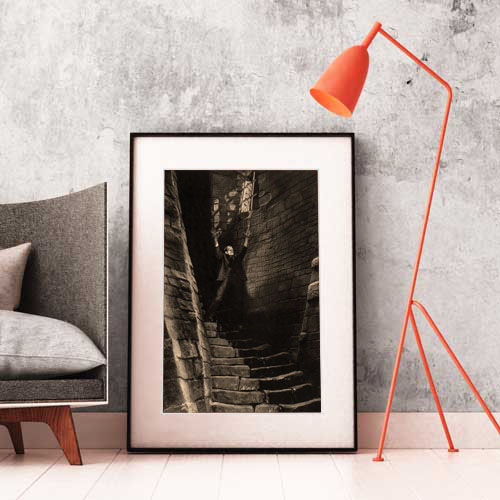
An extraordinary theatrical image from DRACULA captures Bela Lugosi as Count Dracula alongside Helen Chandler as Mina within one of the most imposing Gothic interiors of Universal’s 1931 horror landmark. Surrounded by towering stone walls, enormous staircases, pointed Gothic arches and heavy cobwebs, Lugosi gestures upward as Chandler stands before him in her flowing white gown—a spectacular composition in which Dracula, his victim and the monumental architecture of his world become equally important parts of the image.
The sheer scale of the setting is immediately striking.
Lugosi and Chandler appear comparatively small within the cavernous interior, allowing the massive stone staircase to rise dramatically through the right side of the composition while the dark vertical walls seem almost to disappear above them. At left, a pointed doorway tangled in thick cobwebs provides another unmistakable element of classic Universal Gothic atmosphere.
This is not simply Dracula standing inside a castle. The castle itself seems to possess the people within it.
Inside Dracula’s Gothic World
Directed by Tod Browning and released by Universal Pictures, DRACULA (1931) stars Bela Lugosi as Count Dracula alongside Helen Chandler, David Manners, Dwight Frye and Edward Van Sloan.
Adapted from the stage play by Hamilton Deane and John L. Balderston, itself derived from Bram Stoker’s novel, the film helped establish both Lugosi’s interpretation of Count Dracula and the visual language that would become inseparable from Universal’s classic horror cinema.
This photograph demonstrates exactly why that visual legacy remains so powerful.
There is no need for exposed fangs.
No blood.
No attack.
Instead, architecture creates the menace.
The enormous staircase dominates the right half of the photograph, climbing toward shadowed Gothic windows and an upper level seemingly swallowed by darkness. Heavy stone surfaces surround the characters while the web-covered opening at left suggests an environment that has remained untouched for an almost unnatural length of time.
Within all of this stands Lugosi.
His dark formal clothing and cape merge naturally into the surrounding shadows, while Chandler’s pale gown creates the photograph’s strongest tonal contrast. She seems illuminated against Dracula’s dark world, making her presence within the immense castle environment appear especially vulnerable.
Then comes Lugosi’s gesture.
His extended arm directs Mina—and simultaneously directs our own eye—toward the staircase.
That small physical movement activates the entire composition.
Rather than simply posing within an elaborate set, Dracula appears to command the space around him. The staircase becomes a destination, the gesture creates expectation, and the still photograph suddenly suggests a story extending beyond the captured instant.
That is a major part of its collector appeal.
A close portrait of Bela Lugosi can preserve the face of Dracula.
An image emphasizing his cape and hypnotic gaze can preserve the performance.
A dramatic confrontation can preserve the character’s menace.
But this photograph preserves something equally important:
the world that made Universal’s Dracula possible.
For collectors interested in classic horror production design and early Hollywood Gothic imagery, the environment becomes extraordinarily significant.
The towering walls.
The carved stone staircase.
The pointed windows.
The cobwebs.
The darkness.
Every architectural element contributes to the mythology.
And because the photograph pulls back far enough to reveal so much of the surrounding space, the collector can study details that would disappear completely within a tighter publicity portrait.
The longer one looks, the larger the castle seems to become.
That sense of scale gives the image tremendous display presence.
It also distinguishes the photograph within a serious Bela Lugosi or Universal Monsters collection. Instead of providing another variation on the familiar Dracula close-up, it documents the relationship between character, victim and Gothic environment.
Lugosi does not dominate through physical size.
He dominates because everything in the image appears to belong to him.
The shadows.
The staircase.
The decaying architecture.
Even Mina’s luminous white gown seems visually trapped within the darkness surrounding her.
Dracula commands the castle—and the castle amplifies Dracula.
That is the deeper WHY behind this remarkable image.
More than ninety years after the film’s release, the photograph still communicates the visual ingredients that helped establish an enduring cinematic vocabulary for Dracula: aristocratic menace, monumental Gothic architecture, vulnerable beauty and darkness seemingly without end.
Preserved within the KissMeMonster photographic archive, this exceptional black-and-white image has been carefully restored to retain the rich tonal detail of Bela Lugosi and Helen Chandler, the monumental stone staircase, pointed Gothic architecture, intricate cobwebs and deep atmospheric shadows—preserving the extraordinary production design and haunting visual character of Universal’s DRACULA.
Product Enquiry
Kodak Professional Endura Paper
Kodak Endura papers provide an incredible amount of detail and smooth transition of tones. Designed for the professional photographer in mind, looking for a more traditional photo print style, Kodak Endura provides an extended print life and color gamut almost at the level of a high end fine art paper print.
Archival Matte Paper
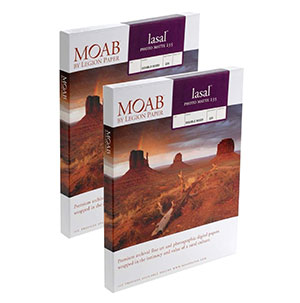
Archival Matte Paper, also known as Moab Lasal Photo Matte, is our house stock fine art paper and is an economical favorite for fine art reproductions and photo prints. It features a smooth surface, heavy weight (230 g, 9.5-mil), neutral white, matte paper engineered for accurate color reproduction that provides high contrast and high-resolution output. This paper is acid-free, making it the perfect choice for both photography & fine art reproductions.
Giclee William Turner Paper by Hahnemühle
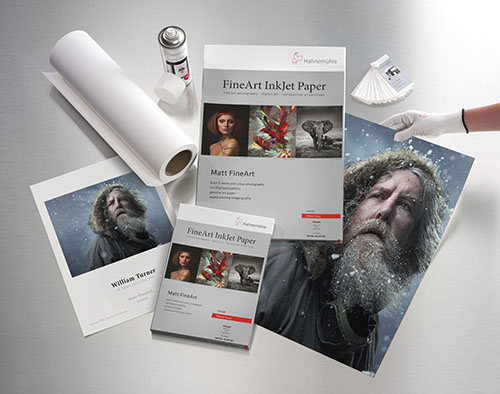
The William Turner by Hahnemühle is one of the most popular papers used in the Giclee printing industry. This is a 310g natural white mould made natural line paper with 100% rag content making it highly archival. It has a slight coarse texture which gives photos and artwork an elegant look. These fine art paper prints (also known as Giclee) are ordered by galleries, individual artists and photographers. The papers and inks are not only archival but use some of the most accurate print technology for full color prints.
- Giclee prints use very expensive archival pigmented inks.
- Highest level of color gamut available in printing (12 color printing).
- Exceptional black & white printing.
- Fade resistant, pigmented inks which provide a superior color range compared to other types of inks. Widely preferred in fine art and photography circles.
- We ONLY use professional grade fine art and photo paper that resist yellowing and aging.
Framing
We offer wood and metal frames, custom cut & joined to order. Each framed print includes hanging hardware and foamcore backer.
Matting
We use conservation grade 100% virgin alpha-cellulose 2 ply mats with white core. Acid-free and lignin-free, these are both face resistant and meet all conservation quality standards set by the Fine Art Trade Guild. Mats are digitally cut for ultimate precision. The window will be 1/8″ smaller than the print dimensions.
Glazing (Acrylic Glass)
We offer custom cut panes of shatter-proof, acrylic glass, to protect your valuable artwork and prints.
Premium Clear
Framing grade clear acrylic is shatter resistant and lightweight.
Reflection Control
With its matte finish, Tru Vue Reflection Control® Acrylic scatters light to diminish unwanted glare.
Conservation Clear
Tru Vue Conservation Clear® Acrylic is a framing industry staple, blocking up to 99% of UV rays for ultimate protection.
Conservation Reflection Control
Tru Vue Conservation Reflection Control® Acrylic scatters and diffuses light to reduce unwanted glare. Blocks up to 99% of UV rays.
Related products
-

ROSALBA NERI – LADY FRANKENSTEIN (1971) Dr. Tania Crimson Gown Gothic Photo
$30.00 -
KING KONG (1933) Great Wall Gate Rare Pre-Production Concept Art
$38.00 -
CATHERINE DENEUVE – REPULSION (1965) Carol Ledoux Profile Portrait
$30.00 -
THE HOWLING (1981) Werewolf Rob Bottin Special Effects Joe Dante Horror Photo
$25.00