

CHRISTOPHER LEE & CAROLINE MUNRO – DRACULA A.D. 1972 Bloody Vampire Attack Photo
Limited Edition Photograph (learn more)
In stock
Christopher Lee’s Count Dracula towers over Caroline Munro in this extraordinary color image from DRACULA A.D. 1972, capturing the aftermath of his attack on Laura Bellows with considerably more of its shocking visual detail exposed. Munro’s head falls completely backward as a vivid trail of crimson blood runs from her throat across her pale skin, while Lee remains immediately behind her with fangs visible—a spectacular Hammer composition in which vulnerability, blood and predatory menace collide within a single frame.
Here, the blood commands attention.
It begins at Munro’s throat.
Travels downward across her body.
And against the warmth of her skin, that brilliant red becomes almost impossible for the eye to escape.
Dracula in the Modern Era
Directed by Alan Gibson, DRACULA A.D. 1972 brought Christopher Lee’s Count Dracula into contemporary London while reuniting him with Peter Cushing, portraying Professor Lorrimer Van Helsing.
Caroline Munro appears as Laura Bellows, one of the young people drawn by Johnny Alucard into the Black Mass at the abandoned St. Bartolph’s Church that leads to Dracula’s resurrection.
This photograph captures Laura in Dracula’s grasp.
But compared with tighter publicity variations from the same encounter, this composition tells the story through the body as much as through the faces.
Munro is pulled dramatically backward.
Her throat is completely exposed.
Her dark hair cascades downward.
And the blood creates a powerful vertical line extending from the wound across her skin.
That additional visual information changes the photograph.
The tighter companion image concentrates attention upon Lee and Munro's expressions.
This one concentrates attention upon what Dracula has done.
The color photography makes that difference especially powerful.
Lee is surrounded by the familiar darkness of Dracula's costume.
Munro's skin provides the lighter visual field.
Then comes the red.
Brilliant.
Wet.
Unmistakable.
The blood becomes the bridge between predator and victim.
Lee's body language strengthens the effect.
He remains close behind Munro.
His mouth is partially open.
The fangs are visible.
One hand reaches forward while his attention remains fixed upon the woman collapsing against him.
Munro moves in precisely the opposite direction.
Her head falls backward.
Her eyes close.
Her neck stretches upward.
Her body appears almost completely surrendered to gravity.
He advances visually while she yields.
That opposing movement creates the tension.
And it gives this variation a legitimate reason to exist beside the closer composition.
For the collector, companion photographs should never be justified merely because the camera moved slightly.
There must be something meaningfully different to discover.
Here there is.
The close variation gives us the faces.
This variation gives us the blood.
And in Hammer Horror photography, that is no minor distinction.
Christopher Lee had already established one of cinema's definitive interpretations of Dracula long before DRACULA A.D. 1972, while Caroline Munro would become one of the most recognizable personalities associated with British genre cinema during the decade.
Putting both performers together gives the photograph immediate collector appeal.
But putting them together at this moment gives it something more.
Lee is not merely posing as Dracula.
Munro is not merely posing as Laura.
The photograph captures the fundamental visual relationship upon which vampire cinema has always depended:
the predator,
the victim,
and the physical evidence of what has occurred between them.
Yet the composition remains remarkably beautiful.
That is classic Hammer.
The horror is explicit.
The colors are sumptuous.
The performers are glamorous.
Beauty and brutality occupy the same photograph.
For the serious Hammer collector, this companion image therefore earns its place not by repeating the tighter portrait, but by expanding it.
Pull the camera back—
and suddenly the attack becomes more graphic.
More physical.
More red.
The first photograph shows us Dracula closing upon Laura.
This one shows us the price of that encounter.
Preserved within the KissMeMonster photographic archive, this exceptional color image has been carefully restored to retain the vivid crimson character of the blood against Caroline Munro’s skin, the expressive detail of Christopher Lee’s visible fangs, the rich darkness of Dracula’s costume and the dramatic physical positioning that makes this attack from DRACULA A.D. 1972 such an unforgettable example of Hammer Horror imagery.
Product Enquiry
Kodak Professional Endura Paper
Kodak Endura papers provide an incredible amount of detail and smooth transition of tones. Designed for the professional photographer in mind, looking for a more traditional photo print style, Kodak Endura provides an extended print life and color gamut almost at the level of a high end fine art paper print.
Archival Matte Paper
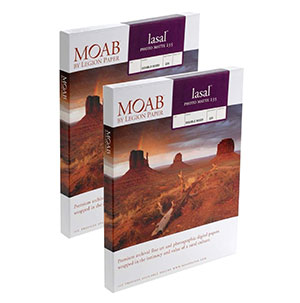
Archival Matte Paper, also known as Moab Lasal Photo Matte, is our house stock fine art paper and is an economical favorite for fine art reproductions and photo prints. It features a smooth surface, heavy weight (230 g, 9.5-mil), neutral white, matte paper engineered for accurate color reproduction that provides high contrast and high-resolution output. This paper is acid-free, making it the perfect choice for both photography & fine art reproductions.
Giclee William Turner Paper by Hahnemühle
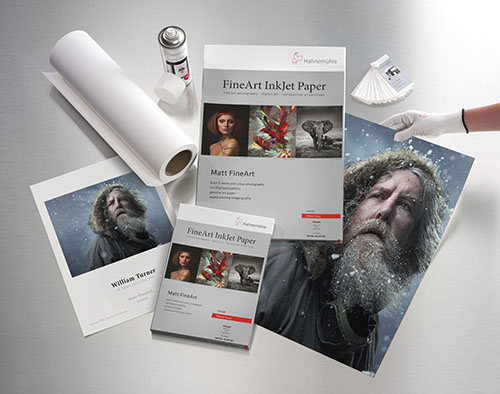
The William Turner by Hahnemühle is one of the most popular papers used in the Giclee printing industry. This is a 310g natural white mould made natural line paper with 100% rag content making it highly archival. It has a slight coarse texture which gives photos and artwork an elegant look. These fine art paper prints (also known as Giclee) are ordered by galleries, individual artists and photographers. The papers and inks are not only archival but use some of the most accurate print technology for full color prints.
- Giclee prints use very expensive archival pigmented inks.
- Highest level of color gamut available in printing (12 color printing).
- Exceptional black & white printing.
- Fade resistant, pigmented inks which provide a superior color range compared to other types of inks. Widely preferred in fine art and photography circles.
- We ONLY use professional grade fine art and photo paper that resist yellowing and aging.
Framing
We offer wood and metal frames, custom cut & joined to order. Each framed print includes hanging hardware and foamcore backer.
Matting
We use conservation grade 100% virgin alpha-cellulose 2 ply mats with white core. Acid-free and lignin-free, these are both face resistant and meet all conservation quality standards set by the Fine Art Trade Guild. Mats are digitally cut for ultimate precision. The window will be 1/8″ smaller than the print dimensions.
Glazing (Acrylic Glass)
We offer custom cut panes of shatter-proof, acrylic glass, to protect your valuable artwork and prints.
Premium Clear
Framing grade clear acrylic is shatter resistant and lightweight.
Reflection Control
With its matte finish, Tru Vue Reflection Control® Acrylic scatters light to diminish unwanted glare.
Conservation Clear
Tru Vue Conservation Clear® Acrylic is a framing industry staple, blocking up to 99% of UV rays for ultimate protection.
Conservation Reflection Control
Tru Vue Conservation Reflection Control® Acrylic scatters and diffuses light to reduce unwanted glare. Blocks up to 99% of UV rays.
Related products
-

BARBARA STEELE BLACK SUNDAY (1960) Katia Vajda Gothic Bed Mario Bava Publicity Photo
$38.00 -
YUTTE STENSGAARD & MICHAEL JOHNSON LUST FOR A VAMPIRE (1971) Rare Kissing Production Photo Hammer Horror
$38.00 -
JIMMY SANGSTER, RALPH BATES & MICHAEL JOHNSON – LUST FOR A VAMPIRE (1971) Rare Behind-the-Scenes Hammer Horror Photo
$30.00 -
PETER CUSHING – TORTURE GARDEN (1967) The Man Who Collected Poe Amicus Horror Portrait Photo
$30.00