

CHRISTOPHER LEE – DRACULA HAS RISEN FROM THE GRAVE (1968) Bloody Coffin Photo
Limited Edition Photograph (learn more)
In stock
An extraordinarily eerie color image from DRACULA HAS RISEN FROM THE GRAVE captures Christopher Lee’s Count Dracula lying motionless within his coffin, his pale face framed by darkness as vivid blood stains his lips and trails from the corners of his mouth.
Lee’s fixed upward gaze and unnaturally composed expression create an unsettling ambiguity between death and supernatural sleep, while flashes of crimson from Dracula’s cape emerge against the surrounding black—a haunting image of Hammer’s legendary vampire at his most still, intimate and mysterious.
The composition is beautifully controlled. The ornate edge of the coffin forms a dramatic diagonal around Lee’s head while the dark interior isolates his illuminated face. His eyes remain open and distant, his lips slightly parted, with the vivid blood providing the only suggestion that something violent or unnatural has occurred.
Nothing moves, yet nothing about the image feels peaceful.
Dracula Between Death and Resurrection
Directed by Freddie Francis for Hammer Film Productions, DRACULA HAS RISEN FROM THE GRAVE (1968) marked Christopher Lee’s third appearance as Count Dracula for Hammer, following HORROR OF DRACULA (1958) and DRACULA: PRINCE OF DARKNESS (1966).
The film also stars Veronica Carlson, Barry Andrews and Rupert Davies and became one of the major commercial successes of Hammer’s celebrated Dracula cycle.
The coffin is one of the most fundamental visual symbols in Dracula mythology, but Christopher Lee’s presence transforms this familiar Gothic image into something considerably more unsettling.
Dracula appears completely vulnerable—and yet the viewer never quite believes that he is powerless.
That contradiction gives this photograph its remarkable tension.
Lee does not snarl, expose his fangs or advance upon a victim. There is none of the explosive physicality associated with many of his most recognizable Dracula images. Instead, virtually all of the photograph’s menace is concentrated in his face.
His eyes are especially compelling.
They remain open, fixed somewhere beyond the frame, giving Dracula the appearance of being suspended in an unnatural trance. Combined with the blood staining his mouth, the expression occupies an eerie space somewhere between exhaustion, death and dormant supernatural life.
The stillness becomes more disturbing than movement.
The color photography adds enormously to that effect. Lee’s pale complexion emerges from the deep blacks surrounding his head, while the brilliant red blood at his lips immediately draws the eye toward his face. Small areas of crimson from Dracula’s cape provide a second visual accent, creating the rich black, red and flesh-toned palette so closely associated with Hammer’s Gothic horror.
Even the coffin itself contributes to the photograph’s elegance.
Its decorative edging encloses Lee within an almost formal frame, transforming Dracula’s resting place into part of the composition rather than merely a prop. The resulting image possesses an unusual combination of macabre beauty and quiet menace.
For the serious Christopher Lee or Hammer Dracula collector, this photograph offers something fundamentally different from the more aggressive imagery associated with the Count.
Fanged close-ups capture Dracula hunting.
Images with victims capture Dracula feeding.
The climactic staking photographs capture Dracula fighting destruction.
This image preserves another essential element of the mythology:
Dracula in the coffin—the mysterious state between apparent death and inevitable return.
That distinction gives the photograph an important place within a deeper visual collection of Lee’s Count. Rather than repeating another attack or confrontation, it documents the vampire in the environment most inseparably associated with his supernatural existence.
And Lee’s expression prevents the image from becoming merely illustrative.
The viewer is left studying his face, looking for some indication of consciousness.
Is Dracula dead?
Is he unconscious?
Is he watching?
Or is he simply waiting?
That uncertainty is precisely what makes the photograph so compelling.
For a collector assembling different facets of Christopher Lee’s Dracula, the contrast with more violent images is particularly valuable. The same vampire who can appear ferocious and physically overwhelming elsewhere is presented here in absolute stillness—yet somehow remains equally threatening.
The predator has stopped moving, but the menace has not disappeared.
Christopher Lee needs neither exposed fangs nor an attacking pose to dominate the frame. Lying silent within the darkness of his coffin, blood still marking his lips, he remains unmistakably Dracula.
Preserved within the KissMeMonster photographic archive, this exceptionally atmospheric color image has been carefully restored to retain the subtle pallor and remarkable detail of Christopher Lee’s face, the vivid crimson blood at his lips, the rich red accents of Dracula’s cape, the ornate texture of the coffin and the deep surrounding blacks—preserving the eerie stillness and sumptuous Gothic color that make this distinctive DRACULA HAS RISEN FROM THE GRAVE image so mesmerizing.
Product Enquiry
Kodak Professional Endura Paper
Kodak Endura papers provide an incredible amount of detail and smooth transition of tones. Designed for the professional photographer in mind, looking for a more traditional photo print style, Kodak Endura provides an extended print life and color gamut almost at the level of a high end fine art paper print.
Archival Matte Paper
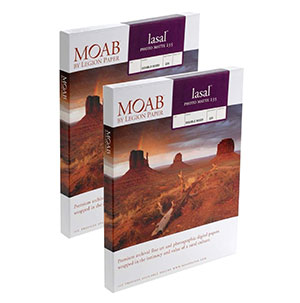
Archival Matte Paper, also known as Moab Lasal Photo Matte, is our house stock fine art paper and is an economical favorite for fine art reproductions and photo prints. It features a smooth surface, heavy weight (230 g, 9.5-mil), neutral white, matte paper engineered for accurate color reproduction that provides high contrast and high-resolution output. This paper is acid-free, making it the perfect choice for both photography & fine art reproductions.
Giclee William Turner Paper by Hahnemühle
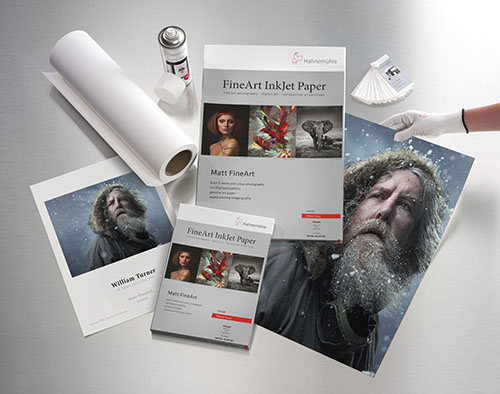
The William Turner by Hahnemühle is one of the most popular papers used in the Giclee printing industry. This is a 310g natural white mould made natural line paper with 100% rag content making it highly archival. It has a slight coarse texture which gives photos and artwork an elegant look. These fine art paper prints (also known as Giclee) are ordered by galleries, individual artists and photographers. The papers and inks are not only archival but use some of the most accurate print technology for full color prints.
- Giclee prints use very expensive archival pigmented inks.
- Highest level of color gamut available in printing (12 color printing).
- Exceptional black & white printing.
- Fade resistant, pigmented inks which provide a superior color range compared to other types of inks. Widely preferred in fine art and photography circles.
- We ONLY use professional grade fine art and photo paper that resist yellowing and aging.

Framing
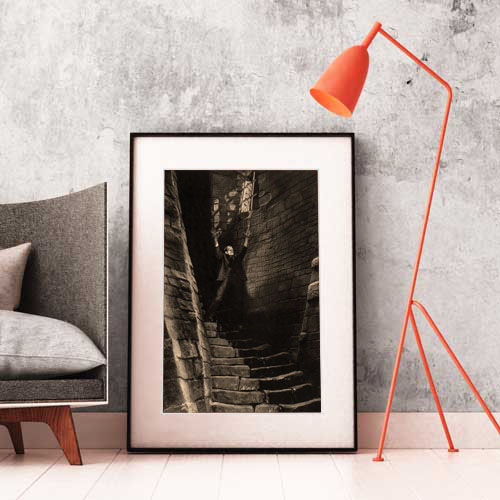
We offer wood and metal frames, custom cut & joined to order. Each framed print includes hanging hardware and foamcore backer.
Matting
We use conservation grade 100% virgin alpha-cellulose 2 ply mats with white core. Acid-free and lignin-free, these are both face resistant and meet all conservation quality standards set by the Fine Art Trade Guild. Mats are digitally cut for ultimate precision. The window will be 1/8″ smaller than the print dimensions.
Glazing (Acrylic Glass)
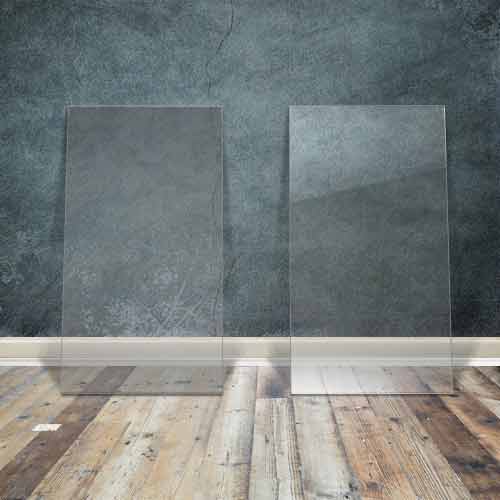
We offer custom cut panes of shatter-proof, acrylic glass, to protect your valuable artwork and prints.
Premium Clear
Framing grade clear acrylic is shatter resistant and lightweight.
Reflection Control
With its matte finish, Tru Vue Reflection Control® Acrylic scatters light to diminish unwanted glare.
Conservation Clear
Tru Vue Conservation Clear® Acrylic is a framing industry staple, blocking up to 99% of UV rays for ultimate protection.
Conservation Reflection Control
Tru Vue Conservation Reflection Control® Acrylic scatters and diffuses light to reduce unwanted glare. Blocks up to 99% of UV rays.
Related products
-

PETER CUSHING – FRANKENSTEIN MUST BE DESTROYED (1969) Sickle Murder Prologue Rare Behind-the-Scenes Hammer Horror Photo
$30.00 -
AKIKO WAKABAYASHI YOU ONLY LIVE TWICE (1967) Japanese Fan James Bond 007 Publicity Photo
$38.00 -
SEAN CONNERY – THUNDERBALL (1965) Rare After-Filming Beach Candid Nassau James Bond 007 BTS Photo
$30.00 -
PETER CUSHING & SIMON WARD – FRANKENSTEIN MUST BE DESTROYED (1969) Brain Surgery
$30.00