

CHRISTOPHER LEE – DRACULA HAS RISEN FROM THE GRAVE (1968) Staked Dracula Photo
Limited Edition Photograph (learn more)
In stock
An extraordinary color image from DRACULA HAS RISEN FROM THE GRAVE captures Christopher Lee’s Count Dracula at one of the most violent and unforgettable moments of Hammer’s celebrated vampire cycle - impaled through the chest by a massive wooden stake. Preserved by KissMeMonster from the original photographic negative in our archive, this visceral image brings the collector remarkably close to Dracula’s climactic destruction.
With blood spreading across his chest, the brilliant red lining of his cape cutting through the surrounding darkness and both hands desperately grasping toward the stake, Lee’s agonized, almost feral expression transforms the photograph into a spectacular study of Hammer’s Dracula fighting against death itself.
The camera angle makes the image particularly powerful. Dracula lies confined within the composition while the stake enters prominently from the foreground, directing the viewer’s eye straight toward Lee. His bared teeth, contorted features and desperate hands capture something rarely communicated by a conventional Dracula image:
The supposedly immortal predator has suddenly become the victim.
Dracula Fighting His Own Destruction
Directed by Freddie Francis for Hammer Film Productions, DRACULA HAS RISEN FROM THE GRAVE (1968) marked Christopher Lee’s third appearance as Count Dracula for Hammer, following HORROR OF DRACULA (1958) and DRACULA: PRINCE OF DARKNESS (1966).
The film also stars Veronica Carlson, Barry Andrews and Rupert Davies and became one of the major commercial successes of Hammer’s Dracula cycle.
Throughout the series, Lee’s Dracula is most often remembered as the dominant force—the towering predator entering a room, exposing his fangs or advancing upon his victim.
This photograph reverses that relationship completely.
Here Dracula has been physically overwhelmed.
During the climactic confrontation, Paul, played by Barry Andrews, drives the wooden stake into Dracula. Yet his destruction is not immediately complete. Paul cannot provide the religious prayer required in the moment, leaving Dracula impaled but still struggling desperately against the stake before Monsignor Mueller recites the Lord’s Prayer.
That suspended moment between apparent destruction and continued supernatural life gives the image extraordinary dramatic tension.
Dracula is staked—but he is not yet finished.
Lee’s performance makes the photograph exceptional. His face is twisted into an expression of pain and fury, teeth exposed as his hands reach desperately toward the weapon embedded in his body. Rather than presenting Dracula with his customary aristocratic control, the image captures raw survival instinct.
For an instant, Hammer’s Count becomes almost animalistic.
The color photography intensifies everything. Blood across the dark costume provides the immediate shock, while the vivid red lining of Dracula’s cape emerges beside Lee’s body and unmistakably anchors the image within Hammer’s richly colored Gothic world.
Against those reds, Lee’s face becomes even more striking.
Pain, rage, defiance and disbelief seem to exist simultaneously in the expression.
For the serious Christopher Lee or Hammer Dracula collector, that is what gives this photograph significance beyond its obvious visual impact.
Portraits preserve Dracula the icon.
Fanged close-ups preserve Dracula the predator.
Images with his victims preserve Dracula the seducer and destroyer.
But this photograph preserves something fundamentally different:
Dracula confronting his own mortality.
That makes it an important narrative image within a collection devoted to Lee’s evolution as the Count. It documents not merely what Dracula looks like, but one of the decisive moments in his cinematic story.
And this particular image carries another significant archival distinction.
The photographic source is preserved in the KissMeMonster archive as an original negative, allowing this remarkable view of Lee’s climactic staking to survive with the detail, color relationships and unusual perspective contained within the photographic source itself.
For collectors accustomed to repeatedly encountering the most familiar Hammer Dracula publicity images, material preserved from original photographic sources can reveal different expressions, moments and perspectives from productions they may have known for decades.
Here, the distinction is extraordinary.
The wooden stake dominates the foreground.
Blood spreads across Dracula’s chest.
His hands fight desperately against the instrument intended to destroy him.
And Christopher Lee—so often photographed as the apparently invincible embodiment of Hammer’s Dracula—is captured at precisely the moment immortality appears to fail him.
Preserved from the original photographic negative held within the KissMeMonster archive, this exceptional color image has been carefully restored to retain the visceral crimson of the blood and cape lining, the subtle textures of Christopher Lee’s costume and surroundings, and the remarkable detail of his agonized expression and desperate hands—preserving the intensity and Gothic color that make this climactic DRACULA HAS RISEN FROM THE GRAVE image so unforgettable.
Product Enquiry
Kodak Professional Endura Paper
Kodak Endura papers provide an incredible amount of detail and smooth transition of tones. Designed for the professional photographer in mind, looking for a more traditional photo print style, Kodak Endura provides an extended print life and color gamut almost at the level of a high end fine art paper print.
Archival Matte Paper
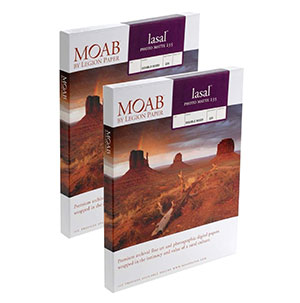
Archival Matte Paper, also known as Moab Lasal Photo Matte, is our house stock fine art paper and is an economical favorite for fine art reproductions and photo prints. It features a smooth surface, heavy weight (230 g, 9.5-mil), neutral white, matte paper engineered for accurate color reproduction that provides high contrast and high-resolution output. This paper is acid-free, making it the perfect choice for both photography & fine art reproductions.
Giclee William Turner Paper by Hahnemühle
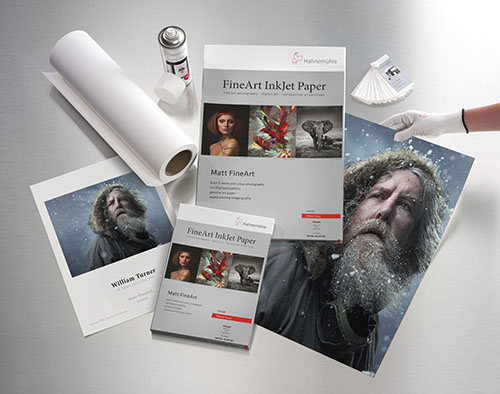
The William Turner by Hahnemühle is one of the most popular papers used in the Giclee printing industry. This is a 310g natural white mould made natural line paper with 100% rag content making it highly archival. It has a slight coarse texture which gives photos and artwork an elegant look. These fine art paper prints (also known as Giclee) are ordered by galleries, individual artists and photographers. The papers and inks are not only archival but use some of the most accurate print technology for full color prints.
- Giclee prints use very expensive archival pigmented inks.
- Highest level of color gamut available in printing (12 color printing).
- Exceptional black & white printing.
- Fade resistant, pigmented inks which provide a superior color range compared to other types of inks. Widely preferred in fine art and photography circles.
- We ONLY use professional grade fine art and photo paper that resist yellowing and aging.
Framing
We offer wood and metal frames, custom cut & joined to order. Each framed print includes hanging hardware and foamcore backer.
Matting
We use conservation grade 100% virgin alpha-cellulose 2 ply mats with white core. Acid-free and lignin-free, these are both face resistant and meet all conservation quality standards set by the Fine Art Trade Guild. Mats are digitally cut for ultimate precision. The window will be 1/8″ smaller than the print dimensions.
Glazing (Acrylic Glass)
We offer custom cut panes of shatter-proof, acrylic glass, to protect your valuable artwork and prints.
Premium Clear
Framing grade clear acrylic is shatter resistant and lightweight.
Reflection Control
With its matte finish, Tru Vue Reflection Control® Acrylic scatters light to diminish unwanted glare.
Conservation Clear
Tru Vue Conservation Clear® Acrylic is a framing industry staple, blocking up to 99% of UV rays for ultimate protection.
Conservation Reflection Control
Tru Vue Conservation Reflection Control® Acrylic scatters and diffuses light to reduce unwanted glare. Blocks up to 99% of UV rays.
Related products
-

BORIS KARLOFF – FRANKENSTEIN (1931) Monster Reaches for Light Rare Universal Horror Photo
$38.00 -
CHRISTOPHER LEE – HORROR OF DRACULA (1958) Stone Eagle Castle Gothic Photo
$30.00 -
MARTINE BESWICK, CLAUDINE AUGER & LUCIANA PALUZZI – THUNDERBALL (1965) Iconic Beach Swimsuit James Bond 007 Publicity Photo
$38.00 -
CATHERINE DENEUVE – REPULSION (1965) Behind the Scenes Camera Photo
$25.00