

CHRISTOPHER LEE & EWAN HOOPER – DRACULA HAS RISEN FROM THE GRAVE (1968) Carriage Production Photo
Limited Edition Photograph (learn more)
In stock
A remarkable color production photograph from DRACULA HAS RISEN FROM THE GRAVE captures Christopher Lee as Count Dracula seated beside Ewan Hooper as the Priest aboard a horse-drawn carriage, preserving an unusual moment that looks convincingly like part of Dracula’s journey yet does not appear this way in the finished film.
Dressed entirely in black with the brilliant red lining of his cape cascading beside him, Lee grips the reins while holding a long carriage whip upright in his other hand—a commanding image of Dracula in complete control, with the subdued Priest seated quietly at his side.
The visual contrast is superb.
Lee sits tall and rigid, staring forward with an intensely serious expression. The long whip creates a strong vertical line through the composition, while the reins stretch outward from his hand toward the unseen horses ahead.
Beside him, Hooper appears comparatively restrained.
One figure commands the carriage.
The other simply rides beside him.
And behind them, the muted woodland environment makes the vivid red interior of Dracula’s cape seem almost to leap from the photograph.
Dracula Takes the Reins
Directed by Freddie Francis for Hammer Film Productions, DRACULA HAS RISEN FROM THE GRAVE (1968) marked Christopher Lee’s third appearance as Count Dracula in Hammer’s celebrated Gothic horror series.
The film follows the consequences of an attempt to exorcise Dracula’s castle, which ultimately results in the Count’s resurrection. Ewan Hooper portrays the Priest who becomes caught within Dracula’s supernatural influence and is compelled to assist him.
That relationship gives this production photograph considerably more meaning than a conventional carriage image.
Dracula is literally holding the reins.
It is a wonderfully appropriate visual detail.
Lee controls the carriage while the Priest sits beside him, creating an image that visually reinforces the imbalance of power between the two characters even outside the precise narrative construction presented in the finished film.
The whip intensifies that impression.
Held almost vertically beside Lee’s body, it gives Dracula an unusually active and authoritative presence. He is not reclining inside a carriage like an aristocratic passenger.
He is driving it.
That distinction makes the photograph immediately unusual within Christopher Lee’s Hammer Dracula imagery.
Collectors are accustomed to seeing Lee inside castles.
Emerging from coffins.
Confronting victims.
Displaying bloodied lips.
Or dominating elaborate Gothic interiors.
Here, Dracula has been removed from those familiar surroundings and placed outdoors within a natural landscape, physically controlling a horse-drawn carriage.
The result feels strangely immediate.
Almost documentary.
And yet Lee never stops looking like Dracula.
His black costume remains severe and formal. His expression is cold and purposeful. The cape surrounds him in darkness until its extraordinary red lining suddenly erupts across the lower left portion of the image.
Black, red and the subdued tones of the landscape create an exceptionally strong color composition.
That cape is not merely costume detail.
It becomes one of the photograph’s principal visual elements.
Against the restrained woodland background, the red fabric provides the image with exactly the dramatic color associated with Hammer’s distinctive Gothic aesthetic—blood, danger and Dracula’s supernatural presence concentrated into one brilliant area of the frame.
Then there is Ewan Hooper.
His quieter posture provides an essential counterpoint to Lee.
The Priest does not visually compete with Dracula.
Instead, his presence makes Lee appear even more commanding.
For a serious collector, this creates a photograph with multiple levels of appeal.
There is Christopher Lee as Dracula.
There is Ewan Hooper as the Priest.
There is the unusual horse-drawn carriage setting.
There are the reins and whip.
There is the extraordinary red-and-black costume contrast.
And there is the fascinating production context of seeing the characters arranged in a moment that differs from what audiences ultimately experienced on screen.
That last point is especially important.
Production photography can preserve possibilities that the finished film does not.
A conventional scene still documents what survives within the movie.
An unusual production photograph can document something more elusive: performers in character, costumes and environments arranged during the creation of the film in ways that may never appear exactly the same once editing is complete.
That makes this image particularly rewarding.
The collector is not simply acquiring another reproduction of a familiar frame from DRACULA HAS RISEN FROM THE GRAVE.
He is acquiring a separate photographic artifact of the production itself.
And visually, it could hardly be more unmistakably Hammer.
Christopher Lee.
Black cape.
Brilliant crimson lining.
Horse-drawn carriage.
Desolate woodland.
A Priest under Dracula’s influence.
And the Count himself sitting upright with the reins firmly in hand.
Dracula does not merely occupy the photograph.
He controls it.
That is the collector WHY.
Preserved within the KissMeMonster photographic archive, this exceptional color production image has been carefully restored to retain the commanding detail of Christopher Lee and Ewan Hooper, the reins and carriage whip, the rich black textures of Dracula’s costume and the spectacular crimson lining of his cape against the subdued natural landscape—preserving an unusual visual record from the production of DRACULA HAS RISEN FROM THE GRAVE.
Product Enquiry
Kodak Professional Endura Paper
Kodak Endura papers provide an incredible amount of detail and smooth transition of tones. Designed for the professional photographer in mind, looking for a more traditional photo print style, Kodak Endura provides an extended print life and color gamut almost at the level of a high end fine art paper print.
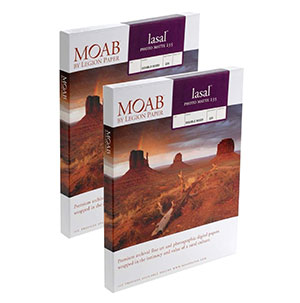
Archival Matte Paper
Archival Matte Paper, also known as Moab Lasal Photo Matte, is our house stock fine art paper and is an economical favorite for fine art reproductions and photo prints. It features a smooth surface, heavy weight (230 g, 9.5-mil), neutral white, matte paper engineered for accurate color reproduction that provides high contrast and high-resolution output. This paper is acid-free, making it the perfect choice for both photography & fine art reproductions.
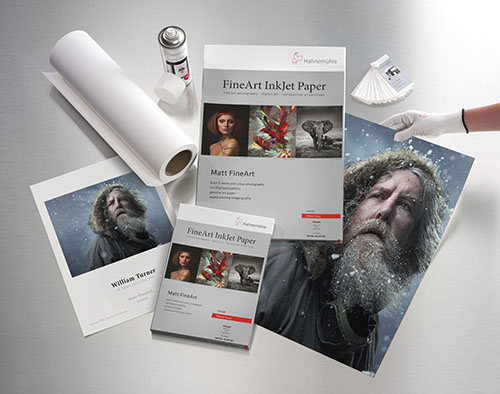
Giclee William Turner Paper by Hahnemühle
The William Turner by Hahnemühle is one of the most popular papers used in the Giclee printing industry. This is a 310g natural white mould made natural line paper with 100% rag content making it highly archival. It has a slight coarse texture which gives photos and artwork an elegant look. These fine art paper prints (also known as Giclee) are ordered by galleries, individual artists and photographers. The papers and inks are not only archival but use some of the most accurate print technology for full color prints.
- Giclee prints use very expensive archival pigmented inks.
- Highest level of color gamut available in printing (12 color printing).
- Exceptional black & white printing.
- Fade resistant, pigmented inks which provide a superior color range compared to other types of inks. Widely preferred in fine art and photography circles.
- We ONLY use professional grade fine art and photo paper that resist yellowing and aging.
Framing
We offer wood and metal frames, custom cut & joined to order. Each framed print includes hanging hardware and foamcore backer.
Matting
We use conservation grade 100% virgin alpha-cellulose 2 ply mats with white core. Acid-free and lignin-free, these are both face resistant and meet all conservation quality standards set by the Fine Art Trade Guild. Mats are digitally cut for ultimate precision. The window will be 1/8″ smaller than the print dimensions.
Glazing (Acrylic Glass)
We offer custom cut panes of shatter-proof, acrylic glass, to protect your valuable artwork and prints.
Premium Clear
Framing grade clear acrylic is shatter resistant and lightweight.
Reflection Control
With its matte finish, Tru Vue Reflection Control® Acrylic scatters light to diminish unwanted glare.
Conservation Clear
Tru Vue Conservation Clear® Acrylic is a framing industry staple, blocking up to 99% of UV rays for ultimate protection.
Conservation Reflection Control
Tru Vue Conservation Reflection Control® Acrylic scatters and diffuses light to reduce unwanted glare. Blocks up to 99% of UV rays.
Related products
-

PETER CUSHING, SUSAN DENBERG & TERENCE FISHER – FRANKENSTEIN CREATED WOMAN (1967) Guillotine Set Rare Behind-the-Scenes Hammer Horror Photo
$30.00 -
CLINT EASTWOOD DIRTY HARRY (1971) Rare Candid Location Behind-the-Scenes Photo
$38.00 -
CLINT EASTWOOD – DIRTY HARRY (1971) Candid On-Location Publicity Photo
$30.00 -
SEAN CONNERY & LUCIANA PALUZZI – THUNDERBALL (1965) Rare Relaxed Bed Scene Rehearsal James Bond 007 BTS Photo
$38.00