

CHRISTOPHER LEE – SCARS OF DRACULA (1970) Dracula Crest Ring Rare BTS Photo
Limited Edition Photograph (learn more)
In stock
Christopher Lee gives collectors an unusually intimate look at one of Dracula’s most fascinating costume details in this exceptional color behind-the-scenes photograph from SCARS OF DRACULA (1970). Still dressed in the Count’s unmistakable black costume, Lee calmly raises his hand toward the camera to display the ornate Dracula crest ring on his pinky—a remarkable production image in which one tiny piece of vampire iconography becomes the entire reason to stop and look.
But Lee’s expression makes the photograph even better.
Gone is Dracula’s murderous glare.
Gone are the fangs.
Gone is the supernatural menace.
For a moment, Count Dracula seems to have stepped aside and Christopher Lee himself is standing before us.
Relaxed.
Approachable.
Almost amused.
And proudly displaying that extraordinary ring.
Dracula Is in the Details
Directed by Roy Ward Baker, SCARS OF DRACULA (1970) stars Christopher Lee as Count Dracula alongside Dennis Waterman, Jenny Hanley, Christopher Matthews and Patrick Troughton.
The film was produced by Hammer and photographed at Elstree Studios and on location in Hertfordshire.
By this stage of Lee’s Dracula career, the ring had become a small but distinctive component of the Count’s appearance.
Its history is particularly fascinating.
The recognizable crest design had roots in earlier Universal Dracula imagery, and accounts of the ring's history indicate that Forrest J Ackerman gave Lee a replica connected to that earlier design. Lee began wearing the more elaborate crest-style ring in his later Hammer Dracula appearances.
That history transforms what might initially appear to be a minor costume accessory into a wonderful bridge between different generations of screen Dracula mythology.
And here—
Lee actually shows it to us.
That is what makes the photograph exceptional.
His raised hand immediately pulls the eye toward the ring.
The large setting catches the light.
The pinky is deliberately extended.
And because the composition crops Lee closely from the chest upward, there is very little competing for our attention.
Even the black costume helps.
Its broad, nearly uninterrupted darkness turns Lee's hand and pale shirt collar into the brightest visual elements in the frame.
Then our eye returns to his face.
And that is where the photograph changes character.
This isn't Dracula confronting Van Helsing.
It isn't the Count preparing to attack a victim.
It isn't even Lee maintaining the severe expression expected of Dracula for a formal publicity portrait.
He looks comfortable.
There is warmth around the eyes.
The mouth appears almost ready to smile.
The raised hand feels conversational rather than threatening.
For the collector, that contrast is irresistible.
We are seeing Christopher Lee inside Dracula's visual identity but outside Dracula's performance.
That distinction creates the WHY.
A dramatic film still preserves Count Dracula.
A formal publicity portrait preserves Christopher Lee as Count Dracula.
A candid production photograph like this lets us glimpse Christopher Lee underneath Count Dracula.
And simultaneously, it gives us an unusually clear view of a specific piece of Dracula iconography that could easily disappear into the broader costume in an ordinary scene.
That combination makes the image particularly satisfying for the advanced Hammer collector.
The actor.
The character.
The costume.
The ring.
All four histories meet in one deceptively simple photograph.
And once the collector understands the ring's connection to the broader visual history of Dracula on screen, that little raised pinky becomes considerably more interesting.
The photograph isn't spectacular because something dramatic is happening.
Quite the opposite.
Its value lies in the quiet moment.
Lee has stopped being terrifying.
The camera has moved close.
And one of horror cinema's most imposing figures appears perfectly content to show us one of Dracula's smallest details.
Preserved within the KissMeMonster photographic archive, this exceptional color behind-the-scenes image has been carefully restored to retain the subtle tonal detail of Christopher Lee’s expression, the deep blacks of Dracula’s costume, natural skin tones and the intricate appearance of the distinctive crest ring displayed prominently on his raised pinky—preserving an unusually personal production image associated with SCARS OF DRACULA.
Product Enquiry
Kodak Professional Endura Paper
Kodak Endura papers provide an incredible amount of detail and smooth transition of tones. Designed for the professional photographer in mind, looking for a more traditional photo print style, Kodak Endura provides an extended print life and color gamut almost at the level of a high end fine art paper print.
Archival Matte Paper
Archival Matte Paper, also known as Moab Lasal Photo Matte, is our house stock fine art paper and is an economical favorite for fine art reproductions and photo prints. It features a smooth surface, heavy weight (230 g, 9.5-mil), neutral white, matte paper engineered for accurate color reproduction that provides high contrast and high-resolution output. This paper is acid-free, making it the perfect choice for both photography & fine art reproductions.
Giclee William Turner Paper by Hahnemühle
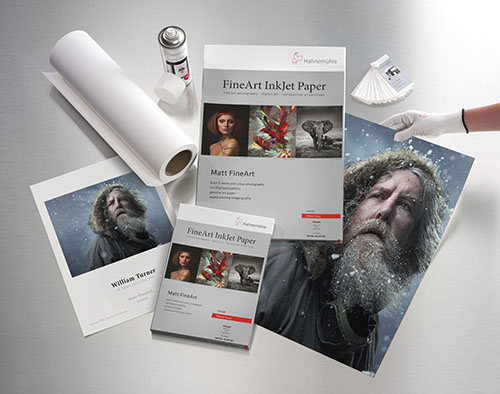
The William Turner by Hahnemühle is one of the most popular papers used in the Giclee printing industry. This is a 310g natural white mould made natural line paper with 100% rag content making it highly archival. It has a slight coarse texture which gives photos and artwork an elegant look. These fine art paper prints (also known as Giclee) are ordered by galleries, individual artists and photographers. The papers and inks are not only archival but use some of the most accurate print technology for full color prints.
- Giclee prints use very expensive archival pigmented inks.
- Highest level of color gamut available in printing (12 color printing).
- Exceptional black & white printing.
- Fade resistant, pigmented inks which provide a superior color range compared to other types of inks. Widely preferred in fine art and photography circles.
- We ONLY use professional grade fine art and photo paper that resist yellowing and aging.
Framing
We offer wood and metal frames, custom cut & joined to order. Each framed print includes hanging hardware and foamcore backer.
Matting
We use conservation grade 100% virgin alpha-cellulose 2 ply mats with white core. Acid-free and lignin-free, these are both face resistant and meet all conservation quality standards set by the Fine Art Trade Guild. Mats are digitally cut for ultimate precision. The window will be 1/8″ smaller than the print dimensions.
Glazing (Acrylic Glass)
We offer custom cut panes of shatter-proof, acrylic glass, to protect your valuable artwork and prints.
Premium Clear
Framing grade clear acrylic is shatter resistant and lightweight.
Reflection Control
With its matte finish, Tru Vue Reflection Control® Acrylic scatters light to diminish unwanted glare.
Conservation Clear
Tru Vue Conservation Clear® Acrylic is a framing industry staple, blocking up to 99% of UV rays for ultimate protection.
Conservation Reflection Control
Tru Vue Conservation Reflection Control® Acrylic scatters and diffuses light to reduce unwanted glare. Blocks up to 99% of UV rays.
Related products
-

CHRISTOPHER LEE – HORROR OF DRACULA (1958) Bloody Lips Fangs Iconic Hammer Photo
$30.00 -
THE CURSE OF FRANKENSTEIN (1957) Original Belgian Poster Art Peter Cushing Christopher Lee Hammer Horror 15×22
$149.85 -
PETER CUSHING & CHRISTOPHER LEE – THE CURSE OF FRANKENSTEIN (1957) Suspended Creature Rare Hammer Horror Photo
$25.00 -
CHRISTOPHER LEE & CAROLINE MUNRO – DRACULA A.D. 1972 Bloody Throat Hammer Photo
$30.00