

FITZCARRALDO (1982) – Steamship on Mountainside Rare Behind-the-Scenes Photo
Limited Edition Photograph (learn more)
In stock
An extraordinary color production photograph from FITZCARRALDO captures the film’s enormous steamship resting impossibly upon the steep Amazonian mountainside—an astonishing visual record of the real physical undertaking that helped make Werner Herzog’s 1982 production legendary.
Tiny human figures gather along the riverbank beneath the vessel while their reflections shimmer across the still water in the foreground, creating an exceptional sense of scale: the deeper one looks into the image, the more improbable the entire undertaking appears.
The steamship immediately dominates the composition.
Perched at an unnatural angle high above the water, its enormous white hull seems almost surreal against the freshly disturbed earth and dense tropical vegetation surrounding it. Far below, the people standing along the shoreline appear remarkably small by comparison.
That difference in scale tells the story before a single word is required.
The Impossible Image Behind FITZCARRALDO
Written and directed by Werner Herzog, FITZCARRALDO (1982) stars Klaus Kinski as Brian Sweeney Fitzgerald, the obsessive would-be rubber baron known as Fitzcarraldo, whose dream of building an opera house in the Peruvian Amazon leads to an extraordinary plan involving the movement of a steamship across land.
The production became nearly as legendary as the story being filmed.
Rather than relying entirely upon miniature effects to create the central spectacle, Herzog’s production undertook the extraordinary physical challenge of moving a full-sized steamship over steep terrain.
This photograph preserves that undertaking in startlingly tangible form.
There is no cinematic illusion hiding the scale.
No carefully framed close-up disguising the landscape.
Instead, the photograph pulls back and allows the collector to comprehend the relationship between ship, mountainside, jungle, river and people within a single image.
And that is precisely what makes it so powerful.
The human figures are essential.
Without them, the vessel would still create an impressive photograph.
With them, its enormous scale becomes immediately understandable.
The eye moves naturally from the calm river in the foreground to the line of people gathered along the bank, then upward across the scarred earth until finally reaching the steamship looming above them.
The composition almost forces the viewer to retrace the physical route the vessel itself was being made to travel.
That visual journey gives the photograph extraordinary depth.
Then there is the reflection.
Along the bottom of the image, figures standing beside the water are mirrored across its surface, introducing an unexpected calmness into a scene documenting an extraordinarily difficult production undertaking.
The contrast is beautiful.
Still water below.
Massive disruption above.
Between them stand the people responsible for turning Herzog’s seemingly impossible idea into physical reality.
For a serious FITZCARRALDO collector, this photograph therefore provides something a Klaus Kinski portrait simply cannot.
A portrait preserves the star.
A finished scene preserves the narrative.
An Amazon location image preserves the environment.
But this photograph preserves:
the impossible physical undertaking behind the film.
That distinction is fundamental to the collector WHY.
The steamship is not merely a prop appearing within the background.
It is evidence.
Evidence of the scale of the production.
Evidence of Herzog’s extraordinary approach to filmmaking.
And evidence of why the making of FITZCARRALDO has become such an enduring part of the film’s history.
The photograph becomes even more compelling because it does not isolate the ship from its surroundings.
Dense jungle remains visible at the edges.
Raw earth cuts across the mountainside.
The river establishes the vessel’s natural environment far below.
And the tiny figures provide the human scale necessary to comprehend just how extraordinary the sight actually is.
It almost resembles an impossible historical photograph rather than a movie production.
That is exactly the reaction a sophisticated collector should have.
Look once and see a ship.
Look again and notice where the ship is sitting.
Look closer and discover the people beneath it.
Then notice their reflections in the water.
Every additional observation increases the photograph’s visual impact.
For collectors interested not merely in movie stars but in filmmaking history itself, this is precisely the type of production photograph capable of becoming a centerpiece.
It does not simply tell us that FITZCARRALDO was difficult to make.
It allows us to see why.
And few images communicate that legendary production history more immediately than the sight of an enormous steamship sitting where no steamship should ever be:
high upon an Amazonian mountainside.
That single impossible visual is the WHY.
Preserved within the KissMeMonster photographic archive, this exceptional color production image has been carefully restored to retain the intricate detail of the steamship, the scarred mountainside and surrounding tropical vegetation, the distant figures gathered along the riverbank and their delicate reflections across the water—preserving an extraordinary visual record of the physical filmmaking achievement behind FITZCARRALDO.
Product Enquiry
Kodak Professional Endura Paper
Kodak Endura papers provide an incredible amount of detail and smooth transition of tones. Designed for the professional photographer in mind, looking for a more traditional photo print style, Kodak Endura provides an extended print life and color gamut almost at the level of a high end fine art paper print.
Archival Matte Paper
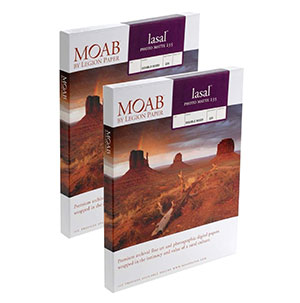
Archival Matte Paper, also known as Moab Lasal Photo Matte, is our house stock fine art paper and is an economical favorite for fine art reproductions and photo prints. It features a smooth surface, heavy weight (230 g, 9.5-mil), neutral white, matte paper engineered for accurate color reproduction that provides high contrast and high-resolution output. This paper is acid-free, making it the perfect choice for both photography & fine art reproductions.
Giclee William Turner Paper by Hahnemühle
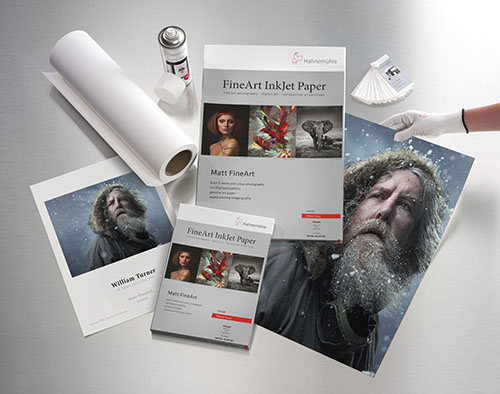
The William Turner by Hahnemühle is one of the most popular papers used in the Giclee printing industry. This is a 310g natural white mould made natural line paper with 100% rag content making it highly archival. It has a slight coarse texture which gives photos and artwork an elegant look. These fine art paper prints (also known as Giclee) are ordered by galleries, individual artists and photographers. The papers and inks are not only archival but use some of the most accurate print technology for full color prints.
- Giclee prints use very expensive archival pigmented inks.
- Highest level of color gamut available in printing (12 color printing).
- Exceptional black & white printing.
- Fade resistant, pigmented inks which provide a superior color range compared to other types of inks. Widely preferred in fine art and photography circles.
- We ONLY use professional grade fine art and photo paper that resist yellowing and aging.
Framing
We offer wood and metal frames, custom cut & joined to order. Each framed print includes hanging hardware and foamcore backer.
Matting
We use conservation grade 100% virgin alpha-cellulose 2 ply mats with white core. Acid-free and lignin-free, these are both face resistant and meet all conservation quality standards set by the Fine Art Trade Guild. Mats are digitally cut for ultimate precision. The window will be 1/8″ smaller than the print dimensions.
Glazing (Acrylic Glass)
We offer custom cut panes of shatter-proof, acrylic glass, to protect your valuable artwork and prints.
Premium Clear
Framing grade clear acrylic is shatter resistant and lightweight.
Reflection Control
With its matte finish, Tru Vue Reflection Control® Acrylic scatters light to diminish unwanted glare.
Conservation Clear
Tru Vue Conservation Clear® Acrylic is a framing industry staple, blocking up to 99% of UV rays for ultimate protection.
Conservation Reflection Control
Tru Vue Conservation Reflection Control® Acrylic scatters and diffuses light to reduce unwanted glare. Blocks up to 99% of UV rays.
Related products
-

YUTTE STENSGAARD & MICHAEL JOHNSON LUST FOR A VAMPIRE (1971) Jimmy Sangster Rare Behind-the-Scenes Hammer Horror Photo
$38.00 -
CLINT EASTWOOD & DON SIEGEL – DIRTY HARRY (1971) Rare Rooftop Production Photo
$38.00 -
CLINT EASTWOOD & DON SIEGEL – DIRTY HARRY (1971) Between Takes Rare Behind-the-Scenes Candid Photo
$38.00 -
SUSAN DENBERG – FRANKENSTEIN CREATED WOMAN (1967) Bray Studios Dressing Room Rare Behind-the-Scenes Hammer Photo
$38.00