
FREDDIE FRANCIS & KATY WILD – THE EVIL OF FRANKENSTEIN (1964) Rare Hammer Script Behind-the-Scenes Production Photo
Limited Edition Photograph (learn more)
In stock
Director Freddie Francis is captured at work in this exceptional behind-the-scenes production photograph from THE EVIL OF FRANKENSTEIN (1964). Crouching at the edge of the muddy outdoor location, Francis holds a production script or binder prominently marked HAMMER while Katy Wild, who portrays the deaf-mute girl Rena, stands in costume watching from the background. The informal composition provides a fascinating glimpse of Hammer filmmaking taking place beyond the carefully staged world seen on screen.
FREDDIE FRANCIS & KATY WILD - THE EVIL OF FRANKENSTEIN (1964) Rare Hammer Script Behind-the-Scenes Production Photo
What makes this photograph particularly compelling is the visible HAMMER production material in Francis’s hands. Combined with the director’s practical working posture, muddy terrain and Wild waiting behind him, the image preserves the everyday mechanics of filmmaking and transforms an otherwise fleeting production moment into a remarkable document of Hammer Studios history.
Directed by Freddie Francis, THE EVIL OF FRANKENSTEIN was the third entry in Hammer’s Frankenstein series and once again starred Peter Cushing as Baron Frankenstein. The production also featured Kiwi Kingston as the Creature, Sandor Elès and Katy Wild, with a screenplay by Anthony Hinds developed from an earlier story by Peter Bryan.
Francis was already an acclaimed cinematographer when he directed the film, having won an Academy Award for his cinematography on SONS AND LOVERS (1960). His career would ultimately encompass both distinguished cinematography and an extensive body of British horror filmmaking, making behind-the-scenes photographs documenting Francis actually directing a Hammer production especially fascinating for genre historians and collectors.
Carefully restored and professionally printed from archival source material, this museum-quality photograph is a distinctive collectible for admirers of Freddie Francis, Katy Wild, THE EVIL OF FRANKENSTEIN, Peter Cushing, Hammer Horror, Frankenstein cinema, and rare behind-the-scenes production photography.
A flashback creates a prior history that is wholly unrelated to the last Sangster script and is instead plundered from Universal's Frankenstein Meets the Wolfman." The film was in production from October 14th to November 16th, 1963 at Bray Studios in Windsor, Berkshire and on location at Black Park Country Park in Wexham, Buckinghsamshire.
The film was made during Hammer's six-year co-production pact with Columbia Pictures. This led to the company to make a few productions a year with Universal Pictures, with The Evil of Frankenstein being the only film that Hammer made that was financed by Universal in 1963.
The film's version of the Monster is noted for resembling the one in Universal Pictures' original Frankenstein series of the 1930s and 1940s, including the distinctive laboratory sets as well as the flat-headed look of Jack Pierce's monster make-up which had been designed for Boris Karloff. Earlier Frankenstein films by Hammer had studiously avoided such similarities for copyright reasons. However, a new film distribution deal had been made between Hammer and Universal.
As a result, Hammer had free rein to duplicate make-up and set elements. Additional scenes for American television were filmed on January 14th, 1966 at Universal Studios in Los Angeles adding a new subplot featuring Steven Geray, Maria Palmer and William Phipps, who had not appeared in the original version.
The Evil of Frankenstein had its premiere in London on April 19th, 1964 at the New Victoria Theatre. It received a general release in the country in May 31st, 1964. It later received a release in the United States by Universal Pictures on May 8th, 1964.
The Monthly Film Bulletin wrote that the monster made "a welcome return to tradition in a close approximation of Boris Karloff's celebrated make-up" and that the Baron's lab equipment was "as photogenic as ever.
Product Enquiry
Kodak Professional Endura Paper
Kodak Endura papers provide an incredible amount of detail and smooth transition of tones. Designed for the professional photographer in mind, looking for a more traditional photo print style, Kodak Endura provides an extended print life and color gamut almost at the level of a high end fine art paper print.
Archival Matte Paper
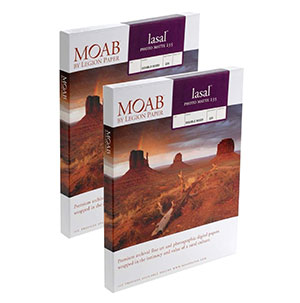
Archival Matte Paper, also known as Moab Lasal Photo Matte, is our house stock fine art paper and is an economical favorite for fine art reproductions and photo prints. It features a smooth surface, heavy weight (230 g, 9.5-mil), neutral white, matte paper engineered for accurate color reproduction that provides high contrast and high-resolution output. This paper is acid-free, making it the perfect choice for both photography & fine art reproductions.
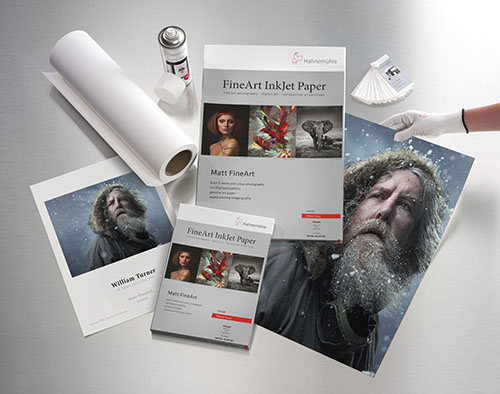
Giclee William Turner Paper by Hahnemühle
The William Turner by Hahnemühle is one of the most popular papers used in the Giclee printing industry. This is a 310g natural white mould made natural line paper with 100% rag content making it highly archival. It has a slight coarse texture which gives photos and artwork an elegant look. These fine art paper prints (also known as Giclee) are ordered by galleries, individual artists and photographers. The papers and inks are not only archival but use some of the most accurate print technology for full color prints.
- Giclee prints use very expensive archival pigmented inks.
- Highest level of color gamut available in printing (12 color printing).
- Exceptional black & white printing.
- Fade resistant, pigmented inks which provide a superior color range compared to other types of inks. Widely preferred in fine art and photography circles.
- We ONLY use professional grade fine art and photo paper that resist yellowing and aging.
Framing
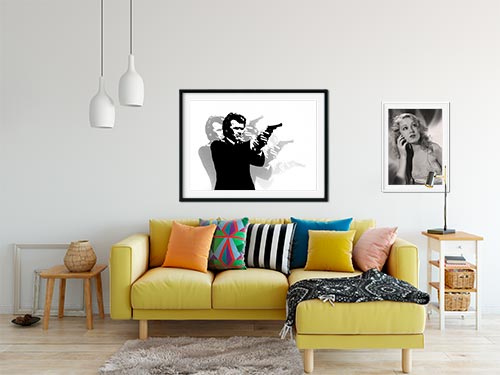
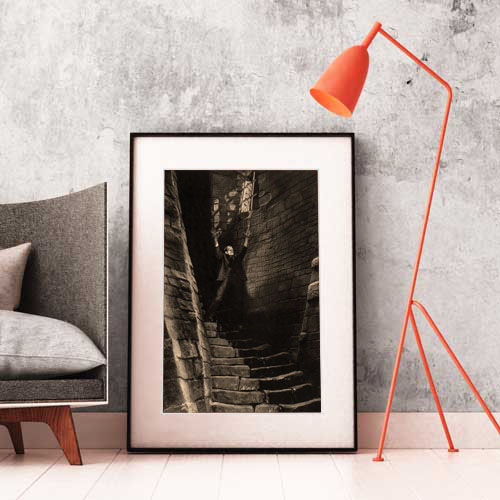
We offer wood and metal frames, custom cut & joined to order. Each framed print includes hanging hardware and foamcore backer.
Matting
We use conservation grade 100% virgin alpha-cellulose 2 ply mats with white core. Acid-free and lignin-free, these are both face resistant and meet all conservation quality standards set by the Fine Art Trade Guild. Mats are digitally cut for ultimate precision. The window will be 1/8″ smaller than the print dimensions.
Glazing (Acrylic Glass)
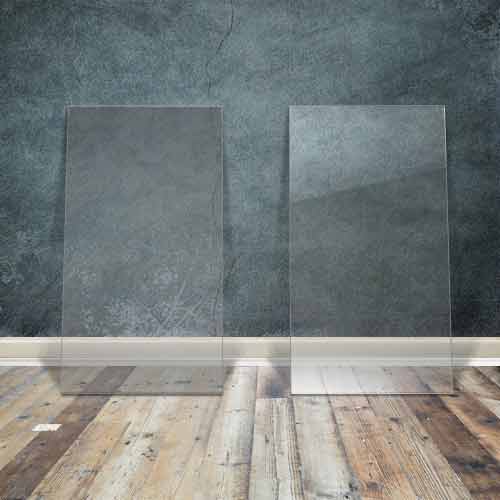
We offer custom cut panes of shatter-proof, acrylic glass, to protect your valuable artwork and prints.
Premium Clear
Framing grade clear acrylic is shatter resistant and lightweight.
Reflection Control
With its matte finish, Tru Vue Reflection Control® Acrylic scatters light to diminish unwanted glare.
Conservation Clear
Tru Vue Conservation Clear® Acrylic is a framing industry staple, blocking up to 99% of UV rays for ultimate protection.
Conservation Reflection Control
Tru Vue Conservation Reflection Control® Acrylic scatters and diffuses light to reduce unwanted glare. Blocks up to 99% of UV rays.
Related products
-

YUTTE STENSGAARD & MICHAEL JOHNSON LUST FOR A VAMPIRE (1971) Jimmy Sangster Rare Behind-the-Scenes Hammer Horror Photo
$38.00 -
TERENCE FISHER & JANINA FAYE – HORROR OF DRACULA (1958) Rare Behind the Scenes
$25.00 -
CLINT EASTWOOD – DIRTY HARRY (1971) .44 Magnum Rare Production Photo
$38.00 -
PETER CUSHING – FRANKENSTEIN MUST BE DESTROYED (1969) Sickle Murder Prologue Rare Behind-the-Scenes Hammer Horror Photo
$30.00