

HAMMER FILMS Queen’s Award 1968 Christopher Lee Peter Cushing Rare Bray Photo
Limited Edition Photograph (learn more)
In stock
Hammer Film Productions gathers at its legendary Bray Studios home in this extraordinary 1968 group photograph associated with the company’s Queen’s Award to Industry, bringing together stars, executives, filmmakers and personnel from one of the most important periods in British horror history. Standing before the unmistakable columned façade of Down Place, the sprawling group includes Christopher Lee and Peter Cushing—but the true subject of this remarkable photograph is larger than either star: it is HAMMER itself.
Look closely and the image becomes increasingly rewarding.
One familiar face leads to another.
Actors stand beside executives and production personnel.
The people who created Hammer history are gathered in front of the building where so much of that history had been made.
That is what elevates this beyond an ordinary celebrity group photograph.
Hammer Celebrates an Extraordinary Achievement
Hammer received the Queen’s Award to Industry in 1968, recognizing the company’s remarkable commercial and export success during a period when its films had achieved international recognition.
The formal presentation took place at Pinewood Studios on May 29, 1968, during production of DRACULA HAS RISEN FROM THE GRAVE.
This separate group photograph preserves another extraordinary connection to that achievement: Hammer personnel assembled outside historic Down Place at Bray Studios.
And that background matters enormously.
Bray had served as Hammer’s legendary production home during the formative years in which the company developed the distinctive visual identity that transformed British Gothic cinema.
The white columns.
The sweeping balcony.
The imposing façade.
Down Place is not merely the background—it is part of the history being photographed.
By 1968, Christopher Lee’s Dracula had become an international horror icon, Peter Cushing had established his extraordinary interpretation of Baron Frankenstein, and the Hammer name itself had become recognized around the world.
Yet Lee and Cushing do not stand alone here.
They are surrounded by the larger Hammer organization.
That gives the photograph unusual historical depth.
Hammer was never simply two famous actors.
Behind the stars stood the producers, directors, designers, technicians, administrators, craftspeople and other personnel whose combined efforts created the films collectors continue celebrating decades later.
Here, the company itself occupies the frame.
That is the collector WHY.
A Christopher Lee portrait preserves a star.
A Peter Cushing portrait preserves a star.
A dramatic still preserves a particular film.
This photograph preserves HAMMER.
And with Down Place towering behind everyone, that statement becomes almost literal.
There is another layer of significance.
Hammer had moved its principal production activity away from Bray by this period, making the appearance of Down Place especially evocative.
The photograph connects Hammer’s celebrated achievement in 1968 with the physical home of its extraordinary earlier Gothic era.
The people.
The place.
The achievement.
Together in one remarkable frame.
For the serious Hammer collector, photographs such as this become increasingly important because they expand a collection beyond individual monsters, actors and movies.
They preserve the institution behind them.
The workplace.
The personnel.
The culture.
The history.
And unlike a reunion photograph created decades later, everyone here belongs to Hammer’s world while that history was still unfolding.
They were not looking backward at the Hammer legend.
They were living it.
That may ultimately be what makes the photograph so compelling.
More than half a century later, collectors continue identifying these faces, studying these productions and preserving the history of the company whose films changed Gothic horror cinema forever.
And here, in 1968, an extraordinary cross-section of that history stood together before the camera—with the legendary home of Hammer itself rising behind them.
Preserved within the KissMeMonster photographic archive, this exceptional black-and-white group photograph has been carefully restored to retain the remarkable facial detail of the assembled Hammer personnel, the architectural character of historic Down Place and the densely layered composition of this extraordinary gathering—preserving an important visual document associated with Hammer Film Productions and its Queen’s Award to Industry year of 1968.
Product Enquiry
Kodak Professional Endura Paper
Kodak Endura papers provide an incredible amount of detail and smooth transition of tones. Designed for the professional photographer in mind, looking for a more traditional photo print style, Kodak Endura provides an extended print life and color gamut almost at the level of a high end fine art paper print.
Archival Matte Paper
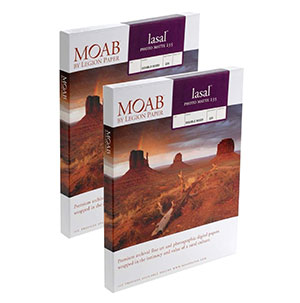
Archival Matte Paper, also known as Moab Lasal Photo Matte, is our house stock fine art paper and is an economical favorite for fine art reproductions and photo prints. It features a smooth surface, heavy weight (230 g, 9.5-mil), neutral white, matte paper engineered for accurate color reproduction that provides high contrast and high-resolution output. This paper is acid-free, making it the perfect choice for both photography & fine art reproductions.
Giclee William Turner Paper by Hahnemühle
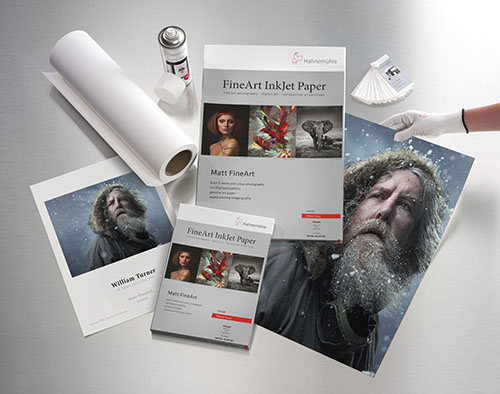
The William Turner by Hahnemühle is one of the most popular papers used in the Giclee printing industry. This is a 310g natural white mould made natural line paper with 100% rag content making it highly archival. It has a slight coarse texture which gives photos and artwork an elegant look. These fine art paper prints (also known as Giclee) are ordered by galleries, individual artists and photographers. The papers and inks are not only archival but use some of the most accurate print technology for full color prints.
- Giclee prints use very expensive archival pigmented inks.
- Highest level of color gamut available in printing (12 color printing).
- Exceptional black & white printing.
- Fade resistant, pigmented inks which provide a superior color range compared to other types of inks. Widely preferred in fine art and photography circles.
- We ONLY use professional grade fine art and photo paper that resist yellowing and aging.
Framing
We offer wood and metal frames, custom cut & joined to order. Each framed print includes hanging hardware and foamcore backer.
Matting
We use conservation grade 100% virgin alpha-cellulose 2 ply mats with white core. Acid-free and lignin-free, these are both face resistant and meet all conservation quality standards set by the Fine Art Trade Guild. Mats are digitally cut for ultimate precision. The window will be 1/8″ smaller than the print dimensions.
Glazing (Acrylic Glass)
We offer custom cut panes of shatter-proof, acrylic glass, to protect your valuable artwork and prints.
Premium Clear
Framing grade clear acrylic is shatter resistant and lightweight.
Reflection Control
With its matte finish, Tru Vue Reflection Control® Acrylic scatters light to diminish unwanted glare.
Conservation Clear
Tru Vue Conservation Clear® Acrylic is a framing industry staple, blocking up to 99% of UV rays for ultimate protection.
Conservation Reflection Control
Tru Vue Conservation Reflection Control® Acrylic scatters and diffuses light to reduce unwanted glare. Blocks up to 99% of UV rays.
Related products
-

CHRISTOPHER LEE – DRACULA: PRINCE OF DARKNESS (1966) Filming Dracula’s Death
$25.00 -
VERONICA CARLSON – DRACULA HAS RISEN FROM THE GRAVE (1968) Bedroom Window Photo
$25.00 -
CHRISTOPHER LEE – TASTE THE BLOOD OF DRACULA (1970) Demonic Vampire Close-Up Hammer Photo
$30.00 -
CHRISTOPHER LEE – HORROR OF DRACULA (1958) Bloody Lips Fangs Iconic Hammer Photo
$30.00