

INGRID PITT – 1973 Rare Rolf Kruger Management Casting Portrait Hammer Horror
Limited Edition Photograph (learn more)
In stock
Ingrid Pitt greets the camera with extraordinary warmth in this rare 1973 black-and-white professional casting portrait associated with Rolf Kruger Management Ltd. in England, revealing a wonderfully natural side of the actress behind one of British horror cinema’s most magnetic screen personas. With one hand casually swept through her flowing hair, an elaborate patterned blouse and multiple strands of beads, Pitt smiles directly toward the camera with an openness and confidence completely removed from the seductive menace of her celebrated Hammer vampires.
This isn't Carmilla Karnstein.
It isn't Countess Elisabeth Nádasdy.
It is Ingrid Pitt presenting Ingrid Pitt.
And that distinction gives the photograph its unusual collector appeal.
Beyond the Hammer Vampire
By 1973, Ingrid Pitt had already established the performances that would permanently connect her with British Gothic horror.
In THE VAMPIRE LOVERS (1970), she portrayed Carmilla Karnstein, bringing sensuality, danger and remarkable screen presence to Hammer’s adaptation of Sheridan Le Fanu’s vampire mythology.
COUNTESS DRACULA (1971) followed, with Pitt starring as Countess Elisabeth Nádasdy in another role that strengthened her emerging identity as one of the defining women of Hammer Horror.
Those films created an enduring screen image.
This photograph strips that image away.
Unlike a theatrical publicity still designed around a particular film or character, a professional management or casting portrait had another purpose.
The performer herself was the subject.
That makes Pitt's expression especially important.
She doesn't appear mysterious.
She doesn't appear threatening.
She isn't performing Gothic seduction for the camera.
She looks inviting.
Her smile reaches immediately across the photograph.
One arm rises naturally behind her head while her hand disappears into her hair, creating a relaxed diagonal through the composition.
The pose feels spontaneous even though the portrait was professionally constructed.
Then there is the styling.
Pitt's richly patterned blouse fills much of the lower image with swirling early-1970s detail.
Multiple strands of beads fall vertically across those patterns, adding another layer of texture.
Her hair provides yet another.
Against the relative simplicity of the background, Pitt herself supplies virtually all of the photograph's visual richness.
And yet the face still wins.
The patterns don't overwhelm her.
The jewelry doesn't overwhelm her.
Even that wonderfully abundant hair doesn't overwhelm her.
The smile controls the portrait.
For the serious Ingrid Pitt collector, that makes this photograph a valuable counterpoint to the imagery for which she became famous.
There are photographs of Pitt looking dangerous.
Seductive.
Imperious.
Mysterious.
Vampiric.
Those images preserve the screen mythology.
This one preserves the woman being professionally presented beyond it.
That is the collector WHY.
And the documented management/casting context gives the photograph an additional layer of entertainment history.
This was not simply another glamour portrait circulating around a particular production.
It belonged to the professional machinery through which an actor's appearance and personality could be presented within the entertainment industry.
That makes it both beautiful and functional historical photography.
The timing strengthens that significance.
By 1973, collectors looking backward today already know exactly what Pitt had accomplished.
Carmilla had happened.
COUNTESS DRACULA had happened.
The Hammer iconography existed.
But here, Pitt isn't asking us to remember any of it.
She simply looks into the camera and smiles.
The vampire has left the room.
What remains is an extraordinarily photogenic actress with enough natural presence to command the frame without costume, blood, fangs or Gothic atmosphere.
For a deeper collection, that difference matters.
The film still gives us the character.
The Hammer portrait gives us the horror icon.
The casting portrait gives us the actress.
And judging from that wonderfully inviting expression—
Ingrid Pitt hardly needed a vampire costume to hold anyone's attention.
Preserved within the KissMeMonster photographic archive, this rare black-and-white professional portrait has been carefully restored to retain the delicate facial detail of Ingrid Pitt’s warm expression, the rich texture of her flowing hair, intricate patterns of her early-1970s wardrobe and layered beadwork—preserving an unusually natural image associated with Rolf Kruger Management and Pitt’s professional career beyond the Gothic characters that made her a cult cinema icon.
Product Enquiry
Kodak Professional Endura Paper
Kodak Endura papers provide an incredible amount of detail and smooth transition of tones. Designed for the professional photographer in mind, looking for a more traditional photo print style, Kodak Endura provides an extended print life and color gamut almost at the level of a high end fine art paper print.
Archival Matte Paper
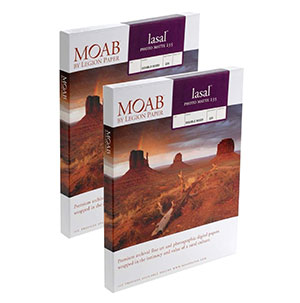
Archival Matte Paper, also known as Moab Lasal Photo Matte, is our house stock fine art paper and is an economical favorite for fine art reproductions and photo prints. It features a smooth surface, heavy weight (230 g, 9.5-mil), neutral white, matte paper engineered for accurate color reproduction that provides high contrast and high-resolution output. This paper is acid-free, making it the perfect choice for both photography & fine art reproductions.
Giclee William Turner Paper by Hahnemühle
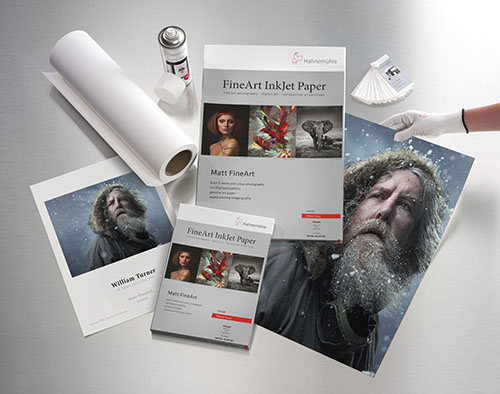
The William Turner by Hahnemühle is one of the most popular papers used in the Giclee printing industry. This is a 310g natural white mould made natural line paper with 100% rag content making it highly archival. It has a slight coarse texture which gives photos and artwork an elegant look. These fine art paper prints (also known as Giclee) are ordered by galleries, individual artists and photographers. The papers and inks are not only archival but use some of the most accurate print technology for full color prints.
- Giclee prints use very expensive archival pigmented inks.
- Highest level of color gamut available in printing (12 color printing).
- Exceptional black & white printing.
- Fade resistant, pigmented inks which provide a superior color range compared to other types of inks. Widely preferred in fine art and photography circles.
- We ONLY use professional grade fine art and photo paper that resist yellowing and aging.
Framing
We offer wood and metal frames, custom cut & joined to order. Each framed print includes hanging hardware and foamcore backer.
Matting
We use conservation grade 100% virgin alpha-cellulose 2 ply mats with white core. Acid-free and lignin-free, these are both face resistant and meet all conservation quality standards set by the Fine Art Trade Guild. Mats are digitally cut for ultimate precision. The window will be 1/8″ smaller than the print dimensions.
Glazing (Acrylic Glass)
We offer custom cut panes of shatter-proof, acrylic glass, to protect your valuable artwork and prints.
Premium Clear
Framing grade clear acrylic is shatter resistant and lightweight.
Reflection Control
With its matte finish, Tru Vue Reflection Control® Acrylic scatters light to diminish unwanted glare.
Conservation Clear
Tru Vue Conservation Clear® Acrylic is a framing industry staple, blocking up to 99% of UV rays for ultimate protection.
Conservation Reflection Control
Tru Vue Conservation Reflection Control® Acrylic scatters and diffuses light to reduce unwanted glare. Blocks up to 99% of UV rays.
Related products
-

KING KONG (1933) Kong & Fay Wray Over New York City Iconic Promotional Art
$38.00 -
PETER CUSHING, INGRID PITT & DAWN ADDAMS – THE VAMPIRE LOVERS (1970) Cast Photo
$30.00 -
FAY WRAY – KING KONG (1933) Ann Darrow Hollywood Glamour Publicity Portrait
$38.00 -
INGRID PITT – COUNTESS DRACULA (1971) Countess Elizabeth Báthory Portrait
$38.00