

Ingrid Pitt – The Vampire Lovers (1970) Marcilla Red Gown Moor Park Mansion Photo
Limited Edition Photograph (learn more)
In stock
Ingrid Pitt appears as Marcilla Karnstein in her striking crimson-red gown in this color photograph from The Vampire Lovers (1970), posed against the monumental pale-stone architecture of Moor Park Mansion in Hertfordshire. The flowing red costume stands in dramatic contrast to the massive Portland-stone column and masonry surrounding her, creating an unusually architectural Hammer Films image in which Marcilla’s vivid presence dominates an otherwise restrained classical setting. The combination of identifiable costume, character and documented filming location gives this photograph a particularly strong visual and historical identity.
The photograph’s impact comes from the contrast between figure and setting. Pitt’s full-length red gown provides the image’s defining color accent, its soft fabric falling in elegant vertical lines against the heavy curved stone base and block masonry behind her. The architectural forms are monumental, almost austere, while Marcilla’s costume introduces movement, sensuality and unmistakable visual drama. The balance between warm flesh tones, pale stone and the saturated crimson fabric makes the composition especially memorable.
This is a particularly effective Marcilla Karnstein image because it emphasizes one of the character’s most recognizable screen costumes while placing her within a location directly associated with the story. Rather than relying on overt horror action, the photograph presents Marcilla through pose, costume and environment. That restraint is precisely what gives the image its strength. It preserves the seductive outward elegance of the Karnstein vampire before violence erupts more openly elsewhere in the film.
Directed by Roy Ward Baker for Hammer Films and American International Pictures, The Vampire Lovers stars Ingrid Pitt as the Karnstein vampire, who appears under the identities Mircalla, Marcilla and Carmilla during the course of the story. Marcilla enters the narrative at General Spielsdorf’s ball and remains at his estate, where her presence becomes inseparable from the film’s atmosphere of desire, secrecy and predation. Pitt’s performance is central to the film’s enduring identity, combining aristocratic poise with unmistakable supernatural threat.
The location adds another important dimension. Moor Park Mansion in Hertfordshire served as General Spielsdorf’s residence, and its grand Palladian architecture makes it one of the most visually distinctive settings in the film. In this photograph, the heavy column base and dressed-stone wall immediately root Marcilla within that elegant country-house world. Because the image joins Pitt’s red gown to a documented filming location, it carries stronger historical interest than a more neutral studio still.
Released in 1970, The Vampire Lovers launched Hammer’s celebrated Karnstein Trilogy, followed by Lust for a Vampire and Twins of Evil. The film draws upon Sheridan Le Fanu’s novella “Carmilla,” reworking its themes of beauty, seduction and vampirism through Hammer’s distinctive Gothic visual style. Photographs of Ingrid Pitt as Marcilla remain among the most sought-after imagery from the film, particularly when they preserve her in one of the production’s most striking costumes.
For collectors of Hammer horror photography, this image has exceptional appeal because it combines costume study, star presence and location atmosphere in a single frame. The monumental stone backdrop, the graceful fall of the crimson gown and Pitt’s unmistakable screen presence give the photograph a refined but powerful identity within the visual world of The Vampire Lovers.
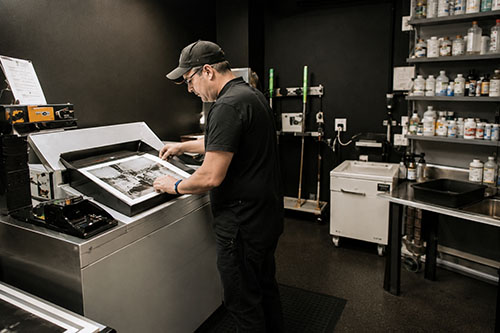
Carefully restored from historic photographic source material and professionally lab-developed, this museum-quality photograph is presented uncropped, preserving the complete image area contained in the source. Restoration recovers fabric detail, stone texture, subtle skin tones, architectural depth and the rich crimson color of Marcilla’s gown while maintaining the natural color balance and authentic character of the historic photograph. The finished photograph contains no AI-generated image content.
Product Enquiry
Kodak Professional Endura Paper
Kodak Endura papers provide an incredible amount of detail and smooth transition of tones. Designed for the professional photographer in mind, looking for a more traditional photo print style, Kodak Endura provides an extended print life and color gamut almost at the level of a high end fine art paper print.
Archival Matte Paper
Archival Matte Paper, also known as Moab Lasal Photo Matte, is our house stock fine art paper and is an economical favorite for fine art reproductions and photo prints. It features a smooth surface, heavy weight (230 g, 9.5-mil), neutral white, matte paper engineered for accurate color reproduction that provides high contrast and high-resolution output. This paper is acid-free, making it the perfect choice for both photography & fine art reproductions.
Giclee William Turner Paper by Hahnemühle
The William Turner by Hahnemühle is one of the most popular papers used in the Giclee printing industry. This is a 310g natural white mould made natural line paper with 100% rag content making it highly archival. It has a slight coarse texture which gives photos and artwork an elegant look. These fine art paper prints (also known as Giclee) are ordered by galleries, individual artists and photographers. The papers and inks are not only archival but use some of the most accurate print technology for full color prints.
- Giclee prints use very expensive archival pigmented inks.
- Highest level of color gamut available in printing (12 color printing).
- Exceptional black & white printing.
- Fade resistant, pigmented inks which provide a superior color range compared to other types of inks. Widely preferred in fine art and photography circles.
- We ONLY use professional grade fine art and photo paper that resist yellowing and aging.
Framing
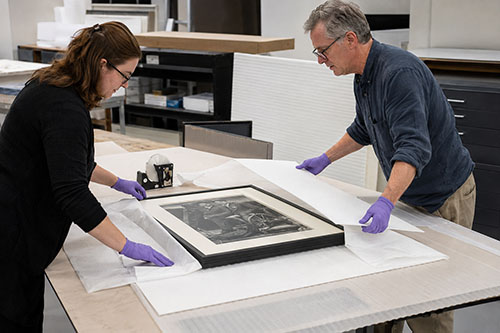
We offer wood and metal frames, custom cut & joined to order. Each framed print includes hanging hardware and foamcore backer.
Matting
We use conservation grade 100% virgin alpha-cellulose 2 ply mats with white core. Acid-free and lignin-free, these are both face resistant and meet all conservation quality standards set by the Fine Art Trade Guild. Mats are digitally cut for ultimate precision. The window will be 1/8″ smaller than the print dimensions.
Glazing (Acrylic Glass)
We offer custom cut panes of shatter-proof, acrylic glass, to protect your valuable artwork and prints.
Premium Clear
Framing grade clear acrylic is shatter resistant and lightweight.
Reflection Control
With its matte finish, Tru Vue Reflection Control® Acrylic scatters light to diminish unwanted glare.
Conservation Clear
Tru Vue Conservation Clear® Acrylic is a framing industry staple, blocking up to 99% of UV rays for ultimate protection.
Conservation Reflection Control
Tru Vue Conservation Reflection Control® Acrylic scatters and diffuses light to reduce unwanted glare. Blocks up to 99% of UV rays.
Related products
-

Ingrid Pitt & Dawn Addams – The Vampire Lovers (1970) Marcilla & Countess Moor Park Ball Behind-the-Scenes Photo
$30.00 -
Peter Cushing, Ingrid Pitt & Dawn Addams – The Vampire Lovers (1970) Savoy Hotel Press Launch Photo
$30.00 -
Ingrid Pitt – The Vampire Lovers (1970) Marcilla / Carmilla Karnstein Ball Candelabrum Hammer Horror Photo
$38.00 -
Ingrid Pitt – The Vampire Lovers (1970) Marcilla / Carmilla Karnstein Hammer Horror Publicity Photo
$38.00


