

KING KONG (1933) Log Bridge Rare Larrinaga Crabbe Promotional Art
Limited Edition Photograph (learn more)
In stock
An extraordinary piece of KING KONG imagery captures one of Skull Island’s most legendary spectacles: Kong confronting the Venture’s expedition as the men struggle for survival upon a massive fallen log suspended high above a jungle chasm. With Kong looming from the foliage at one end, the tiny human figures desperately balancing above the abyss and a prehistoric creature emerging through the jungle beyond, the composition delivers scale, danger and primeval adventure with breathtaking immediacy.
The visual construction is magnificent. The enormous log cuts diagonally across the chasm like a precarious bridge, carrying the eye directly from the threatened men toward Kong. Dense foliage encloses the scene while the sheer drop beneath them creates an extraordinary sensation of depth. The humans occupy the most vulnerable possible position—trapped between the impossible landscape and the gigantic creature controlling their escape.
Visualizing the Lost World of Skull Island
Produced and directed by Merian C. Cooper and Ernest B. Schoedsack, KING KONG (1933) stars Fay Wray as Ann Darrow, Robert Armstrong as Carl Denham and Bruce Cabot as Jack Driscoll, with Willis O’Brien’s pioneering stop-motion effects transforming Kong and Skull Island’s prehistoric creatures into some of the most enduring images in motion-picture history.
Artists Mario Larrinaga and Byron L. Crabbe were important contributors to the remarkable visual-development work behind KING KONG. Their work helped filmmakers visualize the extraordinary environments, scale and effects sequences required to make Skull Island believable.
That creative process gives imagery such as this significance extending far beyond conventional movie advertising.
Before audiences could believe in Skull Island, artists first had to imagine it.
The log sequence became one of KING KONG’s defining demonstrations of scale and terror. Kong’s enormous presence is measured against the comparatively tiny sailors balanced upon the fallen tree, while the depth of the chasm makes the surrounding landscape itself seem every bit as dangerous as the creatures inhabiting it.
The sequence also occupies a fascinating place in the film’s production history. Early development of KING KONG included Kong throwing sailors from the log and the notorious chasm or “spider-pit” material involving prehistoric creatures below. Although portions of that material would not survive in the finished film, its development became an enduring part of KING KONG production lore.
This artwork therefore preserves far more than a dramatic monster encounter. It reflects the extraordinary process of designing action that had no real-world photographic equivalent. Artists, model makers, animators, miniature technicians and cinematographers had to determine how a gigantic ape, human characters and an impossible prehistoric environment could convincingly inhabit the same cinematic space.
For the serious KING KONG collector, that history gives early visual-development and promotional imagery a particularly compelling place beside finished production photographs. It documents not simply the legend audiences ultimately saw, but the artistic imagination and technical experimentation required to create that legend.
And few concepts communicate KING KONG’s essential appeal more perfectly than this one: ordinary men reduced to tiny figures upon a narrow bridge, a vast prehistoric world beneath them, and Kong emerging from the jungle with overwhelming physical power.
Adventure, terror, scale and the impossible world of Skull Island converge within a single spectacular composition.
Preserved within the KissMeMonster photographic archive, this remarkable reproduction of historic KING KONG imagery has been carefully restored to retain the intricate jungle textures, tiny expedition figures, dramatic depth of the chasm and imposing presence of Kong—preserving with renewed clarity the extraordinary visual imagination associated with Mario Larrinaga, Byron L. Crabbe and the pioneering creation of Skull Island.
Product Enquiry
Kodak Professional Endura Paper
Kodak Endura papers provide an incredible amount of detail and smooth transition of tones. Designed for the professional photographer in mind, looking for a more traditional photo print style, Kodak Endura provides an extended print life and color gamut almost at the level of a high end fine art paper print.
Archival Matte Paper
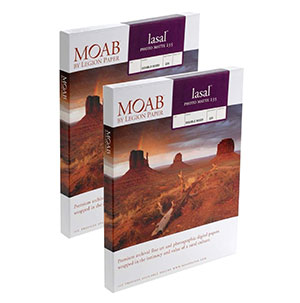
Archival Matte Paper, also known as Moab Lasal Photo Matte, is our house stock fine art paper and is an economical favorite for fine art reproductions and photo prints. It features a smooth surface, heavy weight (230 g, 9.5-mil), neutral white, matte paper engineered for accurate color reproduction that provides high contrast and high-resolution output. This paper is acid-free, making it the perfect choice for both photography & fine art reproductions.
Giclee William Turner Paper by Hahnemühle
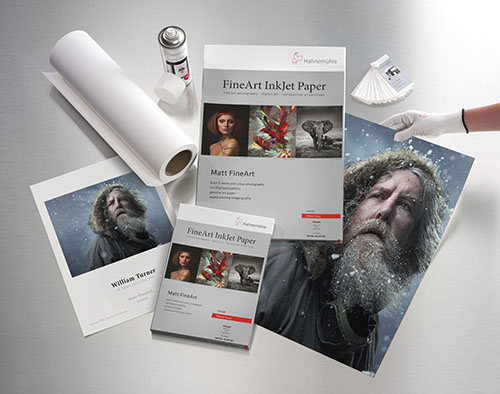
The William Turner by Hahnemühle is one of the most popular papers used in the Giclee printing industry. This is a 310g natural white mould made natural line paper with 100% rag content making it highly archival. It has a slight coarse texture which gives photos and artwork an elegant look. These fine art paper prints (also known as Giclee) are ordered by galleries, individual artists and photographers. The papers and inks are not only archival but use some of the most accurate print technology for full color prints.
- Giclee prints use very expensive archival pigmented inks.
- Highest level of color gamut available in printing (12 color printing).
- Exceptional black & white printing.
- Fade resistant, pigmented inks which provide a superior color range compared to other types of inks. Widely preferred in fine art and photography circles.
- We ONLY use professional grade fine art and photo paper that resist yellowing and aging.
Framing
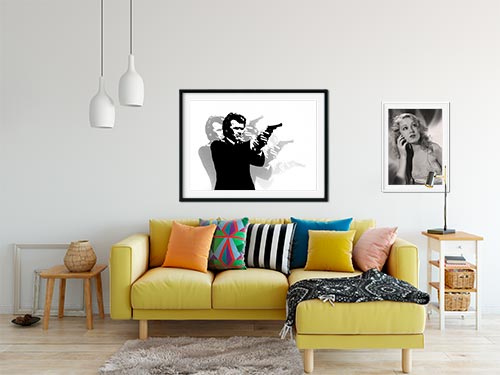
We offer wood and metal frames, custom cut & joined to order. Each framed print includes hanging hardware and foamcore backer.
Matting
We use conservation grade 100% virgin alpha-cellulose 2 ply mats with white core. Acid-free and lignin-free, these are both face resistant and meet all conservation quality standards set by the Fine Art Trade Guild. Mats are digitally cut for ultimate precision. The window will be 1/8″ smaller than the print dimensions.
Glazing (Acrylic Glass)
We offer custom cut panes of shatter-proof, acrylic glass, to protect your valuable artwork and prints.
Premium Clear
Framing grade clear acrylic is shatter resistant and lightweight.
Reflection Control
With its matte finish, Tru Vue Reflection Control® Acrylic scatters light to diminish unwanted glare.
Conservation Clear
Tru Vue Conservation Clear® Acrylic is a framing industry staple, blocking up to 99% of UV rays for ultimate protection.
Conservation Reflection Control
Tru Vue Conservation Reflection Control® Acrylic scatters and diffuses light to reduce unwanted glare. Blocks up to 99% of UV rays.
Related products
-

INGRID PITT – COUNTESS DRACULA (1971) Countess Elizabeth Báthory Portrait
$38.00 -
THE HOWLING (1981) Werewolf Rob Bottin Special Effects Joe Dante Horror Photo
$25.00 -
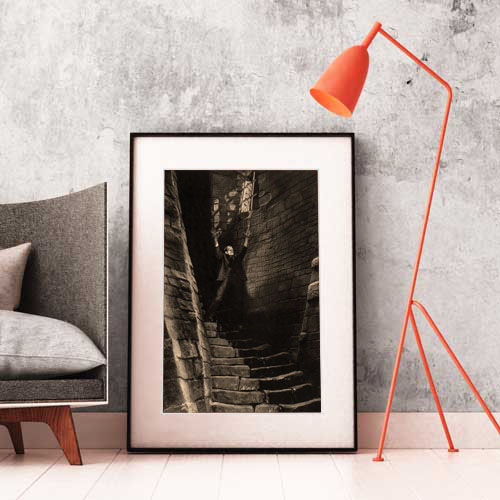
BORIS KARLOFF – FRANKENSTEIN (1931) Monster Dungeon Steps Rare Universal Horror Photo
$30.00 -
CATHERINE DENEUVE – REPULSION (1965) Carol Ledoux Psychological Portrait
$30.00