

KING KONG ESCAPES (1967) King Kong vs Mechani-Kong Rare Kaiju Promotional Art
Limited Edition Photograph (learn more)
In stock
An extraordinary promotional image for KING KONG ESCAPES unleashes King Kong and Mechani-Kong amid a spectacular landscape of fire, smoke and destruction. With Kong clutching a woman as the gigantic mechanical ape towers opposite him, beams of light cutting through the darkness and machinery rising behind them, this remarkable composition delivers pure 1960s Japanese kaiju spectacle in a single explosive image.
There is almost nowhere for the eye to rest. Kong dominates one side of the composition, one enormous arm raised while the tiny human figure in his grasp establishes his tremendous scale. Opposite him stands Mechani-Kong, rendered as a massive armored mechanical counterpart to the living creature.
Beneath them, flames and smoke engulf the landscape while towering machinery and piercing beams of light add still more depth to the chaos. Human beings, monsters and technology collide within the same fantastical world.
King Kong Meets the World of Toho Kaiju
Directed by Ishirō Honda with special effects supervised by Eiji Tsuburaya, KING KONG ESCAPES (1967), originally released in Japan as KINGU KONGU NO GYAKUSHŪ, was a Japanese-American production involving Toho and Rankin/Bass.
The film occupies an especially unusual place within King Kong history. Rather than simply recreating the familiar story of the giant ape, it places Kong firmly within the imaginative world of Japanese tokusatsu and kaiju cinema, complete with elaborate miniature environments, fantastical technology and Mechani-Kong—a gigantic robotic duplicate created to rival the living Kong.
That makes this promotional artwork particularly compelling.
It does not merely depict King Kong; it visualizes the extraordinary collision between an American screen icon and Toho’s distinctive giant-monster tradition. The organic power of Kong is set against the armored technological menace of Mechani-Kong, while the diminutive human figure, blazing landscape and enormous industrial structures amplify their impossible scale.
The presence of Mechani-Kong also gives the image considerable significance for collectors of Japanese monster cinema. Long before mechanical counterparts became an especially recognizable motif within kaiju culture, KING KONG ESCAPES presented audiences with a robotic adversary built in the image of one of cinema’s most famous monsters.
And because this is promotional artwork rather than a conventional production still, the composition is free to condense the film's fantastic ingredients into one heightened vision. Scale is exaggerated, destruction intensified and the opposing monsters arranged for maximum dramatic impact. It sells not one isolated scene, but the promise of the entire spectacle.
For collectors spanning King Kong, Toho, Ishirō Honda, Eiji Tsuburaya and vintage kaiju cinema, that convergence gives the image unusual breadth. It represents a fascinating moment when one of Hollywood’s foundational movie monsters was absorbed into the exuberant visual language of 1960s Japanese fantastic cinema—and confronted by a mechanical reflection of himself.
Kong versus Mechani-Kong, humanity caught between them, and an entire world seemingly collapsing beneath their confrontation: few images communicate the gloriously outsized imagination of KING KONG ESCAPES more immediately.
Preserved within the KissMeMonster photographic archive, this exceptional black-and-white promotional image has been carefully restored to retain the intricate monster detail, metallic character of Mechani-Kong, brilliant beams of light, turbulent smoke and dramatic tonal contrasts of the original source material—reviving the spectacular scale and wonderfully imaginative character of this distinctive piece of KING KONG ESCAPES promotional art.
Product Enquiry
Kodak Professional Endura Paper
Kodak Endura papers provide an incredible amount of detail and smooth transition of tones. Designed for the professional photographer in mind, looking for a more traditional photo print style, Kodak Endura provides an extended print life and color gamut almost at the level of a high end fine art paper print.
Archival Matte Paper
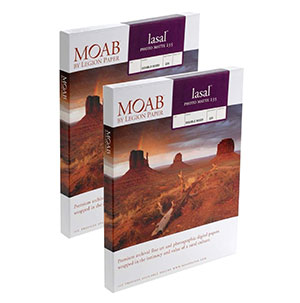
Archival Matte Paper, also known as Moab Lasal Photo Matte, is our house stock fine art paper and is an economical favorite for fine art reproductions and photo prints. It features a smooth surface, heavy weight (230 g, 9.5-mil), neutral white, matte paper engineered for accurate color reproduction that provides high contrast and high-resolution output. This paper is acid-free, making it the perfect choice for both photography & fine art reproductions.
Giclee William Turner Paper by Hahnemühle
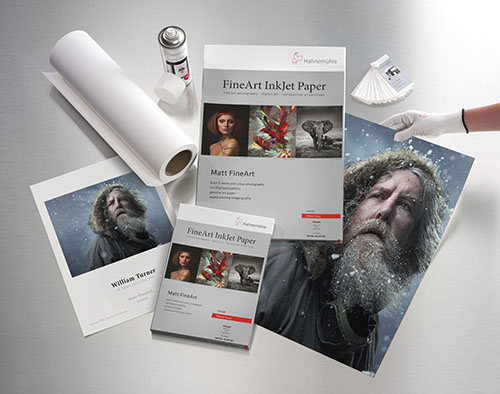
The William Turner by Hahnemühle is one of the most popular papers used in the Giclee printing industry. This is a 310g natural white mould made natural line paper with 100% rag content making it highly archival. It has a slight coarse texture which gives photos and artwork an elegant look. These fine art paper prints (also known as Giclee) are ordered by galleries, individual artists and photographers. The papers and inks are not only archival but use some of the most accurate print technology for full color prints.
- Giclee prints use very expensive archival pigmented inks.
- Highest level of color gamut available in printing (12 color printing).
- Exceptional black & white printing.
- Fade resistant, pigmented inks which provide a superior color range compared to other types of inks. Widely preferred in fine art and photography circles.
- We ONLY use professional grade fine art and photo paper that resist yellowing and aging.
Framing
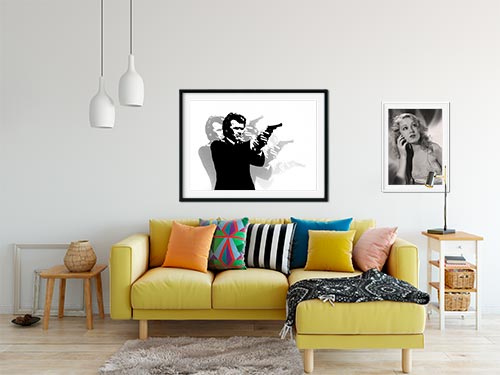
We offer wood and metal frames, custom cut & joined to order. Each framed print includes hanging hardware and foamcore backer.
Matting
We use conservation grade 100% virgin alpha-cellulose 2 ply mats with white core. Acid-free and lignin-free, these are both face resistant and meet all conservation quality standards set by the Fine Art Trade Guild. Mats are digitally cut for ultimate precision. The window will be 1/8″ smaller than the print dimensions.
Glazing (Acrylic Glass)
We offer custom cut panes of shatter-proof, acrylic glass, to protect your valuable artwork and prints.
Premium Clear
Framing grade clear acrylic is shatter resistant and lightweight.
Reflection Control
With its matte finish, Tru Vue Reflection Control® Acrylic scatters light to diminish unwanted glare.
Conservation Clear
Tru Vue Conservation Clear® Acrylic is a framing industry staple, blocking up to 99% of UV rays for ultimate protection.
Conservation Reflection Control
Tru Vue Conservation Reflection Control® Acrylic scatters and diffuses light to reduce unwanted glare. Blocks up to 99% of UV rays.
Related products
-

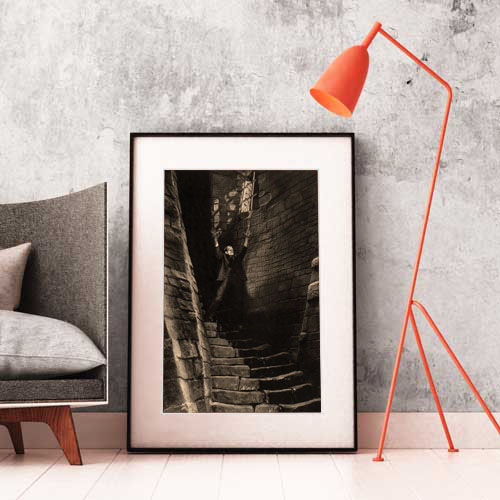
BORIS KARLOFF – FRANKENSTEIN (1931) Monster Dungeon Steps Rare Universal Horror Photo
$30.00 -
PETER CUSHING – THE CURSE OF FRANKENSTEIN (1957) Black Gloves Portrait
$30.00 -
LEONARD WHITING – FRANKENSTEIN: THE TRUE STORY (1973) Monster Creation Laboratory Photo
$25.00 -
KING KONG (1933) Kong & Fay Wray Over New York City Iconic Promotional Art
$38.00