

KLAUS KINSKI – NOSFERATU THE VAMPYRE (1979) Dracula in Coffin Horror Photo
Limited Edition Photograph (learn more)
In stock
A haunting image of Klaus Kinski as Count Dracula lying within his coffin distills the deathly beauty of NOSFERATU THE VAMPYRE into an extraordinary study of darkness and light. From the near-total blackness emerge only Kinski’s spectral face, enormous folded hands and elongated fingernails, creating an intensely macabre portrait of Werner Herzog’s unforgettable reimagining of Nosferatu.
The composition is remarkably spare—and that restraint gives it tremendous power. Dracula’s body almost disappears into the surrounding darkness while cold blue illumination catches his bald head, hollow eyes and corpse-like complexion. His oversized hands dominate the foreground, their long claw-like nails resting prominently across his body. The coffin seems less like a prop than an extension of the darkness consuming him.
Dracula Between Death and Immortality
Written and directed by Werner Herzog, NOSFERATU THE VAMPYRE (1979), released in German as NOSFERATU: PHANTOM DER NACHT, stars Klaus Kinski as Count Dracula alongside Isabelle Adjani as Lucy Harker, Bruno Ganz as Jonathan Harker and Roland Topor as Renfield.
Herzog conceived the film in direct dialogue with F. W. Murnau’s NOSFERATU (1922), and Kinski’s extraordinary appearance recalls essential characteristics of Max Schreck’s Count Orlok—the bald skull, pallid skin, pointed ears and unnaturally elongated fingernails—while creating a Dracula of distinctly different emotional character.
Herzog’s vampire is not simply a triumphant supernatural predator. Immortality hangs over him like a curse, giving Kinski’s Dracula an eerie melancholy and profound isolation that separate the performance from many more conventionally aristocratic interpretations of the character.
This coffin image concentrates that conception with remarkable economy.
There is no victim, elaborate action or violent transformation. Instead, Dracula appears suspended somewhere between corpse and living creature. The blue-toned face seems almost detached from the darkness, while those unmistakable hands remain visible below it like the limbs of something that should be dead but is merely waiting.
The photograph also connects directly to one of the oldest and most enduring images in vampire mythology: the undead creature returning to the coffin. Yet Herzog and Kinski render that familiar idea strangely unfamiliar. The overwhelming darkness, corpse-like makeup and severe lighting remove virtually every trace of romantic glamour, returning Dracula to something ancient, diseased and profoundly unnatural.
For the Nosferatu enthusiast, this image therefore adds a particularly evocative dimension to Kinski’s photographic legacy. Where other portraits reveal the makeup, movement or predatory behavior of Herzog’s Dracula, this photograph captures the character in his most elemental environment—alone within the coffin, surrounded by darkness, neither conventionally alive nor permitted the finality of death.
Preserved within the KissMeMonster photographic archive, this exceptional color image has been carefully restored to retain the extremely delicate shadow detail, cold blue illumination across Kinski’s cadaverous features, subtle coffin contours and remarkable definition of his elongated hands and fingernails—preserving the profound darkness and funereal atmosphere that make this NOSFERATU THE VAMPYRE image so visually arresting.
Product Enquiry
Kodak Professional Endura Paper
Kodak Endura papers provide an incredible amount of detail and smooth transition of tones. Designed for the professional photographer in mind, looking for a more traditional photo print style, Kodak Endura provides an extended print life and color gamut almost at the level of a high end fine art paper print.
Archival Matte Paper
Archival Matte Paper, also known as Moab Lasal Photo Matte, is our house stock fine art paper and is an economical favorite for fine art reproductions and photo prints. It features a smooth surface, heavy weight (230 g, 9.5-mil), neutral white, matte paper engineered for accurate color reproduction that provides high contrast and high-resolution output. This paper is acid-free, making it the perfect choice for both photography & fine art reproductions.
Giclee William Turner Paper by Hahnemühle
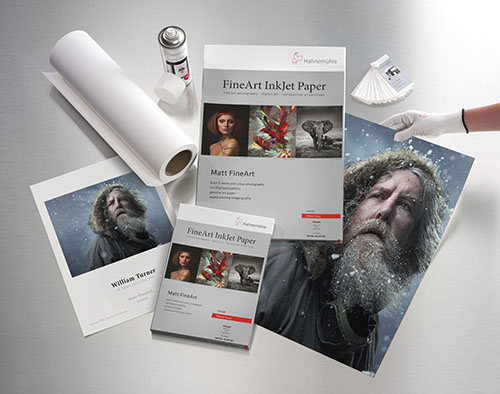
The William Turner by Hahnemühle is one of the most popular papers used in the Giclee printing industry. This is a 310g natural white mould made natural line paper with 100% rag content making it highly archival. It has a slight coarse texture which gives photos and artwork an elegant look. These fine art paper prints (also known as Giclee) are ordered by galleries, individual artists and photographers. The papers and inks are not only archival but use some of the most accurate print technology for full color prints.
- Giclee prints use very expensive archival pigmented inks.
- Highest level of color gamut available in printing (12 color printing).
- Exceptional black & white printing.
- Fade resistant, pigmented inks which provide a superior color range compared to other types of inks. Widely preferred in fine art and photography circles.
- We ONLY use professional grade fine art and photo paper that resist yellowing and aging.
Framing
We offer wood and metal frames, custom cut & joined to order. Each framed print includes hanging hardware and foamcore backer.
Matting
We use conservation grade 100% virgin alpha-cellulose 2 ply mats with white core. Acid-free and lignin-free, these are both face resistant and meet all conservation quality standards set by the Fine Art Trade Guild. Mats are digitally cut for ultimate precision. The window will be 1/8″ smaller than the print dimensions.
Glazing (Acrylic Glass)
We offer custom cut panes of shatter-proof, acrylic glass, to protect your valuable artwork and prints.
Premium Clear
Framing grade clear acrylic is shatter resistant and lightweight.
Reflection Control
With its matte finish, Tru Vue Reflection Control® Acrylic scatters light to diminish unwanted glare.
Conservation Clear
Tru Vue Conservation Clear® Acrylic is a framing industry staple, blocking up to 99% of UV rays for ultimate protection.
Conservation Reflection Control
Tru Vue Conservation Reflection Control® Acrylic scatters and diffuses light to reduce unwanted glare. Blocks up to 99% of UV rays.
Related products
-

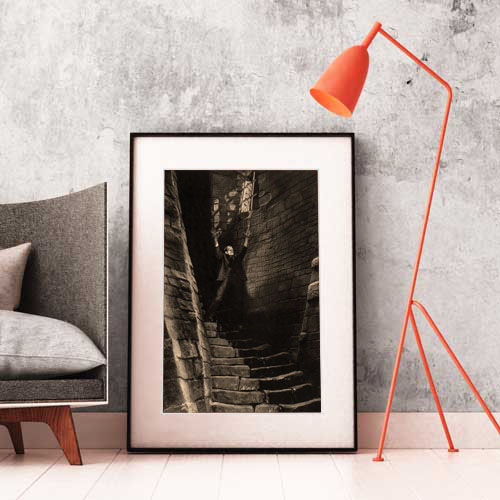
BARBARA STEELE BLACK SUNDAY (1960) Katia Vajda Gothic Bed Mario Bava Publicity Photo
$38.00 -
KLAUS KINSKI & ISABELLE ADJANI – NOSFERATU THE VAMPYRE (1979) Dracula Bite Photo
$38.00 -
KLAUS KINSKI – NOSFERATU THE VAMPYRE (1979) Dracula Claw Hand Horror Photo
$30.00 -
YUTTE STENSGAARD LUST FOR A VAMPIRE (1971) Nightgown Woods Hammer Horror Photo
$25.00