

KLAUS KINSKI – NOSFERATU THE VAMPYRE (1979) Dracula Long Fingernails Portrait
Limited Edition Photograph (learn more)
In stock
An extraordinary portrait of Klaus Kinski as Count Dracula captures the unforgettable physical transformation at the heart of Werner Herzog’s NOSFERATU THE VAMPYRE.
With his deathly complexion, hollow dark eyes and unnaturally elongated fingernails displayed prominently across his folded hands, Kinski presents a Dracula that is simultaneously human, cadaverous and deeply unsettling—one of the most distinctive vampire interpretations in modern European horror cinema.
The unusual pose makes this photograph particularly arresting. Kinski leans forward with both hands folded prominently beneath his face, allowing the extraordinarily long, claw-like nails to become almost as important as his expression. His eyes glance sharply to the side while the severe black costume encloses his pale head and hands within darkness. Even without a Gothic castle, coffin or victim, there is nothing remotely conventional about this Dracula.
Herzog and Kinski Reinvent Nosferatu
Written and directed by Werner Herzog, NOSFERATU THE VAMPYRE (1979), released in German as NOSFERATU: PHANTOM DER NACHT, stars Klaus Kinski as Count Dracula alongside Isabelle Adjani as Lucy Harker, Bruno Ganz as Jonathan Harker and Roland Topor as Renfield.
Herzog conceived the film in direct conversation with F. W. Murnau’s landmark NOSFERATU (1922), and Kinski’s appearance deliberately evokes the unforgettable Count Orlok created by Max Schreck. The bald skull, pointed ears, pallid skin and elongated nails reconnect Herzog’s vampire to that earlier cinematic nightmare while giving Kinski an identity dramatically removed from the elegant, aristocratic Dracula established by many other screen interpretations.
That distinction is beautifully concentrated in this portrait.
The hands are especially important. Rather than disappearing beneath costume or remaining incidental to the composition, Kinski’s long fingernails are deliberately exposed across the foreground, emphasizing the strange, almost animalistic anatomy of the character. They lead the eye upward toward the hollow face and searching expression, allowing the photograph to function as an unusually complete study of the celebrated Dracula design.
Yet Herzog and Kinski’s vampire is more than a frightening physical creation. Their Dracula is also an isolated, melancholy figure burdened by immortality. Kinski’s sidelong gaze and strangely contained posture introduce an ambiguity absent from a conventional snarling monster portrait—predatory and unnerving, yet curiously vulnerable.
For the Nosferatu enthusiast, the photograph therefore preserves something particularly revealing: not merely Kinski wearing the famous makeup, but the complete physical vocabulary of Herzog’s Dracula—from the corpse-like face and dark eyes to those unmistakable elongated hands.
It also forms a fascinating photographic link across more than half a century of vampire cinema: Murnau and Schreck’s silent-era Count Orlok reimagined through Herzog and Kinski for 1979, while retaining the physical characteristics that made Nosferatu fundamentally different from almost every other cinematic Dracula.
Preserved within the KissMeMonster photographic archive, this exceptional color portrait has been carefully restored to retain the subtle flesh tones of Kinski’s cadaverous makeup, the depth of his dark costume and eyes, and especially the remarkable detail of the elongated fingernails dominating the foreground—preserving with renewed clarity one of the most distinctive vampire character designs in European horror cinema.
Product Enquiry
Kodak Professional Endura Paper
Kodak Endura papers provide an incredible amount of detail and smooth transition of tones. Designed for the professional photographer in mind, looking for a more traditional photo print style, Kodak Endura provides an extended print life and color gamut almost at the level of a high end fine art paper print.
Archival Matte Paper
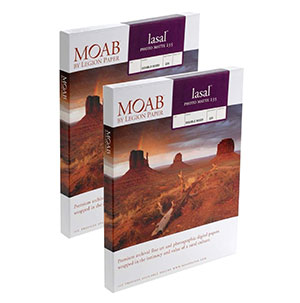
Archival Matte Paper, also known as Moab Lasal Photo Matte, is our house stock fine art paper and is an economical favorite for fine art reproductions and photo prints. It features a smooth surface, heavy weight (230 g, 9.5-mil), neutral white, matte paper engineered for accurate color reproduction that provides high contrast and high-resolution output. This paper is acid-free, making it the perfect choice for both photography & fine art reproductions.
Giclee William Turner Paper by Hahnemühle
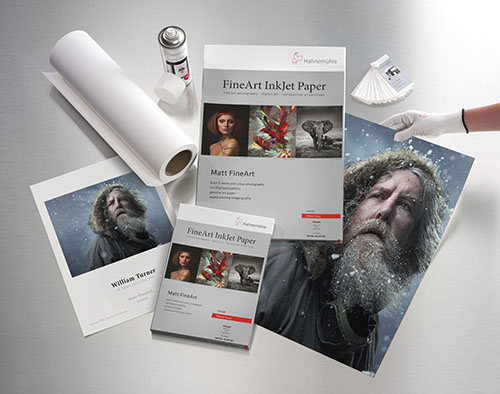
The William Turner by Hahnemühle is one of the most popular papers used in the Giclee printing industry. This is a 310g natural white mould made natural line paper with 100% rag content making it highly archival. It has a slight coarse texture which gives photos and artwork an elegant look. These fine art paper prints (also known as Giclee) are ordered by galleries, individual artists and photographers. The papers and inks are not only archival but use some of the most accurate print technology for full color prints.
- Giclee prints use very expensive archival pigmented inks.
- Highest level of color gamut available in printing (12 color printing).
- Exceptional black & white printing.
- Fade resistant, pigmented inks which provide a superior color range compared to other types of inks. Widely preferred in fine art and photography circles.
- We ONLY use professional grade fine art and photo paper that resist yellowing and aging.
Framing
We offer wood and metal frames, custom cut & joined to order. Each framed print includes hanging hardware and foamcore backer.
Matting
We use conservation grade 100% virgin alpha-cellulose 2 ply mats with white core. Acid-free and lignin-free, these are both face resistant and meet all conservation quality standards set by the Fine Art Trade Guild. Mats are digitally cut for ultimate precision. The window will be 1/8″ smaller than the print dimensions.
Glazing (Acrylic Glass)
We offer custom cut panes of shatter-proof, acrylic glass, to protect your valuable artwork and prints.
Premium Clear
Framing grade clear acrylic is shatter resistant and lightweight.
Reflection Control
With its matte finish, Tru Vue Reflection Control® Acrylic scatters light to diminish unwanted glare.
Conservation Clear
Tru Vue Conservation Clear® Acrylic is a framing industry staple, blocking up to 99% of UV rays for ultimate protection.
Conservation Reflection Control
Tru Vue Conservation Reflection Control® Acrylic scatters and diffuses light to reduce unwanted glare. Blocks up to 99% of UV rays.
Related products
-

PETER CUSHING & SUSAN DENBERG – FRANKENSTEIN CREATED WOMAN (1967) Operating Table Photo
$25.00 -
KLAUS KINSKI – NOSFERATU THE VAMPYRE (1979) Dracula in Coffin Horror Photo
$38.00 -
ELISABETH BROOKS – THE HOWLING (1981) Marsha Quist Werewolf Fangs Photo
$25.00 -
TERENCE YOUNG & URSULA ANDRESS – DR. NO (1962) Rare Director Briefing Behind-the-Scenes James Bond 007 Herman Leonard Photo
$38.00