

LEONARD WHITING – FRANKENSTEIN: THE TRUE STORY (1973) Monster Creation Laboratory Photo
Limited Edition Photograph (learn more)
In stock
A remarkable color image of Leonard Whiting as Victor Frankenstein captures the young scientist absorbed in the painstaking creation of his Creature—an exceptionally detailed glimpse into the forbidden experiment at the heart of FRANKENSTEIN: THE TRUE STORY.
Surrounded by bandaged flesh, articulated laboratory apparatus and the partially visible body of Michael Sarrazin’s Creature, Whiting works with intense concentration, transforming one of literature’s greatest acts of transgression into a fascinating portrait of scientific obsession made physically real.
The composition rewards close examination. The Creature lies horizontally across the foreground while dark mechanical arms and equipment intersect the frame above his body. Victor sits immediately behind him, examining his work with extraordinary calm and precision. Human anatomy and machinery visually merge across the image, blurring the boundary between medicine, experimentation and creation.
Inside Victor Frankenstein’s Forbidden Experiment
Directed by Jack Smight from a screenplay by Christopher Isherwood and Don Bachardy, FRANKENSTEIN: THE TRUE STORY (1973) stars Leonard Whiting as Victor Frankenstein alongside Michael Sarrazin as the Creature, James Mason as Dr. Polidori, David McCallum as Henry Clerval and Jane Seymour as Prima.
The production offered an elaborate reinterpretation of Mary Shelley’s FRANKENSTEIN; OR, THE MODERN PROMETHEUS, placing particular emphasis on the ambition, experimentation and consequences surrounding the artificial creation of human life.
This photograph takes the collector directly into that process.
Rather than showing the finished Creature, it preserves the disturbing intimacy of Victor actually working upon him.
That distinction gives the image unusual narrative value. The laboratory apparatus is not merely decorative Gothic scenery. It surrounds and crosses the Creature’s body, while Victor’s hands bring the human and mechanical elements together. The photograph allows the viewer to study details that can pass rapidly during the moving image: bandages, flesh, instruments, articulated equipment and the intense concentration of the man responsible for assembling life from death.
Whiting’s performance makes the scene particularly intriguing.
There is no theatrical frenzy in his expression. Victor appears thoughtful, controlled and completely absorbed in his task. The calmness makes the experiment more unsettling. What should be horrifying has become work—something requiring patience, precision and absolute commitment.
That interpretation also separates this Victor Frankenstein from the familiar popular image of the wild-eyed “mad scientist.” Here, obsession manifests itself through concentration.
The Creature’s presence adds another important dimension. Michael Sarrazin’s interpretation would develop very differently from the deliberately monstrous appearance associated with earlier screen versions of Frankenstein. His creation initially possesses an almost idealized physical beauty before deterioration begins to transform him, giving the production a distinctive variation on the familiar Frankenstein mythology.
Makeup artist Roy Ashton, celebrated for his extensive work in British horror and particularly his association with Hammer Film Productions, contributed the production’s makeup, adding another important connection for collectors of classic genre craftsmanship.
For a deeper Frankenstein collection, this photograph therefore occupies an especially satisfying position. It documents the process between death and life—the private, methodical labor that must occur before Victor can stand back and confront the extraordinary being he has created.
Placed beside imagery of the completed Creature, it becomes even more compelling. The collector is no longer accumulating disconnected Frankenstein photographs; the images begin documenting the stages of the creation itself.
Body parts become anatomy. Anatomy becomes experiment. Experiment becomes Creature. And Victor Frankenstein remains at the center of every step.
Preserved within the KissMeMonster photographic archive, this exceptional color image has been carefully restored to retain the warm period tones of the laboratory, the subtle detail of Leonard Whiting’s expression and costume, the textures of the Creature’s bandaged body, and the intricate mechanical apparatus surrounding the experiment—preserving the remarkable visual detail and intimate sense of creation that make this FRANKENSTEIN: THE TRUE STORY image so compelling.
Product Enquiry
Kodak Professional Endura Paper
Kodak Endura papers provide an incredible amount of detail and smooth transition of tones. Designed for the professional photographer in mind, looking for a more traditional photo print style, Kodak Endura provides an extended print life and color gamut almost at the level of a high end fine art paper print.
Archival Matte Paper
Archival Matte Paper, also known as Moab Lasal Photo Matte, is our house stock fine art paper and is an economical favorite for fine art reproductions and photo prints. It features a smooth surface, heavy weight (230 g, 9.5-mil), neutral white, matte paper engineered for accurate color reproduction that provides high contrast and high-resolution output. This paper is acid-free, making it the perfect choice for both photography & fine art reproductions.
Giclee William Turner Paper by Hahnemühle
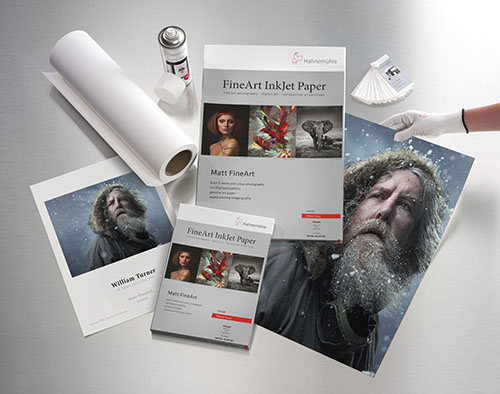
The William Turner by Hahnemühle is one of the most popular papers used in the Giclee printing industry. This is a 310g natural white mould made natural line paper with 100% rag content making it highly archival. It has a slight coarse texture which gives photos and artwork an elegant look. These fine art paper prints (also known as Giclee) are ordered by galleries, individual artists and photographers. The papers and inks are not only archival but use some of the most accurate print technology for full color prints.
- Giclee prints use very expensive archival pigmented inks.
- Highest level of color gamut available in printing (12 color printing).
- Exceptional black & white printing.
- Fade resistant, pigmented inks which provide a superior color range compared to other types of inks. Widely preferred in fine art and photography circles.
- We ONLY use professional grade fine art and photo paper that resist yellowing and aging.
Framing
We offer wood and metal frames, custom cut & joined to order. Each framed print includes hanging hardware and foamcore backer.
Matting
We use conservation grade 100% virgin alpha-cellulose 2 ply mats with white core. Acid-free and lignin-free, these are both face resistant and meet all conservation quality standards set by the Fine Art Trade Guild. Mats are digitally cut for ultimate precision. The window will be 1/8″ smaller than the print dimensions.
Glazing (Acrylic Glass)
We offer custom cut panes of shatter-proof, acrylic glass, to protect your valuable artwork and prints.
Premium Clear
Framing grade clear acrylic is shatter resistant and lightweight.
Reflection Control
With its matte finish, Tru Vue Reflection Control® Acrylic scatters light to diminish unwanted glare.
Conservation Clear
Tru Vue Conservation Clear® Acrylic is a framing industry staple, blocking up to 99% of UV rays for ultimate protection.
Conservation Reflection Control
Tru Vue Conservation Reflection Control® Acrylic scatters and diffuses light to reduce unwanted glare. Blocks up to 99% of UV rays.
Related products
-

CHRISTOPHER LEE – HORROR OF DRACULA (1958) Bloody Lips Fangs Iconic Hammer Photo
$30.00 -
CATHERINE DENEUVE – REPULSION (1965) Carol Ledoux Profile Portrait
$30.00 -
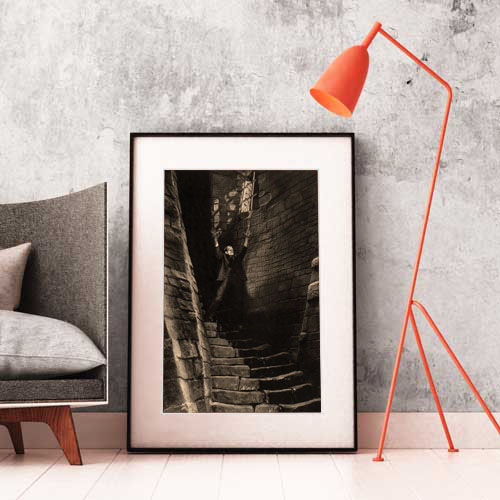
BORIS KARLOFF – FRANKENSTEIN (1931) Monster Dungeon Steps Rare Universal Horror Photo
$30.00 -
FAY WRAY – KING KONG (1933) Ann Darrow Hollywood Glamour Publicity Portrait
$38.00