

MADELINE SMITH – FRANKENSTEIN AND THE MONSTER FROM HELL (1974) Sarah Portrait
Limited Edition Photograph (learn more)
In stock
A captivating color portrait of Madeline Smith as Sarah captures one of Hammer Horror’s most recognizable actresses with extraordinary warmth, beauty and intimacy. Framed by cascading auburn hair, luminous eyes and the deep black of her period costume, Smith gazes almost directly toward the viewer in an exceptionally elegant image from FRANKENSTEIN AND THE MONSTER FROM HELL, the final chapter of Hammer’s celebrated Peter Cushing Frankenstein series.
The simplicity of the composition is precisely what makes it so effective. There is no laboratory apparatus, asylum architecture or Creature competing for attention. Soft illumination models Smith’s face against the restrained background while her long hair creates a rich natural frame around her features. The result is less a conventional horror image than an unusually beautiful character study from within Hammer’s dark Gothic world.
A Gentle Presence in Frankenstein’s Final Nightmare
Directed by Terence Fisher for Hammer Film Productions, FRANKENSTEIN AND THE MONSTER FROM HELL was filmed in 1972 and released in 1974, starring Peter Cushing as Baron Victor Frankenstein alongside Shane Briant, David Prowse and Madeline Smith as Sarah.
The film occupies an important position in Hammer history. It was Peter Cushing’s sixth and final performance as Hammer’s Baron Frankenstein and Terence Fisher’s final feature film as director.
Within the oppressive asylum setting, Smith’s Sarah provides a striking emotional and visual contrast.
The daughter of the asylum director, Sarah is unable to speak and assists within the institution. Her quiet vulnerability and sympathetic presence distinguish her sharply from the cruelty, confinement and obsessive experimentation surrounding Frankenstein’s work.
That contrast gives this portrait considerably more meaning than its immediate glamour suggests.
Smith represents softness within an environment defined by brutality.
The photographer intensifies that quality by eliminating almost every element associated with conventional Gothic horror. Instead of placing Sarah against stone walls, medical equipment or deep theatrical shadows, the portrait concentrates entirely upon Smith herself.
Her expression is particularly compelling. The wide, luminous eyes engage the viewer immediately, yet the slightly parted lips and subtle tilt of the head introduce a quality of uncertainty and vulnerability. She appears beautiful and composed, but not entirely at ease.
That ambiguity is what keeps the photograph from becoming merely a glamour portrait.
Smith had become a familiar presence in British genre cinema by this period, including appearances in Hammer productions such as THE VAMPIRE LOVERS (1970) and later FRANKENSTEIN AND THE MONSTER FROM HELL. Her combination of glamour, warmth and vulnerability made her particularly distinctive within the increasingly provocative landscape of British horror during the early 1970s.
For the Hammer collector, this photograph therefore fills a different role from images centered upon Peter Cushing, Frankenstein’s experiments or David Prowse’s Creature.
Those photographs document the horror. This portrait documents one of the human presences caught within it.
And visually, it offers something equally important to a growing collection: contrast.
Placed among laboratories, Monsters, blood and Gothic architecture, Smith’s softly illuminated portrait provides a moment of extraordinary elegance while remaining firmly connected to one of Hammer’s historically significant final Frankenstein productions.
That combination—Hammer history, character significance and unmistakable 1970s British glamour—is precisely what gives the photograph its enduring appeal.
The Monster may dominate the film’s title, but Madeline Smith’s luminous presence gives the collector another essential face from Frankenstein’s final Hammer nightmare.
Preserved within the KissMeMonster photographic archive, this exceptional color portrait has been carefully restored to retain the luminous quality of Madeline Smith’s eyes and complexion, the individual detail and warm auburn tones of her long hair, the rich blacks of her period costume and the delicate tonal transitions of the original photographic image—preserving the elegant Hammer glamour and quiet character of this distinctive FRANKENSTEIN AND THE MONSTER FROM HELL portrait.
Product Enquiry
Kodak Professional Endura Paper
Kodak Endura papers provide an incredible amount of detail and smooth transition of tones. Designed for the professional photographer in mind, looking for a more traditional photo print style, Kodak Endura provides an extended print life and color gamut almost at the level of a high end fine art paper print.
Archival Matte Paper
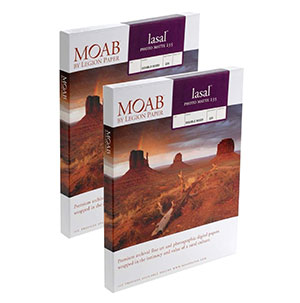
Archival Matte Paper, also known as Moab Lasal Photo Matte, is our house stock fine art paper and is an economical favorite for fine art reproductions and photo prints. It features a smooth surface, heavy weight (230 g, 9.5-mil), neutral white, matte paper engineered for accurate color reproduction that provides high contrast and high-resolution output. This paper is acid-free, making it the perfect choice for both photography & fine art reproductions.
Giclee William Turner Paper by Hahnemühle
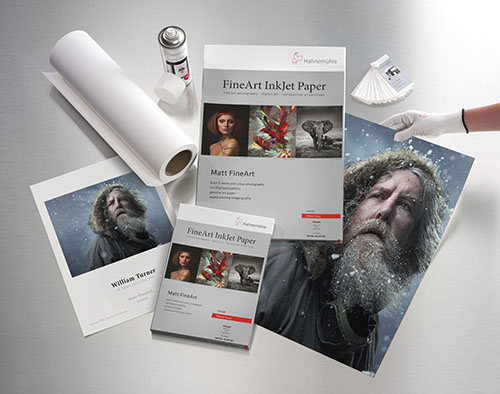
The William Turner by Hahnemühle is one of the most popular papers used in the Giclee printing industry. This is a 310g natural white mould made natural line paper with 100% rag content making it highly archival. It has a slight coarse texture which gives photos and artwork an elegant look. These fine art paper prints (also known as Giclee) are ordered by galleries, individual artists and photographers. The papers and inks are not only archival but use some of the most accurate print technology for full color prints.
- Giclee prints use very expensive archival pigmented inks.
- Highest level of color gamut available in printing (12 color printing).
- Exceptional black & white printing.
- Fade resistant, pigmented inks which provide a superior color range compared to other types of inks. Widely preferred in fine art and photography circles.
- We ONLY use professional grade fine art and photo paper that resist yellowing and aging.
Framing
We offer wood and metal frames, custom cut & joined to order. Each framed print includes hanging hardware and foamcore backer.
Matting
We use conservation grade 100% virgin alpha-cellulose 2 ply mats with white core. Acid-free and lignin-free, these are both face resistant and meet all conservation quality standards set by the Fine Art Trade Guild. Mats are digitally cut for ultimate precision. The window will be 1/8″ smaller than the print dimensions.
Glazing (Acrylic Glass)
We offer custom cut panes of shatter-proof, acrylic glass, to protect your valuable artwork and prints.
Premium Clear
Framing grade clear acrylic is shatter resistant and lightweight.
Reflection Control
With its matte finish, Tru Vue Reflection Control® Acrylic scatters light to diminish unwanted glare.
Conservation Clear
Tru Vue Conservation Clear® Acrylic is a framing industry staple, blocking up to 99% of UV rays for ultimate protection.
Conservation Reflection Control
Tru Vue Conservation Reflection Control® Acrylic scatters and diffuses light to reduce unwanted glare. Blocks up to 99% of UV rays.
Related products
-

TERENCE YOUNG & URSULA ANDRESS – DR. NO (1962) Rare Director Briefing Behind-the-Scenes James Bond 007 Herman Leonard Photo
$38.00 -
CLINT EASTWOOD DIRTY HARRY (1971) Kezar Stadium .44 Magnum Publicity Photo
$25.00 -
SEAN CONNERY & URSULA ANDRESS – DR. NO (1962) Rare Torn Shirt Finale Candid Jamaica Behind-the-Scenes James Bond 007 Photo
$30.00 -
KLAUS KINSKI – NOSFERATU THE VAMPYRE (1979) Dracula in Coffin Horror Photo
$38.00