

PETER CUSHING & SANDOR ELÈS – THE EVIL OF FRANKENSTEIN (1964) Laboratory Photo
Limited Edition Photograph (learn more)
In stock
A spectacular Hammer laboratory image captures Peter Cushing as Baron Frankenstein and Sandor Elès as Hans working over the restrained Monster in THE EVIL OF FRANKENSTEIN.
Beneath a formidable series of curved metal restraints, Kiwi Kingston’s creature lies secured to Frankenstein’s elaborate apparatus, creating an unusually detailed view of the machinery, Monster and men behind one of Hammer Horror’s great experiments in forbidden creation.
The composition offers an extraordinary amount for the eye to explore. Cushing stands at one side of the apparatus with the intense concentration so closely associated with his Baron Frankenstein, while Elès leans inward from the opposite side. Between them, the Monster’s body is almost engulfed by the massive rib-like metal bands stretching along the length of the table. The laboratory itself becomes part of the spectacle, its chains, stonework, instruments and shadowed machinery surrounding the central experiment.
Inside Baron Frankenstein’s Laboratory
Directed by Freddie Francis, THE EVIL OF FRANKENSTEIN (1964) marked Peter Cushing’s third appearance as Baron Frankenstein in Hammer’s celebrated series. Sandor Elès appears as his assistant Hans, while Kiwi Kingston portrays the Monster.
The film is particularly fascinating within Hammer history because its association with Universal allowed the filmmakers to embrace visual elements recalling the classic Universal Frankenstein tradition more directly than Hammer’s earlier entries. Kingston’s Monster—with its squared head and imposing physical presence—became one of the production’s most immediately recognizable visual departures.
That makes this photograph especially rewarding. Rather than isolating Cushing or Kingston for a conventional publicity portrait, it preserves the complete Frankenstein tableau: creator, assistant, creature, restraints and laboratory machinery gathered within a single richly detailed color composition.
There is also a wonderful human element in the frame. Elès appears almost amused as he leans toward the apparatus, while Cushing remains characteristically intent upon the work before him. That contrast gives the photograph a sense of immediacy that a carefully posed studio portrait could never quite reproduce.
For admirers of Hammer’s Frankenstein cycle, the attraction lies in precisely this concentration of detail. The photograph doesn't merely identify THE EVIL OF FRANKENSTEIN—it opens a window into the physical world of Baron Frankenstein’s laboratory, preserving the elaborate apparatus and practical production design surrounding Cushing, Elès and Kingston’s Monster.
Few images can represent the Frankenstein myth so completely without requiring explanation: the brilliant Baron, his assistant, the helpless creation and the machinery of unnatural life are all here.
Preserved within the KissMeMonster photographic archive, this remarkable color image has been carefully restored to retain the intricate laboratory detail, metallic textures, atmospheric shadows and natural character of the original source material—bringing renewed clarity to an exceptional piece of Hammer Frankenstein imagery for today’s collectors.
Product Enquiry
Kodak Professional Endura Paper
Kodak Endura papers provide an incredible amount of detail and smooth transition of tones. Designed for the professional photographer in mind, looking for a more traditional photo print style, Kodak Endura provides an extended print life and color gamut almost at the level of a high end fine art paper print.
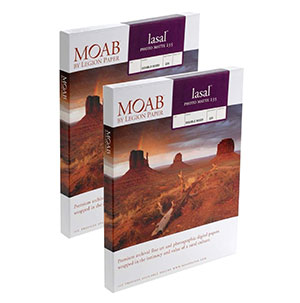
Archival Matte Paper
Archival Matte Paper, also known as Moab Lasal Photo Matte, is our house stock fine art paper and is an economical favorite for fine art reproductions and photo prints. It features a smooth surface, heavy weight (230 g, 9.5-mil), neutral white, matte paper engineered for accurate color reproduction that provides high contrast and high-resolution output. This paper is acid-free, making it the perfect choice for both photography & fine art reproductions.
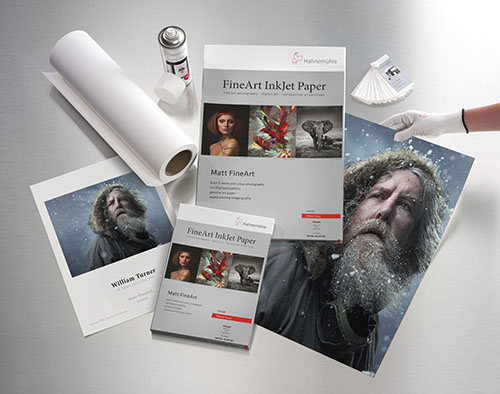
Giclee William Turner Paper by Hahnemühle
The William Turner by Hahnemühle is one of the most popular papers used in the Giclee printing industry. This is a 310g natural white mould made natural line paper with 100% rag content making it highly archival. It has a slight coarse texture which gives photos and artwork an elegant look. These fine art paper prints (also known as Giclee) are ordered by galleries, individual artists and photographers. The papers and inks are not only archival but use some of the most accurate print technology for full color prints.
- Giclee prints use very expensive archival pigmented inks.
- Highest level of color gamut available in printing (12 color printing).
- Exceptional black & white printing.
- Fade resistant, pigmented inks which provide a superior color range compared to other types of inks. Widely preferred in fine art and photography circles.
- We ONLY use professional grade fine art and photo paper that resist yellowing and aging.
Framing
We offer wood and metal frames, custom cut & joined to order. Each framed print includes hanging hardware and foamcore backer.
Matting
We use conservation grade 100% virgin alpha-cellulose 2 ply mats with white core. Acid-free and lignin-free, these are both face resistant and meet all conservation quality standards set by the Fine Art Trade Guild. Mats are digitally cut for ultimate precision. The window will be 1/8″ smaller than the print dimensions.
Glazing (Acrylic Glass)
We offer custom cut panes of shatter-proof, acrylic glass, to protect your valuable artwork and prints.
Premium Clear
Framing grade clear acrylic is shatter resistant and lightweight.
Reflection Control
With its matte finish, Tru Vue Reflection Control® Acrylic scatters light to diminish unwanted glare.
Conservation Clear
Tru Vue Conservation Clear® Acrylic is a framing industry staple, blocking up to 99% of UV rays for ultimate protection.
Conservation Reflection Control
Tru Vue Conservation Reflection Control® Acrylic scatters and diffuses light to reduce unwanted glare. Blocks up to 99% of UV rays.
Related products
-

PETER CUSHING – THE CURSE OF FRANKENSTEIN (1957) Black Gloves Portrait
$30.00 -
PETER CUSHING & VERONICA CARLSON – FRANKENSTEIN MUST BE DESTROYED (1969) Script Reading Behind-the-Scenes Hammer Horror Photo
$30.00 -
PETER CUSHING – THE EVIL OF FRANKENSTEIN (1964) Back Projection Cart Rare Hammer Horror Behind-the-Scenes Photo
$30.00 -
THE CURSE OF FRANKENSTEIN (1957) Original Belgian Poster Art Peter Cushing Christopher Lee Hammer Horror 15×22
$149.85