

PETER CUSHING – FRANKENSTEIN AND THE MONSTER FROM HELL (1974) Intense Close-Up Portrait
Limited Edition Photograph (learn more)
In stock
An extraordinary close-up of Peter Cushing as Baron Victor Frankenstein strips the character to his most compelling essentials—the penetrating eyes, severe features and formidable intelligence behind Hammer’s legendary scientist.
Wearing his distinctive black top hat as warm light cuts dramatically across his face, Cushing appears quiet and controlled rather than theatrical, creating an intensely personal portrait from his final screen appearance as Hammer’s Baron Frankenstein.
The proximity is remarkable. Every line of Cushing’s face becomes part of the characterization: the sharply defined cheekbones, slightly parted lips, wisps of hair emerging beneath the hat and, above all, those piercing eyes fixed intently beyond the frame. Nothing competes with the face—and nothing needs to.
Face to Face with Hammer’s Baron Frankenstein
Directed by Terence Fisher for Hammer Film Productions, FRANKENSTEIN AND THE MONSTER FROM HELL was filmed in 1972 and released in 1974, starring Peter Cushing alongside Shane Briant, Madeline Smith and David Prowse.
The film occupies an especially important place in Hammer history. It marked Cushing’s sixth and final portrayal of Baron Frankenstein for Hammer and became Terence Fisher’s final feature film as director.
Cushing had originated his interpretation of the Baron in THE CURSE OF FRANKENSTEIN (1957), helping establish the cycle of Gothic horror films that transformed Hammer into an internationally recognized name. Seventeen years later, this extraordinary close-up brings the viewer almost face-to-face with the older Frankenstein.
And that passage of time is visible.
Rather than diminishing the portrait, Cushing’s mature features give it additional power. The lines around his eyes and face suggest experience and severity, while the formal top hat preserves the Baron’s unmistakable Victorian identity.
This is no longer the ambitious young Frankenstein approaching forbidden science for the first time.
This is a man who has spent years living with obsession.
That distinction gives the photograph considerable collector significance.
Many memorable images from Hammer’s Frankenstein series naturally concentrate upon spectacle: laboratories, operating tables, surgical instruments, bodies and Creatures. Those photographs document what Frankenstein does.
This photograph preserves something more elusive:
the man capable of doing it.
Cushing’s expression is especially fascinating because it is so restrained. His mouth is slightly open as though captured in the midst of speaking, yet there is no exaggerated gesture or conventional display of madness. The intensity comes principally through his eyes.
That restraint was fundamental to Cushing’s interpretation of the Baron. His Frankenstein could commit extraordinary acts while retaining the intelligence, precision and outward bearing of a cultivated gentleman. The contradiction between civilized appearance and ruthless purpose made him considerably more unsettling than a conventional wild-eyed mad scientist.
The color photography heightens the portrait beautifully. Warm illumination models Cushing’s face against the deep blacks of his top hat and clothing, while his remarkably expressive eyes remain the natural focal point of the entire composition.
For collectors following Cushing’s Frankenstein across Hammer’s celebrated series, a close-up of this intensity contributes something laboratory imagery simply cannot provide. It moves beyond documenting the experiments and allows the viewer to study the character himself at extraordinarily close range.
And because FRANKENSTEIN AND THE MONSTER FROM HELL represents Cushing’s final appearance as Hammer’s Baron, the mature face carries an additional historical resonance. The photograph becomes not merely a portrait of Frankenstein, but an evocative image from the closing chapter of one of British horror cinema’s defining actor-character relationships.
The experiments changed. The bodies changed. The laboratories changed. Frankenstein endured.
In this remarkably intimate portrait, Hammer’s Baron needs no Monster beside him. Peter Cushing’s face has become the icon.
Preserved within the KissMeMonster photographic archive, this exceptional color image has been carefully restored to retain the warm tonal transitions across Peter Cushing’s face, the remarkable clarity of his eyes and expression, the subtle textures of his top hat and period costume, and the deep surrounding shadows—preserving the quiet intensity of this distinctive portrait from Cushing’s final Hammer performance as Baron Frankenstein.
Product Enquiry
Kodak Professional Endura Paper
Kodak Endura papers provide an incredible amount of detail and smooth transition of tones. Designed for the professional photographer in mind, looking for a more traditional photo print style, Kodak Endura provides an extended print life and color gamut almost at the level of a high end fine art paper print.
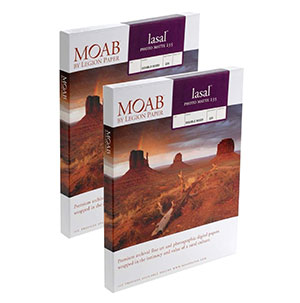
Archival Matte Paper
Archival Matte Paper, also known as Moab Lasal Photo Matte, is our house stock fine art paper and is an economical favorite for fine art reproductions and photo prints. It features a smooth surface, heavy weight (230 g, 9.5-mil), neutral white, matte paper engineered for accurate color reproduction that provides high contrast and high-resolution output. This paper is acid-free, making it the perfect choice for both photography & fine art reproductions.
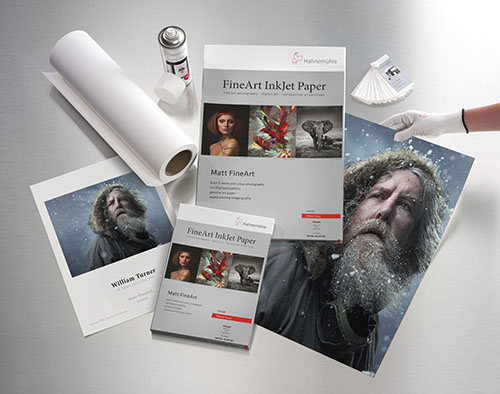
Giclee William Turner Paper by Hahnemühle
The William Turner by Hahnemühle is one of the most popular papers used in the Giclee printing industry. This is a 310g natural white mould made natural line paper with 100% rag content making it highly archival. It has a slight coarse texture which gives photos and artwork an elegant look. These fine art paper prints (also known as Giclee) are ordered by galleries, individual artists and photographers. The papers and inks are not only archival but use some of the most accurate print technology for full color prints.
- Giclee prints use very expensive archival pigmented inks.
- Highest level of color gamut available in printing (12 color printing).
- Exceptional black & white printing.
- Fade resistant, pigmented inks which provide a superior color range compared to other types of inks. Widely preferred in fine art and photography circles.
- We ONLY use professional grade fine art and photo paper that resist yellowing and aging.
Framing
We offer wood and metal frames, custom cut & joined to order. Each framed print includes hanging hardware and foamcore backer.
Matting
We use conservation grade 100% virgin alpha-cellulose 2 ply mats with white core. Acid-free and lignin-free, these are both face resistant and meet all conservation quality standards set by the Fine Art Trade Guild. Mats are digitally cut for ultimate precision. The window will be 1/8″ smaller than the print dimensions.
Glazing (Acrylic Glass)
We offer custom cut panes of shatter-proof, acrylic glass, to protect your valuable artwork and prints.
Premium Clear
Framing grade clear acrylic is shatter resistant and lightweight.
Reflection Control
With its matte finish, Tru Vue Reflection Control® Acrylic scatters light to diminish unwanted glare.
Conservation Clear
Tru Vue Conservation Clear® Acrylic is a framing industry staple, blocking up to 99% of UV rays for ultimate protection.
Conservation Reflection Control
Tru Vue Conservation Reflection Control® Acrylic scatters and diffuses light to reduce unwanted glare. Blocks up to 99% of UV rays.
Related products
-

JIMMY SANGSTER, RALPH BATES & MICHAEL JOHNSON – LUST FOR A VAMPIRE (1971) Rare Behind-the-Scenes Hammer Horror Photo
$30.00 -
YUTTE STENSGAARD & MICHAEL JOHNSON LUST FOR A VAMPIRE (1971) Rare Kissing Production Photo Hammer Horror
$38.00 -
JIMMY SANGSTER, RALPH BATES & MICHAEL JOHNSON – LUST FOR A VAMPIRE (1971) Cast at Play Rare Behind-the-Scenes Hammer Photo
$38.00 -
PETER CUSHING & SUSAN DENBERG – FRANKENSTEIN CREATED WOMAN (1967) Chained in Laboratory Hammer Horror Photo
$25.00