

PETER CUSHING & SIMON WARD – FRANKENSTEIN MUST BE DESTROYED (1969) Brain Surgery
Limited Edition Photograph (learn more)
In stock
An extraordinary color image from FRANKENSTEIN MUST BE DESTROYED captures Peter Cushing’s Baron Frankenstein performing one of the film’s most disturbing procedures—drilling into the skull of Professor Richter as Simon Ward’s Karl Holst holds the immobilized patient firmly in place.
With Frankenstein concentrating intently on the surgical drill while the heavily bandaged head dominates the center of the composition, this is a defining image of the Baron’s cold scientific obsession pushed beyond every moral boundary.
The visual tension is exceptional. Cushing stands above the patient in his blood-marked apron, instrument poised over the exposed top of the head, while Ward leans inward and braces Richter from the opposite side. Their converging bodies direct the eye toward a single horrifying point: the precise place where Frankenstein is about to violate the human skull.
Yet Cushing remains remarkably composed.
Peter Cushing’s Frankenstein Without Restraint
Directed by Terence Fisher for Hammer Film Productions, FRANKENSTEIN MUST BE DESTROYED (1969) stars Peter Cushing as Baron Victor Frankenstein alongside Veronica Carlson, Simon Ward and Freddie Jones.
By this stage in Hammer’s Frankenstein cycle, Cushing’s Baron had evolved far beyond the merely ambitious young scientist seeking the secret of life. His intellect remains formidable, but increasingly little is permitted to stand between Frankenstein and the completion of his experiments.
This photograph crystallizes that transformation.
There is nothing supernatural about what we are seeing. No lightning strikes. No gigantic laboratory machinery dominates the room. No Creature rises dramatically from a table.
Instead, the horror comes from clinical procedure.
Frankenstein approaches the human body with the concentration of a surgeon, reducing an act that should provoke revulsion to a technical problem requiring steady hands and the correct instrument. The calmer he appears, the more disturbing the image becomes.
That is precisely why Cushing’s performance is so effective here.
His Baron does not need wild eyes or exaggerated gestures to communicate obsession. Intelligence, precision and complete certainty are enough. The photograph captures Frankenstein not as a stereotypical mad scientist, but as a brilliant man whose scientific purpose has overwhelmed his moral limits.
Simon Ward’s presence adds another important layer. As Karl Holst, he is physically drawn into Frankenstein’s work, shown here helping restrain the helpless Professor Richter while the Baron carries out the procedure. Freddie Jones, almost completely immobilized beneath white bandages and restraints, becomes the vulnerable center around which both men operate.
The resulting composition creates an extraordinary triangle: Frankenstein controls the procedure, Karl controls the patient, and Richter has control over nothing.
For collectors of Hammer’s Frankenstein cycle, imagery of the Baron actually performing his experiments has particular narrative power. Portraits preserve Cushing’s characterization. Laboratory photographs establish atmosphere. Creature images document the results.
This photograph preserves the act itself.
It places the collector inside Frankenstein’s working world at precisely the moment when scientific brilliance becomes physical transgression.
And that makes the image an especially revealing document of Cushing’s later interpretation of the character. The elegant Victorian gentleman and brilliant scientist remain completely recognizable—but beneath the immaculate precision lies something far colder.
Frankenstein is no longer asking whether the experiment should be performed. He is concerned only with whether it can succeed.
For a serious Peter Cushing or Hammer Frankenstein collection, this is the kind of image that defines character through action: the Baron’s intelligence, surgical precision, ruthlessness and obsession concentrated into one unforgettable procedure.
Preserved within the KissMeMonster photographic archive, this exceptional color image has been carefully restored to retain the warm laboratory tones, subtle detail of Peter Cushing and Simon Ward’s expressions and costumes, the clinical whites surrounding Freddie Jones, and the disturbing surgical detail at the center of the composition—preserving the extraordinary visual tension of one of FRANKENSTEIN MUST BE DESTROYED’s defining images.
Product Enquiry
Kodak Professional Endura Paper
Kodak Endura papers provide an incredible amount of detail and smooth transition of tones. Designed for the professional photographer in mind, looking for a more traditional photo print style, Kodak Endura provides an extended print life and color gamut almost at the level of a high end fine art paper print.
Archival Matte Paper
Archival Matte Paper, also known as Moab Lasal Photo Matte, is our house stock fine art paper and is an economical favorite for fine art reproductions and photo prints. It features a smooth surface, heavy weight (230 g, 9.5-mil), neutral white, matte paper engineered for accurate color reproduction that provides high contrast and high-resolution output. This paper is acid-free, making it the perfect choice for both photography & fine art reproductions.
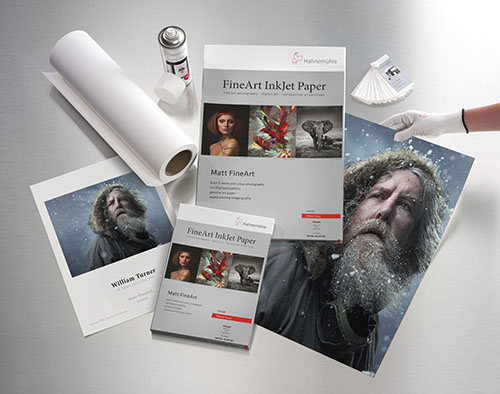
Giclee William Turner Paper by Hahnemühle
The William Turner by Hahnemühle is one of the most popular papers used in the Giclee printing industry. This is a 310g natural white mould made natural line paper with 100% rag content making it highly archival. It has a slight coarse texture which gives photos and artwork an elegant look. These fine art paper prints (also known as Giclee) are ordered by galleries, individual artists and photographers. The papers and inks are not only archival but use some of the most accurate print technology for full color prints.
- Giclee prints use very expensive archival pigmented inks.
- Highest level of color gamut available in printing (12 color printing).
- Exceptional black & white printing.
- Fade resistant, pigmented inks which provide a superior color range compared to other types of inks. Widely preferred in fine art and photography circles.
- We ONLY use professional grade fine art and photo paper that resist yellowing and aging.

Framing
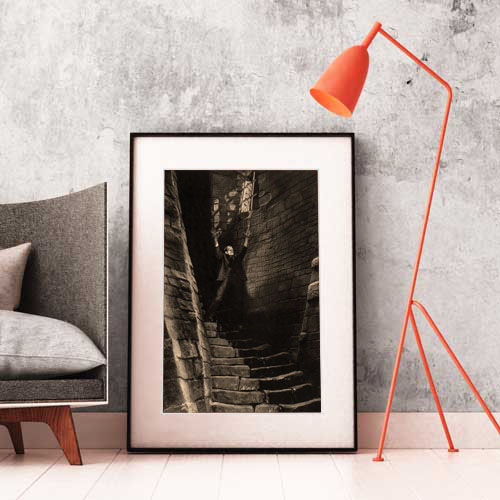
We offer wood and metal frames, custom cut & joined to order. Each framed print includes hanging hardware and foamcore backer.
Matting
We use conservation grade 100% virgin alpha-cellulose 2 ply mats with white core. Acid-free and lignin-free, these are both face resistant and meet all conservation quality standards set by the Fine Art Trade Guild. Mats are digitally cut for ultimate precision. The window will be 1/8″ smaller than the print dimensions.
Glazing (Acrylic Glass)
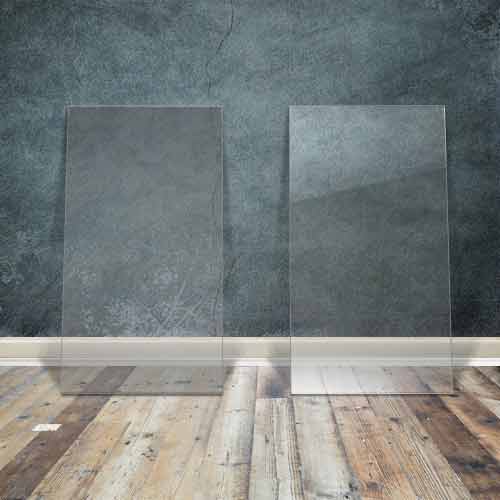
We offer custom cut panes of shatter-proof, acrylic glass, to protect your valuable artwork and prints.
Premium Clear
Framing grade clear acrylic is shatter resistant and lightweight.
Reflection Control
With its matte finish, Tru Vue Reflection Control® Acrylic scatters light to diminish unwanted glare.
Conservation Clear
Tru Vue Conservation Clear® Acrylic is a framing industry staple, blocking up to 99% of UV rays for ultimate protection.
Conservation Reflection Control
Tru Vue Conservation Reflection Control® Acrylic scatters and diffuses light to reduce unwanted glare. Blocks up to 99% of UV rays.
Related products
-

PETER CUSHING, SUSAN DENBERG & TERENCE FISHER – FRANKENSTEIN CREATED WOMAN (1967) Guillotine Set Rare Behind-the-Scenes Hammer Horror Photo
$30.00 -
CLINT EASTWOOD & DON SIEGEL – DIRTY HARRY (1971) Rare Rooftop Production Photo
$38.00 -
MARTINE BESWICK – THUNDERBALL (1965) Rare Zebra Swimsuit Boat Bahamas James Bond 007 Publicity Photo
$30.00 -
SEAN CONNERY – THUNDERBALL (1965) Rare After-Filming Beach Candid Nassau James Bond 007 BTS Photo
$30.00