

PETER CUSHING & SUSAN DENBERG – FRANKENSTEIN CREATED WOMAN (1967) Operating Table Photo
Limited Edition Photograph (learn more)
In stock
An extraordinary color image from FRANKENSTEIN CREATED WOMAN captures Peter Cushing’s Baron Frankenstein standing over Susan Denberg’s Christina as she lies restrained and partially bandaged upon the laboratory table.
Photographed from a dramatically elevated viewpoint that exposes the entire procedure beneath us, the composition brings Frankenstein, Christina, the vivid red operating table and surrounding laboratory apparatus together in one remarkably revealing image of Hammer’s most unusual experiment in creation.
Denberg forms the luminous center of the composition. Her pale figure and white bandaging contrast dramatically against the rich red surface beneath her, while the dark restraints across her wrists and body emphasize her complete physical vulnerability. Above her, Cushing methodically handles the long strip of bandage, his upright figure visually controlling the entire scene.
The unusual viewpoint makes us feel less like spectators to a publicity portrait and more like witnesses looking directly down into Frankenstein’s private laboratory.
A Different View Inside Frankenstein’s Experiment
Directed by Terence Fisher for Hammer Film Productions, FRANKENSTEIN CREATED WOMAN (1967) stars Peter Cushing as Baron Victor Frankenstein and Susan Denberg as Christina, alongside Thorley Walters, Robert Morris and Barry Warren.
The fourth entry in Hammer’s Frankenstein series with Cushing as the Baron moves beyond the purely physical questions of creating life and into the more metaphysical territory of whether the human soul can be captured, preserved and transferred into another body.
That makes Christina fundamentally different from a conventional Frankenstein Creature—and makes imagery documenting Frankenstein working directly upon her especially representative of this particular chapter in Hammer’s series.
This photograph is particularly compelling because of what the camera allows us to see.
Rather than isolating Cushing or Denberg for a conventional character portrait, the elevated angle reveals the relationship between scientist, subject and apparatus. Christina stretches almost the full length of the operating table while Frankenstein stands over her, physically manipulating the bandaging surrounding her body.
The laboratory equipment enclosing the table adds another layer of visual interest. Large circular forms flank Christina on either side, creating an almost mechanical enclosure around the human figure at the center. Flesh, fabric, restraints and machinery become components within Frankenstein’s carefully controlled environment.
And yet the strongest visual contrast remains human.
Cushing’s Frankenstein is active, upright and methodical.
Denberg’s Christina is recumbent, unconscious and completely dependent upon what happens around her.
One possesses absolute control; the other has surrendered all of it.
That relationship gives the photograph tension even before the viewer considers the larger implications of Frankenstein’s experiment.
The rich color photography contributes enormously to its impact. The saturated red of the operating table immediately draws the eye toward Christina, while her pale skin and white bandaging separate sharply from both the surface beneath her and Cushing’s dark waistcoat above. The result is an image with unusually strong visual hierarchy—our eye finds Christina first, then Frankenstein, and finally begins exploring the strange equipment surrounding them.
For the serious Hammer collector, this photograph becomes still more interesting when considered alongside other images from the same laboratory sequence.
A closer viewpoint can preserve Cushing’s expression and the intimacy of Frankenstein working upon Christina. This elevated composition reveals something different: the complete physical arrangement of the experiment itself.
Neither image makes the other redundant.
Together, they allow a collection to document the same pivotal procedure from distinctly different photographic perspectives—one emphasizing character and proximity, the other emphasizing composition, apparatus and Christina’s position within Frankenstein’s controlled environment.
That is precisely where deeper film collecting becomes fascinating. The collector is no longer accumulating repeated pictures of the same stars; different photographs begin revealing different information about the same production.
Peter Cushing and Susan Denberg remain the recognizable icons, but the unusual elevated perspective is what makes this particular image worth remembering.
Preserved within the KissMeMonster photographic archive, this exceptional color image has been carefully restored to retain the warm laboratory tones, vivid red of the operating table, delicate detail of Susan Denberg’s figure and white bandaging, Peter Cushing’s dark period costume, and the surrounding mechanical apparatus—preserving the striking elevated composition and rich visual character that distinguish this FRANKENSTEIN CREATED WOMAN image.
Product Enquiry
Kodak Professional Endura Paper
Kodak Endura papers provide an incredible amount of detail and smooth transition of tones. Designed for the professional photographer in mind, looking for a more traditional photo print style, Kodak Endura provides an extended print life and color gamut almost at the level of a high end fine art paper print.
Archival Matte Paper
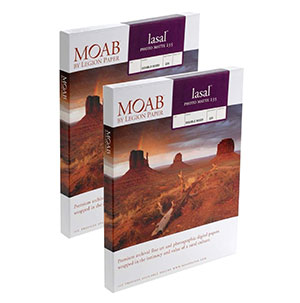
Archival Matte Paper, also known as Moab Lasal Photo Matte, is our house stock fine art paper and is an economical favorite for fine art reproductions and photo prints. It features a smooth surface, heavy weight (230 g, 9.5-mil), neutral white, matte paper engineered for accurate color reproduction that provides high contrast and high-resolution output. This paper is acid-free, making it the perfect choice for both photography & fine art reproductions.
Giclee William Turner Paper by Hahnemühle
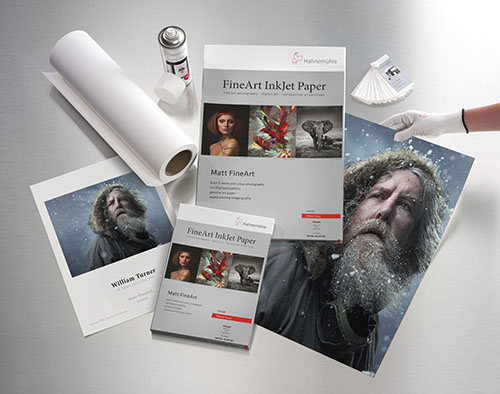
The William Turner by Hahnemühle is one of the most popular papers used in the Giclee printing industry. This is a 310g natural white mould made natural line paper with 100% rag content making it highly archival. It has a slight coarse texture which gives photos and artwork an elegant look. These fine art paper prints (also known as Giclee) are ordered by galleries, individual artists and photographers. The papers and inks are not only archival but use some of the most accurate print technology for full color prints.
- Giclee prints use very expensive archival pigmented inks.
- Highest level of color gamut available in printing (12 color printing).
- Exceptional black & white printing.
- Fade resistant, pigmented inks which provide a superior color range compared to other types of inks. Widely preferred in fine art and photography circles.
- We ONLY use professional grade fine art and photo paper that resist yellowing and aging.
Framing
We offer wood and metal frames, custom cut & joined to order. Each framed print includes hanging hardware and foamcore backer.
Matting
We use conservation grade 100% virgin alpha-cellulose 2 ply mats with white core. Acid-free and lignin-free, these are both face resistant and meet all conservation quality standards set by the Fine Art Trade Guild. Mats are digitally cut for ultimate precision. The window will be 1/8″ smaller than the print dimensions.
Glazing (Acrylic Glass)
We offer custom cut panes of shatter-proof, acrylic glass, to protect your valuable artwork and prints.
Premium Clear
Framing grade clear acrylic is shatter resistant and lightweight.
Reflection Control
With its matte finish, Tru Vue Reflection Control® Acrylic scatters light to diminish unwanted glare.
Conservation Clear
Tru Vue Conservation Clear® Acrylic is a framing industry staple, blocking up to 99% of UV rays for ultimate protection.
Conservation Reflection Control
Tru Vue Conservation Reflection Control® Acrylic scatters and diffuses light to reduce unwanted glare. Blocks up to 99% of UV rays.
Related products
-

JIMMY SANGSTER, RALPH BATES & MICHAEL JOHNSON – LUST FOR A VAMPIRE (1971) Rare Behind-the-Scenes Hammer Horror Photo
$30.00 -
PETER CUSHING – TORTURE GARDEN (1967) The Man Who Collected Poe Amicus Horror Portrait Photo
$30.00 -
PETER CUSHING & SUSAN DENBERG – FRANKENSTEIN CREATED WOMAN (1967) Chained in Laboratory Hammer Horror Photo
$25.00 -
YUTTE STENSGAARD LUST FOR A VAMPIRE (1971) Nightgown Woods Hammer Horror Photo
$25.00