

ROMAN POLANSKI & SVEN NYKVIST – THE TENANT (1976) Rare Behind-the-Scenes Photo
Limited Edition Photograph (learn more)
In stock
An extraordinary behind-the-scenes photograph from THE TENANT brings director-star Roman Polanski and celebrated cinematographer Sven Nykvist into the same remarkable production environment, surrounded by the very equipment being used to construct the film’s unsettling visual world.
Seated below an enormous motion-picture camera, Polanski looks upward while holding a book in his hands as the camera apparatus towers directly above him and a boom microphone hangs conspicuously overhead—a rare, visually dense production image that allows the serious cinema collector to look beyond the finished film and directly into its creation.
The composition is exceptional precisely because it is so crowded with filmmaking information.
The massive camera dominates the upper portion of the photograph, its lens assembly, magazine and mechanical components descending toward Polanski below. Crew members occupy virtually every available space around the equipment, while the suspended microphone completes an extraordinary visual record of a working film set.
Actor, director, cinematographer, camera, microphone and crew all converge within a single frame.
Inside the Making of THE TENANT
Directed by Roman Polanski and photographed by Sven Nykvist, THE TENANT (1976) stars Polanski as Trelkovsky alongside Isabelle Adjani, Melvyn Douglas and Shelley Winters.
Adapted from Roland Topor’s novel LE LOCATAIRE CHIMÉRIQUE, the psychological thriller follows Trelkovsky as his existence within a Paris apartment building becomes increasingly disturbing and his perception of identity and reality begins to fracture.
The film is commonly regarded as the concluding work in Polanski’s informal Apartment Trilogy, following REPULSION (1965) and ROSEMARY’S BABY (1968).
That cinematic context makes the presence of the filmmaking apparatus in this photograph particularly fascinating.
THE TENANT depends profoundly upon what the camera allows the audience to see—and how it makes them feel while seeing it.
Its enclosed interiors, unsettling perspectives and increasingly unstable relationship between character and environment help pull the viewer into Trelkovsky’s deteriorating psychological world.
Here, the illusion is temporarily dismantled.
Instead of seeing Trelkovsky through the finished cinematography, we see Polanski beneath the camera creating Trelkovsky.
The enormous scale of the equipment makes that reversal visually dramatic.
Polanski appears almost surrounded by the machinery of production. He sits below the camera, looking upward while holding his book, as crew members work within inches of him. Above his head, the boom microphone enters the composition with none of the invisibility required in the finished movie.
Nothing is hidden.
And that is exactly what makes the photograph so rewarding.
For serious collectors of filmmaking history, the image provides something a conventional theatrical still simply cannot offer:
the architecture behind the illusion.
The camera that disappears from the finished film becomes one of the largest objects in the photograph.
The microphone audiences are never meant to notice hangs openly above the star.
The crew normally existing outside the frame now surrounds him.
And at the center sits Roman Polanski—simultaneously the film’s director and its leading actor.
That dual role adds another fascinating dimension.
Polanski was responsible for shaping the world behind the camera while also inhabiting the increasingly unstable Trelkovsky in front of it. A production photograph capable of showing both sides of that relationship carries unusual historical interest because the director himself becomes part of the scene being constructed around him.
Then there is Sven Nykvist.
One of the most celebrated cinematographers in international cinema, Nykvist is especially associated with his extraordinary collaborations with Ingmar Bergman. His involvement in THE TENANT brought an important photographic sensibility to Polanski’s disturbing psychological world.
A production image connecting Polanski, Nykvist and the physical camera equipment therefore documents far more than a pause between scenes—it preserves a meeting of significant cinematic talents at work.
For collectors, that is the deeper WHY.
A conventional THE TENANT photograph can preserve Trelkovsky the character.
A finished scene can preserve Polanski’s psychological world.
A portrait can preserve the star.
But this photograph preserves:
the filmmaking process responsible for creating all three.
And visually, the image could hardly communicate that idea more effectively.
The giant camera bears down from above.
Polanski looks upward beneath it.
The boom microphone hovers overhead.
Technicians crowd around the apparatus.
The normally invisible machinery of cinema has suddenly become the subject.
That makes the photograph especially compelling within a serious Roman Polanski, Sven Nykvist or European cinema collection. Rather than merely documenting what appeared on screen, it records the people and equipment responsible for transforming performance into the finished photographic image.
The longer one studies it, the more there is to discover.
This is not simply a photograph from THE TENANT. It is a photograph of THE TENANT being made.
Preserved within the KissMeMonster photographic archive, this rare black-and-white production image has been carefully restored to retain the intricate mechanical detail of the motion-picture camera, the suspended boom microphone, Roman Polanski’s expression and costume, and the surrounding production crew and equipment—preserving an unusually intimate visual record of the craftsmanship behind THE TENANT.
Product Enquiry
Kodak Professional Endura Paper
Kodak Endura papers provide an incredible amount of detail and smooth transition of tones. Designed for the professional photographer in mind, looking for a more traditional photo print style, Kodak Endura provides an extended print life and color gamut almost at the level of a high end fine art paper print.
Archival Matte Paper
Archival Matte Paper, also known as Moab Lasal Photo Matte, is our house stock fine art paper and is an economical favorite for fine art reproductions and photo prints. It features a smooth surface, heavy weight (230 g, 9.5-mil), neutral white, matte paper engineered for accurate color reproduction that provides high contrast and high-resolution output. This paper is acid-free, making it the perfect choice for both photography & fine art reproductions.
Giclee William Turner Paper by Hahnemühle
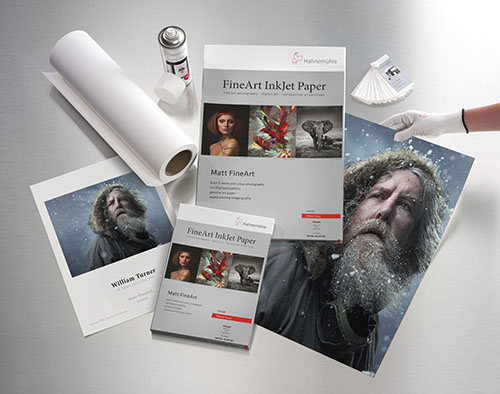
The William Turner by Hahnemühle is one of the most popular papers used in the Giclee printing industry. This is a 310g natural white mould made natural line paper with 100% rag content making it highly archival. It has a slight coarse texture which gives photos and artwork an elegant look. These fine art paper prints (also known as Giclee) are ordered by galleries, individual artists and photographers. The papers and inks are not only archival but use some of the most accurate print technology for full color prints.
- Giclee prints use very expensive archival pigmented inks.
- Highest level of color gamut available in printing (12 color printing).
- Exceptional black & white printing.
- Fade resistant, pigmented inks which provide a superior color range compared to other types of inks. Widely preferred in fine art and photography circles.
- We ONLY use professional grade fine art and photo paper that resist yellowing and aging.
Framing
We offer wood and metal frames, custom cut & joined to order. Each framed print includes hanging hardware and foamcore backer.
Matting
We use conservation grade 100% virgin alpha-cellulose 2 ply mats with white core. Acid-free and lignin-free, these are both face resistant and meet all conservation quality standards set by the Fine Art Trade Guild. Mats are digitally cut for ultimate precision. The window will be 1/8″ smaller than the print dimensions.
Glazing (Acrylic Glass)
We offer custom cut panes of shatter-proof, acrylic glass, to protect your valuable artwork and prints.
Premium Clear
Framing grade clear acrylic is shatter resistant and lightweight.
Reflection Control
With its matte finish, Tru Vue Reflection Control® Acrylic scatters light to diminish unwanted glare.
Conservation Clear
Tru Vue Conservation Clear® Acrylic is a framing industry staple, blocking up to 99% of UV rays for ultimate protection.
Conservation Reflection Control
Tru Vue Conservation Reflection Control® Acrylic scatters and diffuses light to reduce unwanted glare. Blocks up to 99% of UV rays.
Related products
-

BORIS KARLOFF – FRANKENSTEIN (1931) Monster Reaches for Light Rare Universal Horror Photo
$38.00 -
DIETER EPPLER & GRAZIELLA GRANATA – SLAUGHTER OF THE VAMPIRES (1962) Neck Bite in Bed Rare Italian Gothic Horror Photo
$30.00 -
INGRID PITT – THE VAMPIRE LOVERS (1970) Bloody Fangs Hammer Horror Photo
$25.00 -
SEAN CONNERY & URSULA ANDRESS – DR. NO (1962) Crab Key Filming Rare Behind-the-Scenes James Bond 007 Photo
$30.00