
SEAN CONNERY – DR. NO (1962) M’s Office Walther PPK Major Boothroyd Rare James Bond 007 Photo
Limited Edition Photograph (learn more)
In stock
An important image for the serious James Bond collector—and one whose significance could easily escape the casual viewer. This intense close-up of Sean Connery in DR. NO (1962) is documented to the famous sequence inside M’s office involving Major Boothroyd and Bond’s change of service weapon.
This is not another Le Cercle casino portrait simply because Connery is wearing his dinner jacket. It belongs to the sequence that established 007’s legendary association with the Walther PPK.
That distinction makes the photograph particularly fascinating.
Connery appears impeccably dressed in his formal dinner jacket and bow tie, but his expression is markedly different from the relaxed sophistication of the casino sequence. His tightly focused gaze and serious demeanor perfectly complement the business taking place inside M’s office.
Bond has been summoned by M, portrayed by Bernard Lee, where Major Boothroyd—played by Peter Burton—addresses 007’s choice of firearm. Bond is ordered to surrender the Beretta he has been carrying and is directed toward the Walther PPK as his new sidearm.
Bond is not particularly pleased about it.
The exchange provides an early glimpse of the independent streak that would become fundamental to Connery’s interpretation of 007. Bond reluctantly complies with M’s order, establishing both the authority of his superior and the agent’s attachment to his own methods.
For Bond history, however, the sequence became enormously important. The Walther PPK would develop into one of the objects most closely identified with James Bond, appearing throughout the film series and becoming part of the character’s visual identity alongside the tuxedo, Aston Martin and vodka martini.
Major Boothroyd himself has an additional place in Bond history. The character was named after firearms expert Geoffrey Boothroyd, who corresponded with Ian Fleming about Bond’s weapons and famously criticized the Beretta carried by Fleming’s fictional agent. The cinematic exchange therefore has roots extending directly into the development of Bond mythology.
The photograph also demonstrates why accurate scene identification matters to serious collectors. Removed from its production context, this could easily be catalogued simply as a handsome Connery tuxedo portrait—or incorrectly associated with Bond’s celebrated introduction at Le Cercle.
But the informed collector sees something else.
He sees M’s office, Major Boothroyd and the beginning of the Walther PPK association—an important piece of 007 history hiding inside what initially appears to be a simple portrait.
DR. NO is a 1962 spy adventure directed by Terence Young and starring Sean Connery as James Bond, Ursula Andress as Honey Ryder, Joseph Wiseman as Dr. Julius No, Bernard Lee as M and Peter Burton as Major Boothroyd. Produced by Harry Saltzman and Albert R. Broccoli, it launched the James Bond motion-picture series.
The film established an extraordinary number of elements that would become fundamental to cinematic Bond, and the Boothroyd sequence is among them. Alongside Connery’s introduction, the James Bond Theme and the exotic international setting, the selection of Bond’s firearm helped construct the screen identity of Agent 007.
For the collector building a historically detailed DR. NO archive, this photograph represents exactly the kind of image that separates a carefully curated collection from a collection of familiar publicity portraits. Its significance lies not merely in Sean Connery’s appearance, but in knowing precisely where this image belongs within the birth of cinematic James Bond.
Carefully restored and professionally printed from archival source material, this museum-quality photograph is a distinctive collectible for admirers of Sean Connery, DR. NO, Major Boothroyd, Bernard Lee, the Walther PPK and James Bond 007.
Product Enquiry
Kodak Professional Endura Paper
Kodak Endura papers provide an incredible amount of detail and smooth transition of tones. Designed for the professional photographer in mind, looking for a more traditional photo print style, Kodak Endura provides an extended print life and color gamut almost at the level of a high end fine art paper print.
Archival Matte Paper
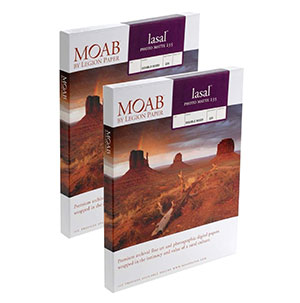
Archival Matte Paper, also known as Moab Lasal Photo Matte, is our house stock fine art paper and is an economical favorite for fine art reproductions and photo prints. It features a smooth surface, heavy weight (230 g, 9.5-mil), neutral white, matte paper engineered for accurate color reproduction that provides high contrast and high-resolution output. This paper is acid-free, making it the perfect choice for both photography & fine art reproductions.
Giclee William Turner Paper by Hahnemühle
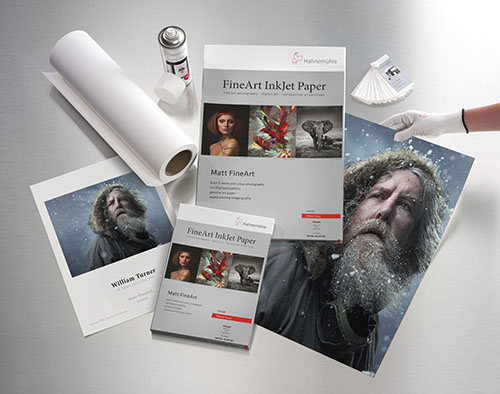
The William Turner by Hahnemühle is one of the most popular papers used in the Giclee printing industry. This is a 310g natural white mould made natural line paper with 100% rag content making it highly archival. It has a slight coarse texture which gives photos and artwork an elegant look. These fine art paper prints (also known as Giclee) are ordered by galleries, individual artists and photographers. The papers and inks are not only archival but use some of the most accurate print technology for full color prints.
- Giclee prints use very expensive archival pigmented inks.
- Highest level of color gamut available in printing (12 color printing).
- Exceptional black & white printing.
- Fade resistant, pigmented inks which provide a superior color range compared to other types of inks. Widely preferred in fine art and photography circles.
- We ONLY use professional grade fine art and photo paper that resist yellowing and aging.
Framing
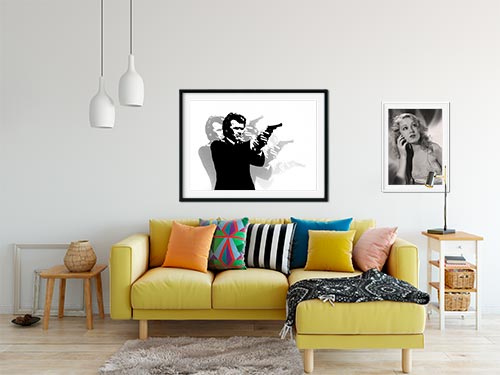
We offer wood and metal frames, custom cut & joined to order. Each framed print includes hanging hardware and foamcore backer.
Matting
We use conservation grade 100% virgin alpha-cellulose 2 ply mats with white core. Acid-free and lignin-free, these are both face resistant and meet all conservation quality standards set by the Fine Art Trade Guild. Mats are digitally cut for ultimate precision. The window will be 1/8″ smaller than the print dimensions.
Glazing (Acrylic Glass)
We offer custom cut panes of shatter-proof, acrylic glass, to protect your valuable artwork and prints.
Premium Clear
Framing grade clear acrylic is shatter resistant and lightweight.
Reflection Control
With its matte finish, Tru Vue Reflection Control® Acrylic scatters light to diminish unwanted glare.
Conservation Clear
Tru Vue Conservation Clear® Acrylic is a framing industry staple, blocking up to 99% of UV rays for ultimate protection.
Conservation Reflection Control
Tru Vue Conservation Reflection Control® Acrylic scatters and diffuses light to reduce unwanted glare. Blocks up to 99% of UV rays.
Related products
-

SEAN CONNERY & URSULA ANDRESS – DR. NO (1962) Rare Torn Shirt Finale Candid Jamaica Behind-the-Scenes James Bond 007 Photo
$30.00 -
SEAN CONNERY – DR. NO (1962) Dinner with Dr. No, Crab Key Lair James Bond 007 Photo
$25.00 -
SEAN CONNERY – DR. NO (1962) Strangways MI6 Office Radio Investigation James Bond 007 Photo
$30.00 -
SEAN CONNERY & URSULA ANDRESS – DR. NO (1962) Crab Key Filming Rare Behind-the-Scenes James Bond 007 Photo
$30.00