
SEAN CONNERY – DR. NO (1962) Strangways MI6 Office Radio Investigation James Bond 007 Photo
Limited Edition Photograph (learn more)
In stock
Sean Connery appears as James Bond in this exceptional black-and-white production photograph from DR. NO (1962), captured during 007’s investigation inside the Jamaica office of missing British agent Commander John Strangways. Standing beside the communications equipment, Bond examines the office for evidence as he begins piecing together the mystery that will ultimately lead him toward Crab Key and the secret operations of Dr. Julius No.
SEAN CONNERY - DR. NO (1962) Strangways MI6 Office Radio Investigation James Bond 007 Photo
The photograph captures Connery at a pivotal early stage of Bond’s first cinematic mission. Following the murder and disappearance of Strangways and his secretary, Bond is dispatched to Jamaica to investigate. Strangways’ activities and the evidence surrounding his disappearance become part of the trail connecting Bond with Professor Dent, Quarrel, Honey Ryder and eventually the mysterious island of Crab Key.
Visually, this is a particularly strong character image of Connery. Dressed in his impeccably tailored suit, Bond leans over the communications equipment while looking sharply beyond the frame, creating the impression of an agent actively assessing his surroundings. The books, radio equipment and open tropical window provide an unusually detailed environment around Connery and reinforce the investigative nature of the scene.
Directed by Terence Young and produced by Albert R. Broccoli and Harry Saltzman for Eon Productions, DR. NO introduced Sean Connery as Ian Fleming’s James Bond and established the cinematic foundations of the 007 series. Jamaica became an essential part of the film’s identity, providing the exotic location for the investigation that eventually leads Bond to his confrontation with Dr. No.
Seen more than six decades later, this photograph documents something historically significant: Sean Connery portraying James Bond during the investigation at the heart of 007’s very first motion-picture mission.
Carefully restored and professionally printed from archival source material, this museum-quality photograph is a distinctive collectible for admirers of Sean Connery, DR. NO, James Bond 007, Commander Strangways, Jamaica, Crab Key, Terence Young, Eon Productions, and photography documenting the birth of the James Bond film franchise.
Although it was the first of the Bond books to be made into a film, Dr. No was the sixth of Fleming's series, beginning with Casino Royale. The film makes a few references to threads from earlier books, and later books in the series as well, such as the criminal organisation SPECTRE, which was not introduced until the 1961 novel Thunderball. Produced on a low budget, Dr. No was a financial success. While the film received a mixed critical reaction upon release, it has gained a reputation over time as one of the series' best installments. Dr. No also launched a genre of secret agent films that flourished in the 1960s.
The film spawned a comic book adaptation and soundtrack album as part of its promotion and marketing. Many aspects of a typical James Bond film were established in Dr. No.
The film begins with an introduction to the character through the view of a gun barrel and a highly stylized main title sequence, both of which were created by Maurice Binder. It also introduced the iconic theme music. Production designer Ken Adam established an elaborate visual style that is one of the hallmarks of the film series.
Product Enquiry
Kodak Professional Endura Paper
Kodak Endura papers provide an incredible amount of detail and smooth transition of tones. Designed for the professional photographer in mind, looking for a more traditional photo print style, Kodak Endura provides an extended print life and color gamut almost at the level of a high end fine art paper print.
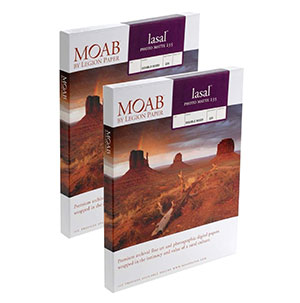
Archival Matte Paper
Archival Matte Paper, also known as Moab Lasal Photo Matte, is our house stock fine art paper and is an economical favorite for fine art reproductions and photo prints. It features a smooth surface, heavy weight (230 g, 9.5-mil), neutral white, matte paper engineered for accurate color reproduction that provides high contrast and high-resolution output. This paper is acid-free, making it the perfect choice for both photography & fine art reproductions.
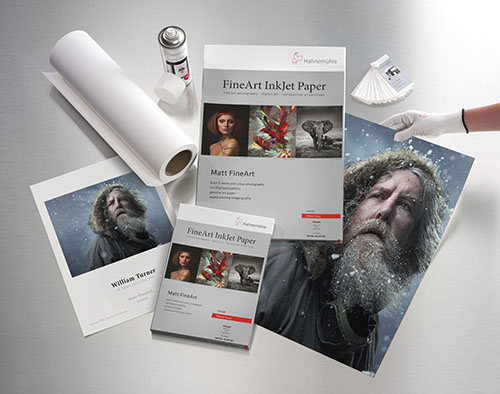
Giclee William Turner Paper by Hahnemühle
The William Turner by Hahnemühle is one of the most popular papers used in the Giclee printing industry. This is a 310g natural white mould made natural line paper with 100% rag content making it highly archival. It has a slight coarse texture which gives photos and artwork an elegant look. These fine art paper prints (also known as Giclee) are ordered by galleries, individual artists and photographers. The papers and inks are not only archival but use some of the most accurate print technology for full color prints.
- Giclee prints use very expensive archival pigmented inks.
- Highest level of color gamut available in printing (12 color printing).
- Exceptional black & white printing.
- Fade resistant, pigmented inks which provide a superior color range compared to other types of inks. Widely preferred in fine art and photography circles.
- We ONLY use professional grade fine art and photo paper that resist yellowing and aging.
Framing
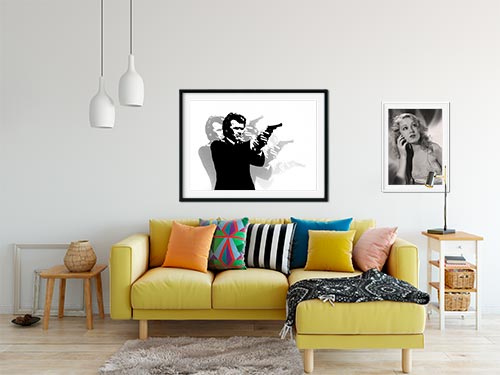
We offer wood and metal frames, custom cut & joined to order. Each framed print includes hanging hardware and foamcore backer.
Matting
We use conservation grade 100% virgin alpha-cellulose 2 ply mats with white core. Acid-free and lignin-free, these are both face resistant and meet all conservation quality standards set by the Fine Art Trade Guild. Mats are digitally cut for ultimate precision. The window will be 1/8″ smaller than the print dimensions.
Glazing (Acrylic Glass)
We offer custom cut panes of shatter-proof, acrylic glass, to protect your valuable artwork and prints.
Premium Clear
Framing grade clear acrylic is shatter resistant and lightweight.
Reflection Control
With its matte finish, Tru Vue Reflection Control® Acrylic scatters light to diminish unwanted glare.
Conservation Clear
Tru Vue Conservation Clear® Acrylic is a framing industry staple, blocking up to 99% of UV rays for ultimate protection.
Conservation Reflection Control
Tru Vue Conservation Reflection Control® Acrylic scatters and diffuses light to reduce unwanted glare. Blocks up to 99% of UV rays.
Related products
-

SEAN CONNERY – THUNDERBALL (1965) Rare Nassau Frogman Suit Behind-the-Scenes Loomis Dean James Bond 007 Photo
$30.00 -
SEAN CONNERY & URSULA ANDRESS – DR. NO (1962) Crab Key Filming Rare Behind-the-Scenes James Bond 007 Photo
$30.00 -
SEAN CONNERY & URSULA ANDRESS – DR. NO (1962) Rare Torn Shirt Finale Candid Jamaica Behind-the-Scenes James Bond 007 Photo
$30.00 -
SEAN CONNERY & URSULA ANDRESS – DR. NO (1962) Rare Relaxing Candid Jamaica Behind-the-Scenes James Bond 007 Photo
$30.00