

SEAN CONNERY & LUCIANA PALUZZI – THUNDERBALL (1965) Legendary Bed Scene Photographers Rare James Bond 007 BTS Photo
Limited Edition Photograph (learn more)
In stock
Sean Connery and Luciana Paluzzi are surrounded by photographers in this exceptionally rare black-and-white behind-the-scenes production photograph from THUNDERBALL (1965). Pictured together in bed as James Bond and SPECTRE assassin Fiona Volpe during production of their Nassau hotel-room sequence, Connery and Paluzzi look directly toward the assembled photographers while multiple cameras capture the stars from immediately beside the set.
SEAN CONNERY & LUCIANA PALUZZI - THUNDERBALL (1965) Legendary Bed Scene Photographers Rare James Bond 007 BTS Photo
What makes this photograph extraordinary is that it documents not only the performers, but the publicity operation surrounding them. At least three photographers are visible immediately behind Connery and Paluzzi, cameras in hand, while additional photographic equipment appears at the edge of the frame. The result is a remarkable image within an image: a publicity photograph showing the creation of THUNDERBALL publicity photography itself.
The relaxed expressions of the two performers further distinguish the image from the finished sequence. Connery turns toward the camera with an amused expression while Paluzzi poses beside him beneath the sheets, momentarily breaking the dramatic tension associated with Bond and Fiona Volpe on screen. The surrounding photographers transform the intimate-looking cinematic setting into what it actually was—a busy working film production.
Fiona Volpe became one of THUNDERBALL’s most memorable antagonists. Portrayed by Italian actress Luciana Paluzzi, the formidable SPECTRE operative combines glamour, intelligence and lethal purpose, making her an unusually dangerous counterpart to Connery’s Bond. Their encounter in Bond’s Nassau hotel room became one of the film's memorable confrontations between 007 and the SPECTRE organization.
THUNDERBALL is a 1965 spy film and the fourth entry in the James Bond series produced by Eon Productions, starring Sean Connery as British MI6 agent James Bond. Adapted from Ian Fleming’s 1961 novel, the film was directed by Terence Young, with a screenplay credited to Richard Maibaum and John Hopkins. It marked Young’s third and final Bond film after DR. NO (1962) and FROM RUSSIA WITH LOVE (1963).
For the serious 007 collector, this photograph possesses unusual documentary value. Rather than simply preserving Connery and Paluzzi in character, it reveals the extraordinary media environment surrounding a major Bond production at the height of 1960s Bondmania—the stars posed before the cameras while the photographers responsible for creating the promotional record of THUNDERBALL are themselves permanently captured in the frame.
Carefully restored and professionally printed from archival source material, this museum-quality photograph is a distinctive collectible for admirers of Sean Connery, Luciana Paluzzi, THUNDERBALL, Fiona Volpe, James Bond 007, SPECTRE, Nassau production history, 1960s film publicity, and exceptionally rare behind-the-scenes photography from the classic Bond era.
THUNDERBALL was exceptionally successful: its worldwide box office receipts of $141.2 million exceeded not only that of each of its predecessors but that of every one of the five Bond films that followed it. Thunderball remains the most financially successful film of the series in North America when adjusted for ticket price inflation. In 1966, John Stears won the Academy Award for Best Visual Effects and BAFTA nominated production designer Ken Adam for an award.
Some critics and viewers praised the film and branded it a welcome addition to the series, while others found the aquatic action repetitious. The movie was followed by 1967's You Only Live Twice. In 1983, Warner Bros. released a second film adaptation of the Thunderball novel under the title Never Say Never Again, with McClory as executive producer.
Guy Hamilton was invited to direct, but considered himself worn out and "creatively drained" after the production of Goldfinger. Terence Young, director of the first two Bond films, returned to the series. Coincidentally, when Saltzman invited him to direct Dr. No, Young expressed interest in directing adaptations of Dr. No, From Russia with Love and Thunderball.
Years later, Young said Thunderball was filmed "at the right time", considering that if it was the first film in the series, the low budget (Dr. No cost only $1 million) would not have yielded good results. Thunderball was the final James Bond film directed by Young.
Product Enquiry
Kodak Professional Endura Paper
Kodak Endura papers provide an incredible amount of detail and smooth transition of tones. Designed for the professional photographer in mind, looking for a more traditional photo print style, Kodak Endura provides an extended print life and color gamut almost at the level of a high end fine art paper print.
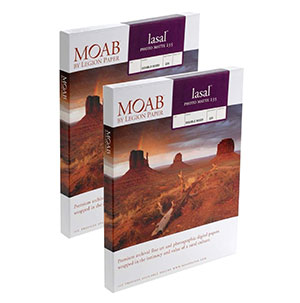
Archival Matte Paper
Archival Matte Paper, also known as Moab Lasal Photo Matte, is our house stock fine art paper and is an economical favorite for fine art reproductions and photo prints. It features a smooth surface, heavy weight (230 g, 9.5-mil), neutral white, matte paper engineered for accurate color reproduction that provides high contrast and high-resolution output. This paper is acid-free, making it the perfect choice for both photography & fine art reproductions.
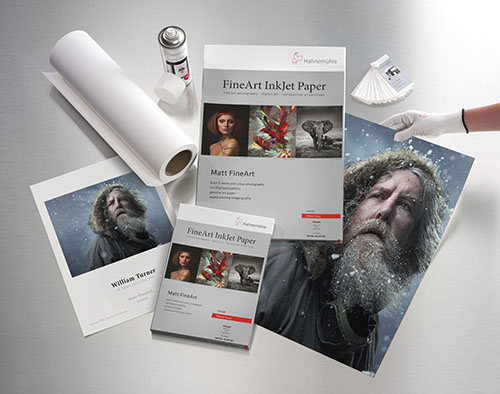
Giclee William Turner Paper by Hahnemühle
The William Turner by Hahnemühle is one of the most popular papers used in the Giclee printing industry. This is a 310g natural white mould made natural line paper with 100% rag content making it highly archival. It has a slight coarse texture which gives photos and artwork an elegant look. These fine art paper prints (also known as Giclee) are ordered by galleries, individual artists and photographers. The papers and inks are not only archival but use some of the most accurate print technology for full color prints.
- Giclee prints use very expensive archival pigmented inks.
- Highest level of color gamut available in printing (12 color printing).
- Exceptional black & white printing.
- Fade resistant, pigmented inks which provide a superior color range compared to other types of inks. Widely preferred in fine art and photography circles.
- We ONLY use professional grade fine art and photo paper that resist yellowing and aging.
Framing
We offer wood and metal frames, custom cut & joined to order. Each framed print includes hanging hardware and foamcore backer.
Matting
We use conservation grade 100% virgin alpha-cellulose 2 ply mats with white core. Acid-free and lignin-free, these are both face resistant and meet all conservation quality standards set by the Fine Art Trade Guild. Mats are digitally cut for ultimate precision. The window will be 1/8″ smaller than the print dimensions.
Glazing (Acrylic Glass)
We offer custom cut panes of shatter-proof, acrylic glass, to protect your valuable artwork and prints.
Premium Clear
Framing grade clear acrylic is shatter resistant and lightweight.
Reflection Control
With its matte finish, Tru Vue Reflection Control® Acrylic scatters light to diminish unwanted glare.
Conservation Clear
Tru Vue Conservation Clear® Acrylic is a framing industry staple, blocking up to 99% of UV rays for ultimate protection.
Conservation Reflection Control
Tru Vue Conservation Reflection Control® Acrylic scatters and diffuses light to reduce unwanted glare. Blocks up to 99% of UV rays.
Related products
-

Peter Cushing & Veronica Carlson – Frankenstein Must Be Destroyed (1969) | Publicity Shot with Script | Hammer Horror | Fine Art Photo
$25.00 -
Peter Cushing & Susan Denberg – Frankenstein Created Woman (1967) | Publicity Shot, Operating Table | Hammer Horror | Fine Art Photo
$25.00 -
Peter Cushing – Frankenstein Must Be Destroyed (1969) | Behind-the-Scenes, Neil Binney | Hammer Horror | Fine Art Photo
$25.00 -
SEAN CONNERY – THUNDERBALL (1965) Rare Double-Biceps Scuba Beach Candid Bahamas James Bond 007 BTS Photo
$38.00