

SEAN CONNERY – THUNDERBALL (1965) Extremely Rare Café Martinique Casino Rehearsal James Bond 007 BTS Photo
Limited Edition Photograph (learn more)
In stock
Sean Connery rehearses one of THUNDERBALL’s (1965) most memorable casino sequences in this exceptionally rare black-and-white behind-the-scenes production photograph from the Café Martinique on Paradise Island in the Bahamas. Dressed as James Bond and seated at the gaming table, Connery smiles broadly while extending his arm across the table, captured from a production viewpoint never presented in the finished film.
SEAN CONNERY - THUNDERBALL (1965) Extremely Rare Café Martinique Casino Rehearsal James Bond 007 BTS Photo
What makes this photograph particularly extraordinary is how completely it pulls back the curtain on the sophisticated cinematic world of 007. Large production lights and filmmaking equipment are plainly visible behind Connery, while surrounding personnel occupy the space immediately beyond the gaming table. The elegant Café Martinique setting remains recognizable, but the carefully controlled illusion presented in THUNDERBALL has temporarily disappeared.
The photograph documents rehearsal for the celebrated Café Martinique sequence in which James Bond encounters his principal adversary, Emilio Largo, portrayed by Adolfo Celi. Bond joins Largo at the gaming table for a high-stakes game of chemin de fer, creating an early face-to-face confrontation between the two men. Beneath the outward civility of the casino setting, Bond is already testing the formidable SPECTRE operative he suspects is connected with the theft of two nuclear weapons.
The contrast between rehearsal and finished scene gives this photograph exceptional historical character. On screen, Connery projects the controlled confidence and sophistication of James Bond. Here, his broad smile and relaxed demeanor reveal the actor during the filmmaking process, while the exposed lighting equipment demonstrates the technical environment surrounding one of the film’s most memorable casino encounters.
THUNDERBALL is a 1965 spy film and the fourth entry in the James Bond series produced by Eon Productions, starring Sean Connery as British MI6 agent James Bond. The film was adapted from Ian Fleming’s 1961 novel, which developed from an earlier screenplay and story involving Jack Whittingham, Kevin McClory and Fleming. Directed by Terence Young, with a screenplay credited to Richard Maibaum and John Hopkins, THUNDERBALL marked Young’s third and final James Bond film after DR. NO (1962) and FROM RUSSIA WITH LOVE (1963).
Filmed extensively in the Bahamas, THUNDERBALL combined spectacular underwater action, exotic locations and sophisticated interiors to create one of the most ambitious productions of the early Bond series. The Café Martinique sequence represents the elegant side of that formula—formal evening wear, gambling and carefully controlled conversation masking the dangerous contest developing between Bond and Largo.
For the serious 007 collector, this photograph offers something fundamentally different from a conventional scene still or posed publicity portrait. It preserves the actual creation of an iconic Bond sequence: Sean Connery rehearsing at the Café Martinique gaming table, production personnel surrounding him, powerful filmmaking lights exposed behind the scene, and the entire moment photographed from a perspective audiences never encounter in the finished THUNDERBALL.
Carefully restored and professionally printed from archival source material, this museum-quality photograph is a distinctive collectible for admirers of Sean Connery, THUNDERBALL, James Bond 007, Emilio Largo, Adolfo Celi, Café Martinique, Paradise Island, chemin de fer, Bahamas location filming, classic Bond casino imagery, and exceptionally rare behind-the-scenes production photography.
THUNDERBALL was exceptionally successful: its worldwide box office receipts of $141.2 million exceeded not only that of each of its predecessors but that of every one of the five Bond films that followed it. Thunderball remains the most financially successful film of the series in North America when adjusted for ticket price inflation. In 1966, John Stears won the Academy Award for Best Visual Effects and BAFTA nominated production designer Ken Adam for an award.
Some critics and viewers praised the film and branded it a welcome addition to the series, while others found the aquatic action repetitious. The movie was followed by 1967's You Only Live Twice. In 1983, Warner Bros. released a second film adaptation of the Thunderball novel under the title Never Say Never Again, with McClory as executive producer.
Guy Hamilton was invited to direct, but considered himself worn out and "creatively drained" after the production of Goldfinger. Terence Young, director of the first two Bond films, returned to the series. Coincidentally, when Saltzman invited him to direct Dr. No, Young expressed interest in directing adaptations of Dr. No, From Russia with Love and Thunderball.
Years later, Young said Thunderball was filmed "at the right time", considering that if it was the first film in the series, the low budget (Dr. No cost only $1 million) would not have yielded good results. Thunderball was the final James Bond film directed by Young.
Product Enquiry
Kodak Professional Endura Paper
Kodak Endura papers provide an incredible amount of detail and smooth transition of tones. Designed for the professional photographer in mind, looking for a more traditional photo print style, Kodak Endura provides an extended print life and color gamut almost at the level of a high end fine art paper print.
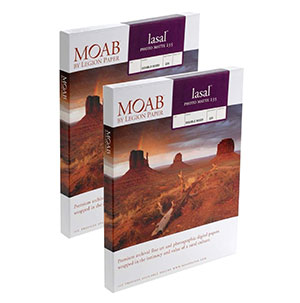
Archival Matte Paper
Archival Matte Paper, also known as Moab Lasal Photo Matte, is our house stock fine art paper and is an economical favorite for fine art reproductions and photo prints. It features a smooth surface, heavy weight (230 g, 9.5-mil), neutral white, matte paper engineered for accurate color reproduction that provides high contrast and high-resolution output. This paper is acid-free, making it the perfect choice for both photography & fine art reproductions.
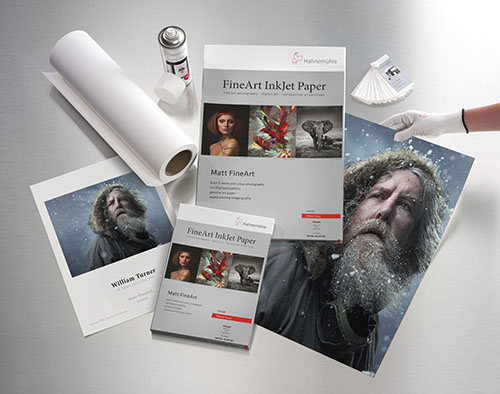
Giclee William Turner Paper by Hahnemühle
The William Turner by Hahnemühle is one of the most popular papers used in the Giclee printing industry. This is a 310g natural white mould made natural line paper with 100% rag content making it highly archival. It has a slight coarse texture which gives photos and artwork an elegant look. These fine art paper prints (also known as Giclee) are ordered by galleries, individual artists and photographers. The papers and inks are not only archival but use some of the most accurate print technology for full color prints.
- Giclee prints use very expensive archival pigmented inks.
- Highest level of color gamut available in printing (12 color printing).
- Exceptional black & white printing.
- Fade resistant, pigmented inks which provide a superior color range compared to other types of inks. Widely preferred in fine art and photography circles.
- We ONLY use professional grade fine art and photo paper that resist yellowing and aging.
Framing
We offer wood and metal frames, custom cut & joined to order. Each framed print includes hanging hardware and foamcore backer.
Matting
We use conservation grade 100% virgin alpha-cellulose 2 ply mats with white core. Acid-free and lignin-free, these are both face resistant and meet all conservation quality standards set by the Fine Art Trade Guild. Mats are digitally cut for ultimate precision. The window will be 1/8″ smaller than the print dimensions.
Glazing (Acrylic Glass)
We offer custom cut panes of shatter-proof, acrylic glass, to protect your valuable artwork and prints.
Premium Clear
Framing grade clear acrylic is shatter resistant and lightweight.
Reflection Control
With its matte finish, Tru Vue Reflection Control® Acrylic scatters light to diminish unwanted glare.
Conservation Clear
Tru Vue Conservation Clear® Acrylic is a framing industry staple, blocking up to 99% of UV rays for ultimate protection.
Conservation Reflection Control
Tru Vue Conservation Reflection Control® Acrylic scatters and diffuses light to reduce unwanted glare. Blocks up to 99% of UV rays.
Related products
-

Peter Cushing & Simon Ward – Frankenstein Must Be Destroyed (1969) | Drilling Hole in Head | Hammer Horror | Fine Art Photo
$25.00 -
Martine Beswick – Thunderball (1965) | Nassau – Sexy Bathing Suit Publicity Shot | James Bond 007 | Fine Art Photo
$25.00 -
MARTINE BESWICK – THUNDERBALL (1965) Rare Zebra Swimsuit Boat Bahamas James Bond 007 Publicity Photo
$30.00 -
AKIKO WAKABAYASHI YOU ONLY LIVE TWICE (1967) Japanese Fan James Bond 007 Publicity Photo
$38.00