

TERENCE FISHER & JANINA FAYE – HORROR OF DRACULA (1958) Rare Behind the Scenes
Limited Edition Photograph (learn more)
In stock
A rare and wonderfully intimate behind-the-scenes photograph from HORROR OF DRACULA captures director Terence Fisher sharing a relaxed moment with young Janina Faye during the making of Hammer’s landmark 1958 Gothic horror classic. With assistant director Robert Lynn leaning into the frame behind them, the candid image takes collectors beyond Dracula’s cape and fangs to reveal the people and remarkably human atmosphere behind one of the most influential British horror films ever made.
Fisher sits beside Faye, who portrayed young Tania, his arm resting warmly around her as the two look together at the illustrated material spread across their laps. Lynn smiles down from behind them. Their expressions are completely relaxed, creating an extraordinary contrast with the sinister Gothic world being constructed for the camera. For a moment, HORROR OF DRACULA ceases to be legend and becomes a group of filmmakers and performers at work.
Behind the Creation of Hammer’s Dracula
Directed by Terence Fisher from a screenplay by Jimmy Sangster, HORROR OF DRACULA (1958) stars Peter Cushing as Doctor Van Helsing and Christopher Lee as Count Dracula, alongside Michael Gough, Melissa Stribling, Carol Marsh and Janina Faye.
The film became a defining production in the history of Hammer Film Productions and helped establish the distinctive approach to Gothic horror that would make the studio internationally famous.
At the center of that transformation was Terence Fisher.
Fisher’s direction brought a remarkable combination of Gothic atmosphere, dramatic seriousness, vivid color and physical intensity to Hammer’s reinvention of classic horror. Together with Christopher Lee’s imposing Dracula and Peter Cushing’s dynamic Van Helsing, the film helped create a new screen vocabulary for the vampire that would influence decades of horror cinema.
That makes an informal production photograph such as this particularly fascinating.
Rather than documenting the fictional world Fisher created, it documents Fisher himself while creating it.
Janina Faye provides another important connection to the finished film. As young Tania, she appears in the memorable sequence involving Jonathan Harker at Dracula’s castle, placing this seemingly gentle behind-the-scenes portrait in direct contrast with the menace surrounding her character on screen.
The presence of assistant director Robert Lynn adds still another layer of production history. Instead of isolating a famous director for a formal portrait, the photograph preserves several members of the filmmaking company together during an unguarded moment.
For the serious Hammer collector, images such as this perform an essential role. Publicity photographs preserve Dracula, Van Helsing and the Gothic spectacle audiences remember. Behind-the-scenes photographs preserve something considerably harder to reconstruct decades later: the actual people, working relationships and atmosphere surrounding the creation of that spectacle.
That distinction gives this photograph its quiet power. Fisher is not directing Christopher Lee or arranging an elaborate Gothic composition. Faye is not performing fear. Lynn is not occupied with the mechanics of production. Instead, we encounter them simply sharing a moment together—a small piece of human history preserved behind a film that would become enormous in horror history.
For a collection documenting HORROR OF DRACULA in depth, this is precisely the kind of image that expands the story beyond what appeared on screen—connecting the finished masterpiece directly to the filmmakers and performers who stood behind it.
Preserved within the KissMeMonster photographic archive, this rare black-and-white behind-the-scenes image has been carefully restored to retain the expressive detail of Terence Fisher, Janina Faye and Robert Lynn, the textures of their clothing and surroundings, and the wonderfully natural character of the original candid moment—preserving an intimate glimpse behind the creation of one of Hammer Film Productions’ defining Gothic horror classics.
Product Enquiry
Kodak Professional Endura Paper
Kodak Endura papers provide an incredible amount of detail and smooth transition of tones. Designed for the professional photographer in mind, looking for a more traditional photo print style, Kodak Endura provides an extended print life and color gamut almost at the level of a high end fine art paper print.
Archival Matte Paper
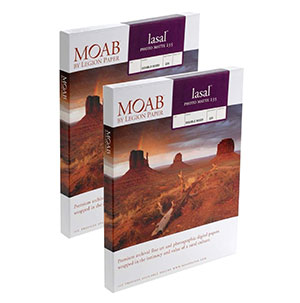
Archival Matte Paper, also known as Moab Lasal Photo Matte, is our house stock fine art paper and is an economical favorite for fine art reproductions and photo prints. It features a smooth surface, heavy weight (230 g, 9.5-mil), neutral white, matte paper engineered for accurate color reproduction that provides high contrast and high-resolution output. This paper is acid-free, making it the perfect choice for both photography & fine art reproductions.
Giclee William Turner Paper by Hahnemühle
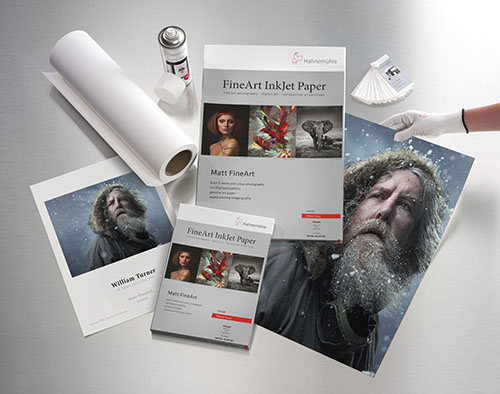
The William Turner by Hahnemühle is one of the most popular papers used in the Giclee printing industry. This is a 310g natural white mould made natural line paper with 100% rag content making it highly archival. It has a slight coarse texture which gives photos and artwork an elegant look. These fine art paper prints (also known as Giclee) are ordered by galleries, individual artists and photographers. The papers and inks are not only archival but use some of the most accurate print technology for full color prints.
- Giclee prints use very expensive archival pigmented inks.
- Highest level of color gamut available in printing (12 color printing).
- Exceptional black & white printing.
- Fade resistant, pigmented inks which provide a superior color range compared to other types of inks. Widely preferred in fine art and photography circles.
- We ONLY use professional grade fine art and photo paper that resist yellowing and aging.
Framing
We offer wood and metal frames, custom cut & joined to order. Each framed print includes hanging hardware and foamcore backer.
Matting
We use conservation grade 100% virgin alpha-cellulose 2 ply mats with white core. Acid-free and lignin-free, these are both face resistant and meet all conservation quality standards set by the Fine Art Trade Guild. Mats are digitally cut for ultimate precision. The window will be 1/8″ smaller than the print dimensions.
Glazing (Acrylic Glass)
We offer custom cut panes of shatter-proof, acrylic glass, to protect your valuable artwork and prints.
Premium Clear
Framing grade clear acrylic is shatter resistant and lightweight.
Reflection Control
With its matte finish, Tru Vue Reflection Control® Acrylic scatters light to diminish unwanted glare.
Conservation Clear
Tru Vue Conservation Clear® Acrylic is a framing industry staple, blocking up to 99% of UV rays for ultimate protection.
Conservation Reflection Control
Tru Vue Conservation Reflection Control® Acrylic scatters and diffuses light to reduce unwanted glare. Blocks up to 99% of UV rays.
Related products
-

CLINT EASTWOOD – DIRTY HARRY (1971) Aiming .44 Magnum Rare Behind-the-Scenes San Francisco Photo
$38.00 -
CHRISTOPHER LEE – HORROR OF DRACULA (1958) Stone Eagle Castle Gothic Photo
$30.00 -
SEAN CONNERY & URSULA ANDRESS – DR. NO (1962) Crab Key Filming Rare Behind-the-Scenes James Bond 007 Photo
$30.00 -
KLAUS KINSKI – FITZCARRALDO (1982) Amazon Jungle Publicity Photo Werner Herzog
$25.00