

WERNER HERZOG, CLAUDIA CARDINALE & KLAUS KINSKI – FITZCARRALDO (1982) Peru BTS Photo
Limited Edition Photograph (learn more)
In stock
Werner Herzog, Claudia Cardinale and Klaus Kinski—the director and two principal stars of FITZCARRALDO (1982)—come together in this extraordinary black-and-white behind-the-scenes photograph captured on location in Peru during one of the most famously demanding productions in cinema history.
With a visibly rumpled Herzog standing beside an elegantly costumed Cardinale while Kinski thrusts one hand dramatically toward something beyond the camera, the photograph brings three towering personalities into a single frame—an exceptional production image whose real collector appeal lies not in a finished movie scene, but in witnessing the people who actually created FITZCARRALDO standing together inside the world of its production.
Three people immediately make this photograph special.
The director.
The leading woman.
The leading man.
And each contributes a completely different visual personality.
Three Essential Figures From FITZCARRALDO
Written, produced and directed by Werner Herzog, FITZCARRALDO (1982) stars Klaus Kinski as Brian Sweeney Fitzgerald, known as Fitzcarraldo, whose obsessive dream of bringing grand opera to the Peruvian Amazon ultimately leads to the extraordinary undertaking of moving a steamship across mountainous jungle terrain.
Claudia Cardinale portrays Molly, whose support becomes instrumental to Fitzgerald’s ambitions.
The film's production itself became legendary.
Rather than relying entirely upon miniatures or conventional studio illusion for its central spectacle, Herzog's production involved physically hauling a full-sized steamship over steep terrain in the Amazon—a filmmaking undertaking documented in Les Blank's BURDEN OF DREAMS and now inseparable from the history surrounding FITZCARRALDO.
That production history completely changes the way this photograph feels.
Herzog stands at left.
His shirt is open at the neck.
His clothing appears rumpled.
One hand rests near his collar.
There is nothing polished or ceremonial about his appearance.
He looks like a filmmaker in the middle of making a film.
Cardinale provides an extraordinary visual counterpoint.
Positioned between Herzog and Kinski, she appears composed in Molly's light period costume, complete with gloves and decorative hat.
Her calm presence visually anchors the photograph.
Then there is Kinski.
Standing at right in Fitzgerald's white costume and broad-brimmed hat, he extends one hand dramatically toward something outside the frame.
The gesture is unmistakable.
Kinski appears to be explaining, indicating or reacting to something we cannot see.
Whatever is happening beyond the camera remains unknown—and we should leave it that way.
Because that uncertainty is part of the photograph's fascination.
Behind the three principal figures, local people and other individuals fill the location.
Buildings remain visible.
Nothing has been cleaned up for a formal publicity portrait.
The production environment is alive around them.
That is the collector WHY.
A conventional FITZCARRALDO publicity photograph can show Kinski beautifully posed as Fitzgerald.
A dramatic still can preserve the story.
An image of the steamship on the mountainside can preserve the film's astonishing physical spectacle.
But this photograph preserves something different:
THE PEOPLE BEHIND THE SPECTACLE.
Herzog.
Cardinale.
Kinski.
Together.
For the serious collector, having all three within a single candid production image gives the photograph tremendous documentary value.
And their body language makes it even better.
Nobody is looking toward the photographer.
Nobody appears to be posing.
There is no conventional publicity smile.
Instead, all three seem mentally engaged with something happening within the production environment.
That gives the image immediacy.
We feel as though we've walked onto the location while the movie is actually being made.
That sensation is difficult to reproduce in a posed publicity photograph.
It is particularly compelling with FITZCARRALDO because the circumstances surrounding the production have become almost as legendary as the finished film itself.
The physical environment mattered.
The jungle mattered.
The steamship mattered.
The logistical challenge mattered.
And the extraordinary personalities attempting to accomplish it certainly mattered.
This photograph puts three of the most important of those personalities shoulder to shoulder.
There is also wonderful visual irony in the arrangement.
Herzog appears informal and physically worn.
Cardinale remains poised and elegant.
Kinski gestures expansively.
Three entirely different energies.
One photograph.
For collectors fascinated by the famously intense creative relationship between Herzog and Kinski, the image acquires another dimension simply because the two men share the frame during the production itself.
But Cardinale's presence elevates it beyond another Herzog-and-Kinski production photograph.
She completes the principal creative triangle visible here:
director, Fitzgerald and Molly.
That makes this an especially satisfying companion to photographs of the steamship being hauled across the landscape.
One image shows the impossible object.
This one shows the people attempting the impossible.
Together they tell a much richer story.
That is how serious film collecting becomes more than accumulating attractive photographs.
One image preserves character.
Another preserves spectacle.
Another preserves location.
Another preserves process.
And occasionally one extraordinary frame gives us the director and both leading stars together in the middle of it all.
For FITZCARRALDO, that is an image worth stopping for.
Preserved within the KissMeMonster photographic archive, this exceptional black-and-white production photograph has been carefully restored to retain the documentary detail of Werner Herzog, Claudia Cardinale and Klaus Kinski, their contrasting costumes and expressions, Kinski’s dramatic gesture and the surrounding Peruvian location environment—preserving a remarkable visual record of three essential figures together during the making of FITZCARRALDO.
Product Enquiry
Kodak Professional Endura Paper
Kodak Endura papers provide an incredible amount of detail and smooth transition of tones. Designed for the professional photographer in mind, looking for a more traditional photo print style, Kodak Endura provides an extended print life and color gamut almost at the level of a high end fine art paper print.
Archival Matte Paper
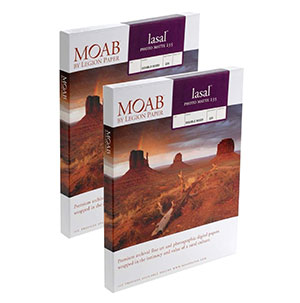
Archival Matte Paper, also known as Moab Lasal Photo Matte, is our house stock fine art paper and is an economical favorite for fine art reproductions and photo prints. It features a smooth surface, heavy weight (230 g, 9.5-mil), neutral white, matte paper engineered for accurate color reproduction that provides high contrast and high-resolution output. This paper is acid-free, making it the perfect choice for both photography & fine art reproductions.
Giclee William Turner Paper by Hahnemühle
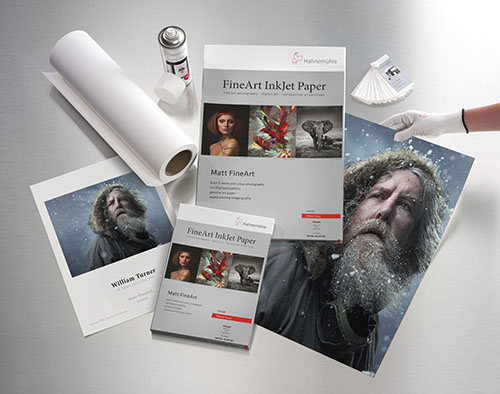
The William Turner by Hahnemühle is one of the most popular papers used in the Giclee printing industry. This is a 310g natural white mould made natural line paper with 100% rag content making it highly archival. It has a slight coarse texture which gives photos and artwork an elegant look. These fine art paper prints (also known as Giclee) are ordered by galleries, individual artists and photographers. The papers and inks are not only archival but use some of the most accurate print technology for full color prints.
- Giclee prints use very expensive archival pigmented inks.
- Highest level of color gamut available in printing (12 color printing).
- Exceptional black & white printing.
- Fade resistant, pigmented inks which provide a superior color range compared to other types of inks. Widely preferred in fine art and photography circles.
- We ONLY use professional grade fine art and photo paper that resist yellowing and aging.
Framing
We offer wood and metal frames, custom cut & joined to order. Each framed print includes hanging hardware and foamcore backer.
Matting
We use conservation grade 100% virgin alpha-cellulose 2 ply mats with white core. Acid-free and lignin-free, these are both face resistant and meet all conservation quality standards set by the Fine Art Trade Guild. Mats are digitally cut for ultimate precision. The window will be 1/8″ smaller than the print dimensions.
Glazing (Acrylic Glass)
We offer custom cut panes of shatter-proof, acrylic glass, to protect your valuable artwork and prints.
Premium Clear
Framing grade clear acrylic is shatter resistant and lightweight.
Reflection Control
With its matte finish, Tru Vue Reflection Control® Acrylic scatters light to diminish unwanted glare.
Conservation Clear
Tru Vue Conservation Clear® Acrylic is a framing industry staple, blocking up to 99% of UV rays for ultimate protection.
Conservation Reflection Control
Tru Vue Conservation Reflection Control® Acrylic scatters and diffuses light to reduce unwanted glare. Blocks up to 99% of UV rays.
Related products
-

KLAUS KINSKI & ISABELLE ADJANI – NOSFERATU THE VAMPYRE (1979) Dracula Bite Photo
$38.00 -
SEAN CONNERY & URSULA ANDRESS – DR. NO (1962) Crab Key Filming Rare Behind-the-Scenes James Bond 007 Photo
$30.00 -
KLAUS KINSKI – FITZCARRALDO (1982) Amazon Jungle Publicity Photo Werner Herzog
$25.00 -
SUSAN DENBERG – FRANKENSTEIN CREATED WOMAN (1967) Bray Studios Dressing Room Rare Behind-the-Scenes Hammer Photo
$38.00