

BARBARA STEELE (1972) Pierluigi Intense Eyes Rare Publicity Portrait
Limited Edition Photograph (learn more)
In stock
Barbara Steele’s extraordinary eyes completely dominate this arresting 1972 black-and-white publicity portrait photographed by Pierluigi, captured as the actress turns over her bare shoulder and fixes the camera with an intensely direct gaze.
With her dark hair swept dramatically upward, lips slightly parted and almost nothing competing with the remarkable architecture of her face, Steele creates an image of startling intimacy and psychological intensity—a portrait that immediately demonstrates why hers remains one of the most unforgettable faces in the history of European Gothic cinema.
There is nowhere else to look.
No elaborate costume.
No Gothic castle.
No dramatic lighting effect.
No cinematic prop.
Just Barbara Steele’s face—and those eyes.
The Face Behind the Gothic Icon
By 1972, Barbara Steele had already created an extraordinary screen legacy through films including BLACK SUNDAY, THE HORRIBLE DR. HICHCOCK, CASTLE OF BLOOD and THE LONG HAIR OF DEATH.
Her distinctive features had become inseparable from the visual identity of European Gothic horror.
This photograph reveals exactly why.
The composition is remarkably economical.
Steele turns toward the photographer from over one bare shoulder, creating a graceful diagonal through the lower portion of the frame. Her elaborate dark hair rises above and around her face, providing a strong tonal contrast against both her pale complexion and the nearly featureless background.
Everything leads toward the eyes.
And once they capture you, they do not let go.
Their size and clarity are remarkable, emphasized by dark lashes and the almost complete absence of distracting elements around them.
Her expression makes the portrait even stronger.
The lips remain slightly parted.
The eyebrows are subtly raised.
There is intensity without theatrical exaggeration.
She could be surprised.
Curious.
Suspicious.
Vulnerable.
Defiant.
The photograph never completely tells us.
That ambiguity is precisely what makes Steele so compelling.
The same face that could communicate terror in one Gothic film could become threatening in another, melancholy in the next and almost otherworldly with only the slightest alteration of expression.
Here, without character or narrative surrounding her, the collector can study that extraordinary expressive instrument directly.
This is Barbara Steele before the castle is added around her.
For the serious collector, that gives the portrait an especially strong WHY.
A photograph from BLACK SUNDAY preserves Steele within one of her defining performances.
A Gothic production still preserves the atmosphere and visual world that made those films memorable.
But a portrait this stripped down allows us to see something underneath all of that:
the face filmmakers understood could carry Gothic cinema almost by itself.
The turned-shoulder composition contributes enormously to the effect.
Had Steele faced the camera squarely, the result might have become a conventional studio headshot.
Instead, her body turns away while her head returns toward us.
That creates tension.
She appears caught somewhere between leaving and looking back.
And because her gaze travels directly toward the viewer, the portrait acquires an unusual intimacy.
She isn't simply being photographed.
She seems to have noticed us.
That distinction gives the image tremendous display power.
From across a room, the contrast between Steele’s dark sculptural hair and pale face immediately attracts attention.
Move closer and the eyes become overwhelming.
Then come the smaller details—the delicately parted lips, the fine facial contours, the bare shoulder, the narrow tie visible behind her neck and the extraordinary precision of her gaze.
For collectors assembling a substantial Barbara Steele archive, this kind of visual differentiation becomes increasingly important.
The cigarette companion portrait gives us sophisticated 1970s attitude.
This photograph gives us pure psychological intensity.
Same actress.
Same year.
Same credited photographer.
Completely different emotional experience.
That is why both images can legitimately belong within the same serious collection.
One documents Steele’s style.
The other documents the extraordinary physical feature that perhaps more than any other became inseparable from her screen identity.
Those eyes.
Long before a castle, crypt, candle or cobweb enters the frame, they already contain mystery.
Preserved within the KissMeMonster photographic archive, this exceptional 1972 black-and-white publicity image has been carefully restored to retain the remarkable clarity of Barbara Steele’s eyes, the delicate tonal detail of her facial features and bare shoulder, and the rich sculptural darkness of her swept-up hair—preserving an extraordinarily intimate portrait of one of European cinema’s most distinctive and enduring faces.
Product Enquiry
Kodak Professional Endura Paper
Kodak Endura papers provide an incredible amount of detail and smooth transition of tones. Designed for the professional photographer in mind, looking for a more traditional photo print style, Kodak Endura provides an extended print life and color gamut almost at the level of a high end fine art paper print.
Archival Matte Paper
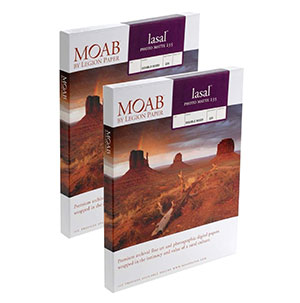
Archival Matte Paper, also known as Moab Lasal Photo Matte, is our house stock fine art paper and is an economical favorite for fine art reproductions and photo prints. It features a smooth surface, heavy weight (230 g, 9.5-mil), neutral white, matte paper engineered for accurate color reproduction that provides high contrast and high-resolution output. This paper is acid-free, making it the perfect choice for both photography & fine art reproductions.
Giclee William Turner Paper by Hahnemühle
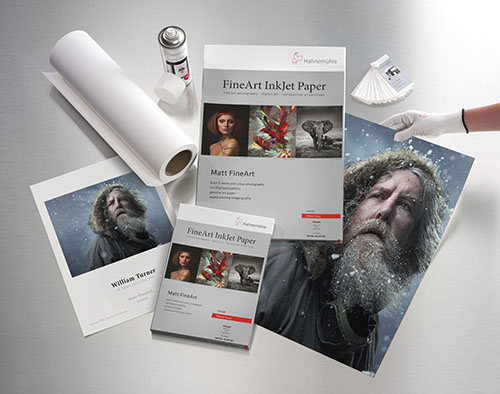
The William Turner by Hahnemühle is one of the most popular papers used in the Giclee printing industry. This is a 310g natural white mould made natural line paper with 100% rag content making it highly archival. It has a slight coarse texture which gives photos and artwork an elegant look. These fine art paper prints (also known as Giclee) are ordered by galleries, individual artists and photographers. The papers and inks are not only archival but use some of the most accurate print technology for full color prints.
- Giclee prints use very expensive archival pigmented inks.
- Highest level of color gamut available in printing (12 color printing).
- Exceptional black & white printing.
- Fade resistant, pigmented inks which provide a superior color range compared to other types of inks. Widely preferred in fine art and photography circles.
- We ONLY use professional grade fine art and photo paper that resist yellowing and aging.
Framing
We offer wood and metal frames, custom cut & joined to order. Each framed print includes hanging hardware and foamcore backer.
Matting
We use conservation grade 100% virgin alpha-cellulose 2 ply mats with white core. Acid-free and lignin-free, these are both face resistant and meet all conservation quality standards set by the Fine Art Trade Guild. Mats are digitally cut for ultimate precision. The window will be 1/8″ smaller than the print dimensions.
Glazing (Acrylic Glass)
We offer custom cut panes of shatter-proof, acrylic glass, to protect your valuable artwork and prints.
Premium Clear
Framing grade clear acrylic is shatter resistant and lightweight.
Reflection Control
With its matte finish, Tru Vue Reflection Control® Acrylic scatters light to diminish unwanted glare.
Conservation Clear
Tru Vue Conservation Clear® Acrylic is a framing industry staple, blocking up to 99% of UV rays for ultimate protection.
Conservation Reflection Control
Tru Vue Conservation Reflection Control® Acrylic scatters and diffuses light to reduce unwanted glare. Blocks up to 99% of UV rays.
Related products
-

CHRISTOPHER LEE – HORROR OF DRACULA (1958) Bloody Lips Fangs Iconic Hammer Photo
$30.00 -
BARBARA STEELE – THE HORRIBLE DR. HICHCOCK (1962) Skull Italian Gothic Photo
$38.00 -
BARBARA STEELE & GEORGES RIVIÈRE – CASTLE OF BLOOD (1964) Blackwood Castle Photo
$25.00 -
KING KONG (1933) Log Bridge Rare Larrinaga Crabbe Promotional Art
$30.00