

CATHERINE DENEUVE – REPULSION (1965) Behind the Scenes Camera Photo
Limited Edition Photograph (learn more)
In stock
A remarkable behind-the-scenes image from REPULSION captures Catherine Deneuve as Carol Ledoux lying vulnerably across the apartment floor while the filmmaking apparatus remains dramatically visible in the foreground.
With Deneuve beside the telephone, the parquet floor stretching around her and production equipment intruding into the frame, this unusually revealing photograph preserves both the psychological intensity of her performance and the physical craft behind Roman Polanski’s landmark film.
Deneuve lies curled low against the floor, her head resting upon one arm while the telephone sits only inches away. Her body appears almost swallowed by the otherwise ordinary domestic space, reinforcing the sense of isolation so essential to Carol’s character. Yet the large camera equipment dominating the lower foreground abruptly breaks the cinematic illusion. We are simultaneously inside Carol’s oppressive apartment and outside the film watching that world being created.
Behind the Camera on REPULSION
Directed by Roman Polanski from a screenplay by Polanski and Gérard Brach, REPULSION (1965) stars Catherine Deneuve as Carol Ledoux, whose increasing isolation within a London apartment develops into a profoundly disturbing world of psychological disintegration and subjective terror.
The apartment is crucial to the film’s effect. Familiar domestic surroundings become increasingly oppressive as Polanski manipulates space, sound and perspective to draw the viewer into Carol’s unstable perception. Ordinary objects—including the telephone—acquire an unsettling psychological presence as her isolation deepens.
That makes this photograph especially fascinating as a production document. The finished film carefully encloses the audience within Carol’s experience; here, the visible filmmaking equipment exposes the mechanism just beyond that illusion.
Deneuve nevertheless remains the unmistakable emotional center of the image. Her low position on the floor, compact posture and direct gaze create an extraordinary impression of vulnerability, while the surrounding doors, polished floorboards and sparse furnishings emphasize how physically small she appears within the apartment.
For admirers of Deneuve, Polanski and the filmmaking process, the photograph offers something conventional publicity portraits cannot: it preserves an iconic performer within the visual world of REPULSION while simultaneously revealing the camera apparatus responsible for transforming that performance into cinema.
It is that rare intersection of character study and production history that gives the image its unusual depth—Carol Ledoux trapped within her increasingly disturbing world, while just inches away we glimpse the machinery that created it.
Preserved within the KissMeMonster photographic archive, this exceptional black-and-white image has been carefully restored to retain the fine detail of Deneuve’s expression, the textures of the parquet floor and apartment interior, and the fascinating production equipment visible in the foreground—preserving an unusually revealing glimpse behind the creation of REPULSION.
Product Enquiry
Kodak Professional Endura Paper
Kodak Endura papers provide an incredible amount of detail and smooth transition of tones. Designed for the professional photographer in mind, looking for a more traditional photo print style, Kodak Endura provides an extended print life and color gamut almost at the level of a high end fine art paper print.
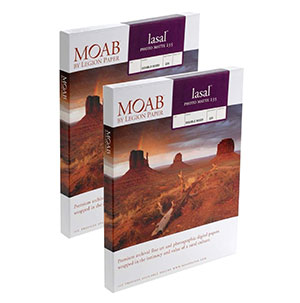
Archival Matte Paper
Archival Matte Paper, also known as Moab Lasal Photo Matte, is our house stock fine art paper and is an economical favorite for fine art reproductions and photo prints. It features a smooth surface, heavy weight (230 g, 9.5-mil), neutral white, matte paper engineered for accurate color reproduction that provides high contrast and high-resolution output. This paper is acid-free, making it the perfect choice for both photography & fine art reproductions.
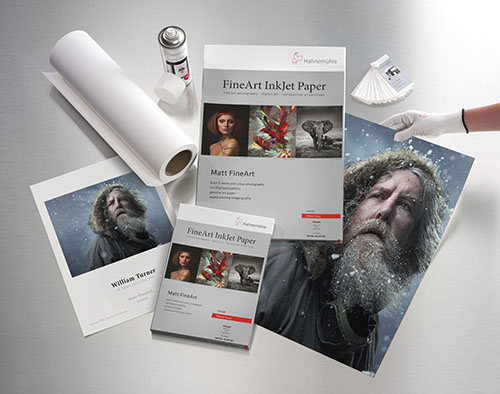
Giclee William Turner Paper by Hahnemühle
The William Turner by Hahnemühle is one of the most popular papers used in the Giclee printing industry. This is a 310g natural white mould made natural line paper with 100% rag content making it highly archival. It has a slight coarse texture which gives photos and artwork an elegant look. These fine art paper prints (also known as Giclee) are ordered by galleries, individual artists and photographers. The papers and inks are not only archival but use some of the most accurate print technology for full color prints.
- Giclee prints use very expensive archival pigmented inks.
- Highest level of color gamut available in printing (12 color printing).
- Exceptional black & white printing.
- Fade resistant, pigmented inks which provide a superior color range compared to other types of inks. Widely preferred in fine art and photography circles.
- We ONLY use professional grade fine art and photo paper that resist yellowing and aging.
Framing
We offer wood and metal frames, custom cut & joined to order. Each framed print includes hanging hardware and foamcore backer.
Matting
We use conservation grade 100% virgin alpha-cellulose 2 ply mats with white core. Acid-free and lignin-free, these are both face resistant and meet all conservation quality standards set by the Fine Art Trade Guild. Mats are digitally cut for ultimate precision. The window will be 1/8″ smaller than the print dimensions.
Glazing (Acrylic Glass)
We offer custom cut panes of shatter-proof, acrylic glass, to protect your valuable artwork and prints.
Premium Clear
Framing grade clear acrylic is shatter resistant and lightweight.
Reflection Control
With its matte finish, Tru Vue Reflection Control® Acrylic scatters light to diminish unwanted glare.
Conservation Clear
Tru Vue Conservation Clear® Acrylic is a framing industry staple, blocking up to 99% of UV rays for ultimate protection.
Conservation Reflection Control
Tru Vue Conservation Reflection Control® Acrylic scatters and diffuses light to reduce unwanted glare. Blocks up to 99% of UV rays.
Related products
-

CHRISTOPHER LEE – HORROR OF DRACULA (1958) Stone Eagle Castle Gothic Photo
$30.00 -
COLIN CLIVE, BORIS KARLOFF & DWIGHT FRYE – FRANKENSTEIN (1931) Spectacular Laboratory Wide View Rare Universal Horror Photo
$38.00 -
INGRID PITT – THE VAMPIRE LOVERS (1970) Bloody Fangs Hammer Horror Photo
$25.00 -
SEAN CONNERY & URSULA ANDRESS – DR. NO (1962) Rare Mirror & Hair Grooming Behind-the-Scenes James Bond 007 Photo
$30.00