

CHRISTOPHER LEE – THE BRIDES OF FU MANCHU (1966) Big Ben London Rare Cast Photo
Limited Edition Photograph (learn more)
In stock
Christopher Lee stands among the international cast of THE BRIDES OF FU MANCHU (1966) in this extraordinary London location publicity photograph, assembled on a rain-darkened Westminster roadway with Big Ben and the Palace of Westminster rising unmistakably behind them. Surrounded by an elegant group of actresses dressed in distinctly mid-1960s coats and fashions, Lee occupies the center of a composition that functions as both film promotion and a remarkable photographic time capsule of London more than half a century ago.
The pavement is still wet.
Heavy coats suggest cool weather.
Period automobiles line the street.
And towering above everyone—
Big Ben makes London itself part of the cast.
Fu Manchu Comes to Westminster
THE BRIDES OF FU MANCHU (1966) continued Christopher Lee's portrayal of Sax Rohmer's criminal mastermind Fu Manchu, bringing together an international cast for another entry in the popular 1960s adventure-thriller series.
This publicity photograph takes the unusual approach of removing the performers entirely from the exotic and sinister world suggested by the film.
Instead—
it puts them unmistakably in London.
The group stands directly across the wet roadway in Westminster.
Christopher Lee's extraordinary height makes him immediately recognizable near the center, despite the absence of Fu Manchu's elaborate screen appearance.
Around him stands an international ensemble associated with the production, including Yvonne Ekman, Anje Langstraat, Grete-Lill Henden, Katarina Quest, Heinz Drache, Christine Rau, Gaby Schar, Evelyne Dheliat, Daniele Defrere and Jeannette Napper.
But the photograph rewards attention beyond the performers.
Look downward.
The pavement is dark from recent rain.
Small reflections appear across its surface.
Now look at the wardrobe.
Coats.
Long sleeves.
Covered legs.
Practical outdoor clothing mixed with unmistakable 1960s fashion.
This wasn't photographed under idealized studio conditions.
The environment remains visible.
And that is precisely what makes the image so fascinating.
Behind the group, Westminster stretches into the distance.
Period vehicles occupy the roadway.
Architectural details remain visible along the street.
Pedestrians and the ordinary activity of London continue around what is, essentially, an extraordinary film-publicity event occurring in the middle of the city.
Then the eye travels upward.
Big Ben dominates everything.
Its enormous vertical form rises directly behind the cast and provides a scale no studio backdrop could reproduce convincingly.
The people suddenly appear small.
London appears monumental.
And the photograph acquires an identity completely independent of THE BRIDES OF FU MANCHU.
That is the collector WHY.
A conventional cast photograph documents the performers.
This photograph documents the performers, the promotion, the fashion, the weather, the automobiles and London itself.
It preserves a moment.
That distinction becomes increasingly valuable as the photograph ages.
What may once have been created primarily to generate publicity for a current motion picture now preserves visual information about an entire era.
The wet Westminster street.
The women's coats.
The men's overcoats.
The hairstyles.
The cars.
The architecture.
1966 is everywhere in the frame.
Christopher Lee provides another fascinating visual contrast.
Collectors accustomed to seeing him as Fu Manchu—or Dracula—might initially expect an imposing costumed character.
Instead, Lee stands among his fellow performers dressed for the London weather.
No elaborate makeup.
No theatrical pose.
No sinister lair.
Just an extraordinarily tall actor surrounded by an international group of performers during the promotional life of the film.
That informality makes him strangely more interesting.
And there is something wonderfully audacious about the composition.
THE BRIDES OF FU MANCHU promises exotic criminal intrigue.
The publicity photographer answers with—
Big Ben.
It could hardly be more British.
For the Christopher Lee collector, that gives the photograph tremendous crossover value beyond a conventional character still.
It documents Lee during a particularly prolific period of his career while simultaneously preserving him within one of the most recognizable urban landscapes in the world.
For the cinema-history collector, it records a coordinated location publicity event.
For the London collector, it preserves Westminster in the mid-1960s.
And for the fashion historian, the lineup provides a wonderful cross-section of women's coats, shoes, hairstyles and silhouettes from the period.
One photograph. Several histories.
That is what elevates it.
The movie brought everyone together.
The photographer arranged the group.
The rain supplied the reflective pavement.
And London supplied a backdrop that no production designer could possibly improve.
Preserved within the KissMeMonster photographic archive, this rare black-and-white location publicity photograph has been carefully restored to retain the individual facial detail of Christopher Lee and the international cast, the textures of their distinctive mid-1960s clothing, the reflective character of the rain-darkened roadway, the surrounding period automobiles and the architectural detail of Big Ben and Westminster—preserving an exceptional intersection of film publicity and London history from THE BRIDES OF FU MANCHU.
Product Enquiry
Kodak Professional Endura Paper
Kodak Endura papers provide an incredible amount of detail and smooth transition of tones. Designed for the professional photographer in mind, looking for a more traditional photo print style, Kodak Endura provides an extended print life and color gamut almost at the level of a high end fine art paper print.
Archival Matte Paper
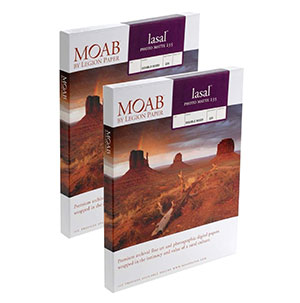
Archival Matte Paper, also known as Moab Lasal Photo Matte, is our house stock fine art paper and is an economical favorite for fine art reproductions and photo prints. It features a smooth surface, heavy weight (230 g, 9.5-mil), neutral white, matte paper engineered for accurate color reproduction that provides high contrast and high-resolution output. This paper is acid-free, making it the perfect choice for both photography & fine art reproductions.
Giclee William Turner Paper by Hahnemühle
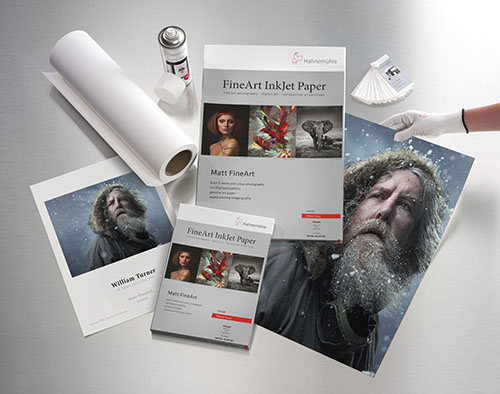
The William Turner by Hahnemühle is one of the most popular papers used in the Giclee printing industry. This is a 310g natural white mould made natural line paper with 100% rag content making it highly archival. It has a slight coarse texture which gives photos and artwork an elegant look. These fine art paper prints (also known as Giclee) are ordered by galleries, individual artists and photographers. The papers and inks are not only archival but use some of the most accurate print technology for full color prints.
- Giclee prints use very expensive archival pigmented inks.
- Highest level of color gamut available in printing (12 color printing).
- Exceptional black & white printing.
- Fade resistant, pigmented inks which provide a superior color range compared to other types of inks. Widely preferred in fine art and photography circles.
- We ONLY use professional grade fine art and photo paper that resist yellowing and aging.
Framing
We offer wood and metal frames, custom cut & joined to order. Each framed print includes hanging hardware and foamcore backer.
Matting
We use conservation grade 100% virgin alpha-cellulose 2 ply mats with white core. Acid-free and lignin-free, these are both face resistant and meet all conservation quality standards set by the Fine Art Trade Guild. Mats are digitally cut for ultimate precision. The window will be 1/8″ smaller than the print dimensions.
Glazing (Acrylic Glass)
We offer custom cut panes of shatter-proof, acrylic glass, to protect your valuable artwork and prints.
Premium Clear
Framing grade clear acrylic is shatter resistant and lightweight.
Reflection Control
With its matte finish, Tru Vue Reflection Control® Acrylic scatters light to diminish unwanted glare.
Conservation Clear
Tru Vue Conservation Clear® Acrylic is a framing industry staple, blocking up to 99% of UV rays for ultimate protection.
Conservation Reflection Control
Tru Vue Conservation Reflection Control® Acrylic scatters and diffuses light to reduce unwanted glare. Blocks up to 99% of UV rays.
Related products
-

CHRISTOPHER LEE & CAROLINE MUNRO – DRACULA A.D. 1972 Bloody Vampire Attack Photo
$30.00 -
CIRCUS OF FEAR (1966) Christopher Lee Original UK One-Sheet Art 30×41 Poster
$149.85 -
CHRISTOPHER LEE & EWAN HOOPER – DRACULA HAS RISEN FROM THE GRAVE (1968) Carriage Production Photo
$30.00 -
CHRISTOPHER LEE – SCARS OF DRACULA (1970) Dracula Crest Ring Rare Behind-the-Scenes Photo
$30.00