

CHRISTOPHER LEE – DRACULA: PRINCE OF DARKNESS (1966) Filming Dracula’s Death BTS Photo
Limited Edition Photograph (learn more)
In stock
An extraordinary behind-the-scenes production photograph from DRACULA: PRINCE OF DARKNESS (1966) captures Christopher Lee as Count Dracula standing upon the frozen moat during the filming of his spectacular climactic destruction—while the camera, crew, elevated wooden platform and brilliant studio lighting responsible for creating the sequence remain completely exposed around him.
Far below the towering motion-picture camera, Lee stands isolated in his black cape upon the ice as the production prepares to capture Dracula’s final struggle—a remarkable image that allows the collector to see both Hammer’s Gothic illusion and the filmmaking machinery behind it within the same frame.
Christopher Lee appears comparatively small at the center of the frozen moat while the enormous camera and its operator dominate the upper-left foreground from a specially elevated wooden platform.
Another member of the production team observes from the right.
Beyond Dracula, a brilliant production light burns through an opening in the castle set.
Everything the finished film normally conceals is suddenly visible.
Creating Dracula’s Climactic Destruction
Directed by Terence Fisher, DRACULA: PRINCE OF DARKNESS (1966) marked Christopher Lee's return to the role of Count Dracula following HORROR OF DRACULA (1958).
The film's climax takes place on the frozen moat surrounding Dracula's castle.
After Dracula pursues Charles Kent and Diana onto the ice, Father Sandor fires upon the frozen surface, creating fractures around the vampire.
The ice gives way.
Dracula plunges into the freezing water below.
And Hammer's resurrected Count disappears beneath the surface.
On screen, it is Gothic spectacle.
This photograph shows us how that spectacle looked while it was being manufactured.
The enormous camera is impossible to ignore.
Mounted high above the action, it occupies a substantial portion of the foreground and immediately establishes the physical relationship between the cinematography and Lee's position below.
Its operator leans forward toward the equipment.
Cables and structural elements remain visible.
Wooden planks create the elevated working platform.
Nothing has been hidden for the publicity photograph.
That is precisely why the image is so valuable.
Look beyond the camera and the Hammer illusion begins to reassemble itself.
Stone walls.
The moat.
Architectural ornament.
The castle entrance.
And standing almost perfectly isolated within that constructed Gothic environment—
Dracula.
Lee's black cape creates a tiny but unmistakable silhouette against the pale frozen surface.
The visual scale is extraordinary.
In the finished film, Christopher Lee's physical stature and performance make Dracula imposing.
Here, the perspective reverses everything.
The monster becomes small.
The filmmaking machinery becomes enormous.
And that reversal gives the photograph much of its power.
Then there is the light.
A brilliant circular source shines through the opening behind the set, completely exposed to the behind-the-scenes camera.
In the finished motion picture, lighting helps create atmosphere.
Here we see the apparatus responsible for creating that atmosphere.
Once again—
illusion and construction occupy the same photograph.
That is the collector WHY.
A conventional scene still preserves what audiences saw.
Dracula.
The castle.
The frozen moat.
The climactic confrontation.
This photograph preserves what audiences were never supposed to see.
Camera placement.
Crew.
Platform.
Lighting.
Set construction.
Physical distance.
The practical environment surrounding Christopher Lee while one of the film's most memorable sequences was being created.
For the serious Hammer collector, those details can be every bit as fascinating as Dracula himself.
They reveal how remarkably economical filmmaking could transform practical studio spaces, constructed scenery, lighting and carefully selected camera angles into an expansive Gothic world.
And the photograph allows the eye to move continuously between those two realities.
Look only toward Lee—
DRACULA: PRINCE OF DARKNESS.
Move your eyes left—
film production.
Look toward the architecture—
Dracula's castle.
Notice the platform and lighting—
Bray Studios filmmaking.
Two worlds coexist within a single frame.
That is what makes genuine behind-the-scenes photography so historically valuable.
It doesn't destroy the illusion.
It explains how the illusion was made.
And Christopher Lee's tiny solitary figure at the center ultimately becomes even more compelling because of everything surrounding him.
The camera is ready.
The crew is positioned.
The lights are burning.
The frozen moat awaits.
And Dracula stands alone upon the ice—
moments before Hammer destroys him again.
Preserved within the KissMeMonster photographic archive, this exceptional black-and-white behind-the-scenes production photograph has been carefully restored to retain the remarkable detail of the elevated motion-picture camera and operator, wooden filming platform, exposed production lighting, Gothic castle environment and Christopher Lee’s isolated figure upon the frozen moat—preserving an extraordinary visual record of the filmmaking craft behind the climactic destruction of Dracula in DRACULA: PRINCE OF DARKNESS.
Product Enquiry
Kodak Professional Endura Paper
Kodak Endura papers provide an incredible amount of detail and smooth transition of tones. Designed for the professional photographer in mind, looking for a more traditional photo print style, Kodak Endura provides an extended print life and color gamut almost at the level of a high end fine art paper print.
Archival Matte Paper
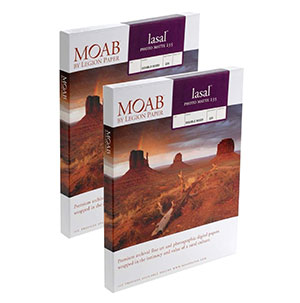
Archival Matte Paper, also known as Moab Lasal Photo Matte, is our house stock fine art paper and is an economical favorite for fine art reproductions and photo prints. It features a smooth surface, heavy weight (230 g, 9.5-mil), neutral white, matte paper engineered for accurate color reproduction that provides high contrast and high-resolution output. This paper is acid-free, making it the perfect choice for both photography & fine art reproductions.
Giclee William Turner Paper by Hahnemühle
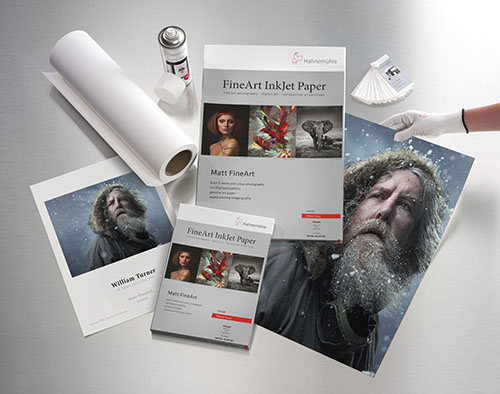
The William Turner by Hahnemühle is one of the most popular papers used in the Giclee printing industry. This is a 310g natural white mould made natural line paper with 100% rag content making it highly archival. It has a slight coarse texture which gives photos and artwork an elegant look. These fine art paper prints (also known as Giclee) are ordered by galleries, individual artists and photographers. The papers and inks are not only archival but use some of the most accurate print technology for full color prints.
- Giclee prints use very expensive archival pigmented inks.
- Highest level of color gamut available in printing (12 color printing).
- Exceptional black & white printing.
- Fade resistant, pigmented inks which provide a superior color range compared to other types of inks. Widely preferred in fine art and photography circles.
- We ONLY use professional grade fine art and photo paper that resist yellowing and aging.
Framing
We offer wood and metal frames, custom cut & joined to order. Each framed print includes hanging hardware and foamcore backer.
Matting
We use conservation grade 100% virgin alpha-cellulose 2 ply mats with white core. Acid-free and lignin-free, these are both face resistant and meet all conservation quality standards set by the Fine Art Trade Guild. Mats are digitally cut for ultimate precision. The window will be 1/8″ smaller than the print dimensions.
Glazing (Acrylic Glass)
We offer custom cut panes of shatter-proof, acrylic glass, to protect your valuable artwork and prints.
Premium Clear
Framing grade clear acrylic is shatter resistant and lightweight.
Reflection Control
With its matte finish, Tru Vue Reflection Control® Acrylic scatters light to diminish unwanted glare.
Conservation Clear
Tru Vue Conservation Clear® Acrylic is a framing industry staple, blocking up to 99% of UV rays for ultimate protection.
Conservation Reflection Control
Tru Vue Conservation Reflection Control® Acrylic scatters and diffuses light to reduce unwanted glare. Blocks up to 99% of UV rays.
Related products
-

CHRISTOPHER LEE & CAROLINE MUNRO – DRACULA A.D. 1972 Bloody Vampire Attack Photo
$30.00 -
CHRISTOPHER LEE & EWAN HOOPER – DRACULA HAS RISEN FROM THE GRAVE (1968) Rare Black Park BTS Hammer Horror Photo
$30.00 -
CHRISTOPHER LEE – DRACULA HAS RISEN FROM THE GRAVE (1968) Bloody Coffin Photo
$30.00 -
CHRISTOPHER LEE & CAROLINE MUNRO – DRACULA A.D. 1972 Bloody Throat Hammer Photo
$30.00