

FAY WRAY – KING KONG (1933) Torn Dress Screaming Glamour Publicity Photo
Limited Edition Photograph (learn more)
In stock
Fay Wray embodies the unforgettable combination of beauty, vulnerability and sheer terror that helped make KING KONG (1933) immortal in this spectacular black-and-white publicity photograph of Ann Darrow sprawled across the floor in her torn costume, one hand thrown defensively into the air as she stares upward in apparent horror.
Her wide eyes, startled expression and dramatically exposed legs transform an already glamorous composition into something far more exciting—an extraordinary image that captures, within a single frame, exactly why Wray became cinema’s defining early Scream Queen.
She genuinely looks frightened.
That is what makes the photograph.
Wray is not simply standing before a camera modeling Ann Darrow’s distressed costume. Her entire body participates in the moment: one hand braces against the floor, her legs sweep dramatically across the foreground and the other hand rises instinctively toward whatever unseen danger appears to be confronting her.
The threat remains outside the frame.
Our imagination supplies it.
Beauty Confronts the Beast
Directed and produced by Merian C. Cooper and Ernest B. Schoedsack, KING KONG (1933) transformed Fay Wray’s Ann Darrow into one of the most enduring heroines in fantasy and horror cinema.
The film’s extraordinary combination of adventure, spectacle, stop-motion effects and romantic tragedy created images that have remained embedded in popular culture for generations.
Yet Kong himself is nowhere to be seen in this photograph.
He doesn't need to be.
Everything necessary to suggest danger is already written across Wray’s face and body.
Her distressed costume is especially important.
The torn and disheveled fabric immediately separates this image from a conventional studio glamour portrait. It visually connects Ann Darrow’s beauty with the physical ordeal of Skull Island and gives the photograph a sense of narrative even without a visible setting.
Then there is Wray’s pose.
It is spectacular.
Her body creates a sweeping diagonal across the composition, with her legs dominating the foreground while her torso recedes toward the darker background.
One arm extends downward for support.
The other rises beside her face.
That raised hand is the crucial detail.
It turns glamour into danger.
Without it, this could almost be interpreted simply as an alluring reclining portrait.
With it, Wray appears to be reacting.
Defending herself.
Recoiling.
Something is coming.
And because we cannot see what she sees, the photograph becomes psychologically interactive.
The collector completes the scene.
Perhaps that unseen presence is Kong.
Perhaps it represents one of the many terrors confronting Ann Darrow on Skull Island.
The photograph itself does not need to specify.
Wray’s expression tells us everything necessary.
This is also why Fay Wray occupies such an important position in horror-film history.
Her performance as Ann Darrow required beauty and vulnerability, but also an extraordinary physical ability to communicate fear.
The eyes widen.
The mouth opens.
The hand rises.
The body recoils.
Those visual gestures became fundamental components of the screen language associated with generations of horror heroines who followed.
Here, the studio photographer has distilled that screen persona into a single remarkable composition.
Ann Darrow does not merely look beautiful.
She looks endangered.
And for the KING KONG collector, that is the WHY.
There are magnificent photographs of Kong himself.
There are extraordinary Skull Island images.
There are production photographs documenting Willis O’Brien’s effects work.
There are glamorous conventional portraits of Fay Wray.
But this image preserves something different:
THE REACTION THAT MADE THE MONSTER TERRIFYING.
A monster becomes frightening partly because of what it does.
But cinema teaches the audience how frightened to feel by showing us the person confronting it.
In KING KONG, nobody communicated that terror more memorably than Fay Wray.
The dramatic lighting makes the photograph even stronger.
Her pale skin and costume emerge brilliantly against the surrounding darkness, while deep shadows carve dimension into the folds of fabric and the floor beneath her.
The result has both glamour and menace.
Beauty and fear.
Sensuality and vulnerability.
Exactly the contradictions that made Ann Darrow such an unforgettable presence beside Kong.
For display, the photograph has tremendous immediate impact.
From across the room, the sweeping legs and raised hand establish the composition.
Move closer and Wray’s expression takes over.
Then the distressed costume becomes apparent.
Then the shadows.
Then the realization:
We cannot see what she is afraid of.
And suddenly the photograph becomes more than a publicity image.
It becomes a tiny unfinished scene from one of cinema’s greatest monster legends—and the viewer mentally supplies the monster.
Preserved within the KissMeMonster photographic archive, this exceptional black-and-white publicity image has been carefully restored to retain the dramatic tonal detail of Fay Wray’s distressed costume, expressive face and raised hand, the sweeping lines of her pose and the deep surrounding shadows—preserving a spectacular representation of the beauty, vulnerability and terror that made Ann Darrow one of the defining heroines of classic fantasy and horror cinema.
Product Enquiry
Kodak Professional Endura Paper
Kodak Endura papers provide an incredible amount of detail and smooth transition of tones. Designed for the professional photographer in mind, looking for a more traditional photo print style, Kodak Endura provides an extended print life and color gamut almost at the level of a high end fine art paper print.
Archival Matte Paper
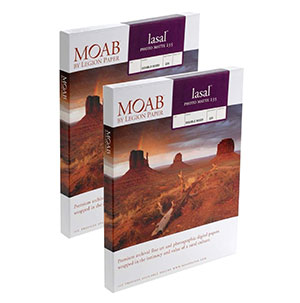
Archival Matte Paper, also known as Moab Lasal Photo Matte, is our house stock fine art paper and is an economical favorite for fine art reproductions and photo prints. It features a smooth surface, heavy weight (230 g, 9.5-mil), neutral white, matte paper engineered for accurate color reproduction that provides high contrast and high-resolution output. This paper is acid-free, making it the perfect choice for both photography & fine art reproductions.
Giclee William Turner Paper by Hahnemühle
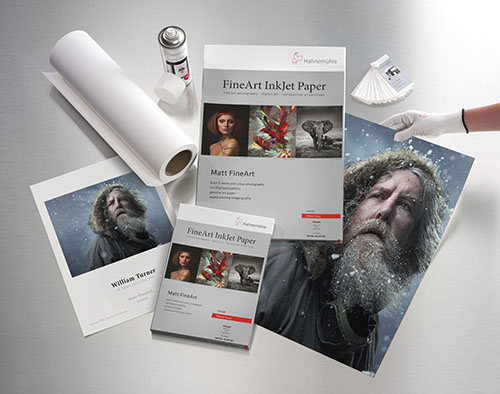
The William Turner by Hahnemühle is one of the most popular papers used in the Giclee printing industry. This is a 310g natural white mould made natural line paper with 100% rag content making it highly archival. It has a slight coarse texture which gives photos and artwork an elegant look. These fine art paper prints (also known as Giclee) are ordered by galleries, individual artists and photographers. The papers and inks are not only archival but use some of the most accurate print technology for full color prints.
- Giclee prints use very expensive archival pigmented inks.
- Highest level of color gamut available in printing (12 color printing).
- Exceptional black & white printing.
- Fade resistant, pigmented inks which provide a superior color range compared to other types of inks. Widely preferred in fine art and photography circles.
- We ONLY use professional grade fine art and photo paper that resist yellowing and aging.
Framing
We offer wood and metal frames, custom cut & joined to order. Each framed print includes hanging hardware and foamcore backer.
Matting
We use conservation grade 100% virgin alpha-cellulose 2 ply mats with white core. Acid-free and lignin-free, these are both face resistant and meet all conservation quality standards set by the Fine Art Trade Guild. Mats are digitally cut for ultimate precision. The window will be 1/8″ smaller than the print dimensions.
Glazing (Acrylic Glass)
We offer custom cut panes of shatter-proof, acrylic glass, to protect your valuable artwork and prints.
Premium Clear
Framing grade clear acrylic is shatter resistant and lightweight.
Reflection Control
With its matte finish, Tru Vue Reflection Control® Acrylic scatters light to diminish unwanted glare.
Conservation Clear
Tru Vue Conservation Clear® Acrylic is a framing industry staple, blocking up to 99% of UV rays for ultimate protection.
Conservation Reflection Control
Tru Vue Conservation Reflection Control® Acrylic scatters and diffuses light to reduce unwanted glare. Blocks up to 99% of UV rays.
Related products
-

CATHERINE DENEUVE – REPULSION (1965) Carol Ledoux Profile Portrait
$30.00 -
BELINDA BALASKI – THE HOWLING (1981) Werewolf Shadow Rob Bottin Horror Photo
$30.00 -
KING KONG ESCAPES (1967) Kong Gorosaurus Mechani-Kong Kaiju Promotional Art
$25.00 -
FAY WRAY – KING KONG (1933) Ann Darrow Torn Dress Publicity Portrait
$30.00