

COLIN CLIVE, BORIS KARLOFF & DWIGHT FRYE – FRANKENSTEIN (1931) Spectacular Laboratory Wide View Rare Universal Horror Photo
Limited Edition Photograph (learn more)
In stock
An extraordinary wide view of Henry Frankenstein’s laboratory is captured in this spectacular black-and-white production photograph from Universal’s FRANKENSTEIN (1931). Colin Clive appears as Henry Frankenstein beside Dwight Frye’s Fritz and the bandaged Monster portrayed by Boris Karloff, while Mae Clarke, John Boles and Edward Van Sloan observe the experiment from across the enormous laboratory.
FRANKENSTEIN (1931) Spectacular Laboratory Wide View Rare Universal Horror Photo
The remarkable perspective makes this photograph fundamentally different from conventional images of the famous creation sequence. Rather than concentrating upon the actors, the camera pulls back to reveal the extraordinary scale and verticality of Frankenstein’s laboratory itself. Towering brick walls, elevated platforms, suspended electrical apparatus, cables, chains, control equipment and strange scientific machinery surround the comparatively tiny human figures.
At the center of the laboratory, Henry Frankenstein and Fritz work within the dense arrangement of experimental equipment surrounding the bandaged Creature. Across the room stand Elizabeth, portrayed by Mae Clarke; Victor Moritz, played by John Boles; and Dr. Waldman, portrayed by Edward Van Sloan, witnessing Frankenstein’s extraordinary experiment.
The immense set transforms the laboratory into a character in its own right. Heavy masonry rises high above the actors while electrical devices extend vertically through the chamber, giving Frankenstein’s workplace a combination of medieval architecture and futuristic technology that became one of the defining visual signatures of the film.
Much of the extraordinary electrical apparatus associated with the creation sequence was designed and constructed by technician Kenneth Strickfaden. His coils, switches, generators and other elaborate devices contributed enormously to the visual identity of Frankenstein’s laboratory and helped establish the cinematic vocabulary of the “mad scientist” laboratory for generations of films that followed.
Directed by James Whale and released by Universal Pictures in 1931, FRANKENSTEIN stars Colin Clive as Henry Frankenstein, Boris Karloff as the Monster, Mae Clarke as Elizabeth, John Boles as Victor Moritz, Dwight Frye as Fritz and Edward Van Sloan as Dr. Waldman. Jack Pierce’s revolutionary Monster makeup and Karloff’s performance became equally fundamental elements of the film’s enduring legacy.
For collectors and students of motion-picture production design, this photograph is particularly significant because it reveals something close views cannot: the extraordinary physical scale of the FRANKENSTEIN laboratory set. The actors appear almost dwarfed by the towering architecture and electrical machinery surrounding them, providing a fascinating record of the craftsmanship behind one of the most influential environments in horror-film history.
Carefully restored and professionally printed from archival source material, this museum-quality photograph is a distinctive collectible for admirers of FRANKENSTEIN, Boris Karloff, Colin Clive, Dwight Frye, Mae Clarke, James Whale, Kenneth Strickfaden, Universal Monsters, classic horror production design and early motion-picture special effects.
Product Enquiry
Kodak Professional Endura Paper
Kodak Endura papers provide an incredible amount of detail and smooth transition of tones. Designed for the professional photographer in mind, looking for a more traditional photo print style, Kodak Endura provides an extended print life and color gamut almost at the level of a high end fine art paper print.
Archival Matte Paper
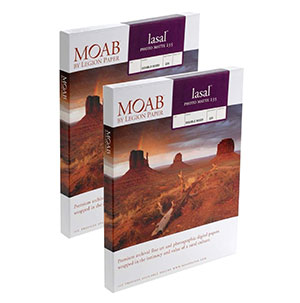
Archival Matte Paper, also known as Moab Lasal Photo Matte, is our house stock fine art paper and is an economical favorite for fine art reproductions and photo prints. It features a smooth surface, heavy weight (230 g, 9.5-mil), neutral white, matte paper engineered for accurate color reproduction that provides high contrast and high-resolution output. This paper is acid-free, making it the perfect choice for both photography & fine art reproductions.
Giclee William Turner Paper by Hahnemühle
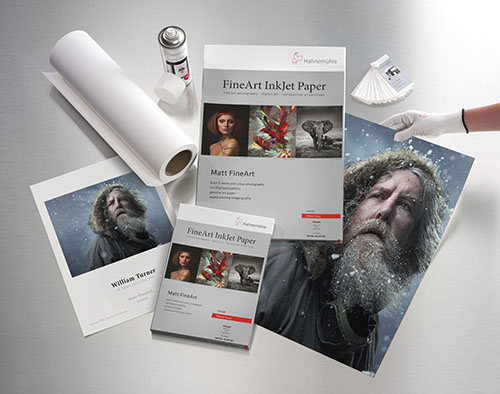
The William Turner by Hahnemühle is one of the most popular papers used in the Giclee printing industry. This is a 310g natural white mould made natural line paper with 100% rag content making it highly archival. It has a slight coarse texture which gives photos and artwork an elegant look. These fine art paper prints (also known as Giclee) are ordered by galleries, individual artists and photographers. The papers and inks are not only archival but use some of the most accurate print technology for full color prints.
- Giclee prints use very expensive archival pigmented inks.
- Highest level of color gamut available in printing (12 color printing).
- Exceptional black & white printing.
- Fade resistant, pigmented inks which provide a superior color range compared to other types of inks. Widely preferred in fine art and photography circles.
- We ONLY use professional grade fine art and photo paper that resist yellowing and aging.
Framing
We offer wood and metal frames, custom cut & joined to order. Each framed print includes hanging hardware and foamcore backer.
Matting
We use conservation grade 100% virgin alpha-cellulose 2 ply mats with white core. Acid-free and lignin-free, these are both face resistant and meet all conservation quality standards set by the Fine Art Trade Guild. Mats are digitally cut for ultimate precision. The window will be 1/8″ smaller than the print dimensions.
Glazing (Acrylic Glass)
We offer custom cut panes of shatter-proof, acrylic glass, to protect your valuable artwork and prints.
Premium Clear
Framing grade clear acrylic is shatter resistant and lightweight.
Reflection Control
With its matte finish, Tru Vue Reflection Control® Acrylic scatters light to diminish unwanted glare.
Conservation Clear
Tru Vue Conservation Clear® Acrylic is a framing industry staple, blocking up to 99% of UV rays for ultimate protection.
Conservation Reflection Control
Tru Vue Conservation Reflection Control® Acrylic scatters and diffuses light to reduce unwanted glare. Blocks up to 99% of UV rays.
Related products
-

CHRISTOPHER LEE – DRACULA HAS RISEN FROM THE GRAVE (1968) Staked Dracula Photo
$38.00 -
BORIS KARLOFF & COLIN CLIVE – FRANKENSTEIN (1931) Monster Confronts Creator Torch Scene Rare Universal Horror Photo
$38.00 -
BARBARA STEELE – THE HORRIBLE DR. HICHCOCK (1962) Buried Alive Gothic Photo
$30.00 -
JAYNE MANSFIELD (c.1958) Leopard Print Pants with Dog Rare Hollywood Glamour Photo
$30.00