

JAROSLAVA SCHALLEROVÁ – VALERIE AND HER WEEK OF WONDERS (1970) Haunting Rare Portrait
Limited Edition Photograph (learn more)
In stock
Jaroslava Schallerová emerges almost entirely from darkness in this extraordinary black-and-white portrait associated with VALERIE AND HER WEEK OF WONDERS (1970), her enormous eyes becoming the emotional center of one of the most haunting images connected with the Czech New Wave classic. With her mouth completely concealed behind dark fabric and her beautifully arranged hair cascading across the composition, Schallerová is reduced to little more than eyes, hair and illuminated skin—a mysterious portrait that seems to reveal Valerie while simultaneously hiding her from us.
The styling is magnificent.
Her bangs perfectly frame the eyes.
A long sweep of hair descends across the darkness.
Her mouth disappears.
And suddenly the eyes have to tell us everything.
A Face Inside Valerie’s Dream World
Directed by Jaromil Jireš, VALERIE AND HER WEEK OF WONDERS (1970) remains one of the most visually distinctive works associated with the Czechoslovak New Wave.
Adapted from the novel by Vítězslav Nezval, the film follows Valerie through an extraordinary world in which fairy-tale imagery, vampires, religion, sexuality, transformation and supernatural menace continually blur the boundary between reality and dream.
This portrait contains none of that elaborate imagery.
And somehow—
it still feels completely at home within Valerie’s world.
There is no recognizable location.
No supporting character.
No elaborate costume to study.
No obvious narrative.
Instead, virtually everything has been removed.
Schallerová looks directly toward us from a field of black.
The dark fabric rises across the lower portion of her face until her mouth is completely hidden.
That single decision transforms the portrait.
Normally the mouth gives us an immediate emotional clue.
A smile invites us closer.
Parted lips might suggest surprise.
Tension can indicate fear.
Here—
we get nothing.
So we return to the eyes.
They are enormous.
Direct.
Curious.
Perhaps apprehensive.
But never completely readable.
And that uncertainty is exactly what makes the portrait so compelling.
Her hair performs an equally important visual function.
The heavy bangs form a beautifully controlled frame above the eyes, while the longer strands descend over the dark fabric and remain visible only because their texture catches the light.
Against so much black, every strand becomes graphic.
Hair becomes line.
Skin becomes light.
The eyes become the story.
That is remarkable photographic economy.
The image also creates an intriguing contradiction for the collector.
Schallerová appears extraordinarily close to us.
This is an intimate portrait.
Yet psychologically, she remains unreachable.
We can see her eyes with extraordinary clarity while much of the person behind them remains literally concealed.
That tension mirrors something essential about VALERIE AND HER WEEK OF WONDERS itself.
The film continually presents images that seem understandable at first glance, only to become stranger when examined more closely.
Innocence and menace coexist.
Beauty and unease coexist.
Reality and fantasy refuse to remain separated.
This portrait operates similarly.
At first—
a beautiful young face.
Then we notice the missing mouth.
The surrounding darkness.
The almost disembodied eyes.
And the photograph becomes something else.
Not frightening.
Unsettling.
There is an important difference.
For collectors of European cult cinema, this is also precisely the kind of photograph that expands the visual history of a film beyond conventional scene stills.
It does not tell us what happens in VALERIE AND HER WEEK OF WONDERS.
It tells us what the film feels like.
That is the collector WHY.
A production still can document a scene.
A character photograph can document Valerie.
But this portrait captures something much harder to preserve:
the mystery surrounding her.
And because the composition is so simple, nothing dilutes that effect.
Eyes.
Hair.
Darkness.
That is virtually all the photographer gives us.
It is enough.
In fact, anything more might weaken it.
Preserved within the KissMeMonster photographic archive, this exceptional black-and-white portrait has been carefully restored to retain the delicate tonal detail of Jaroslava Schallerová’s illuminated features, the extraordinary texture and flowing lines of her hair, the deep surrounding blacks and the penetrating clarity of the eyes that dominate this haunting composition—preserving a remarkable image associated with the dreamlike world of VALERIE AND HER WEEK OF WONDERS.
Product Enquiry
Kodak Professional Endura Paper
Kodak Endura papers provide an incredible amount of detail and smooth transition of tones. Designed for the professional photographer in mind, looking for a more traditional photo print style, Kodak Endura provides an extended print life and color gamut almost at the level of a high end fine art paper print.
Archival Matte Paper
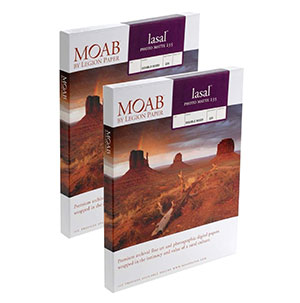
Archival Matte Paper, also known as Moab Lasal Photo Matte, is our house stock fine art paper and is an economical favorite for fine art reproductions and photo prints. It features a smooth surface, heavy weight (230 g, 9.5-mil), neutral white, matte paper engineered for accurate color reproduction that provides high contrast and high-resolution output. This paper is acid-free, making it the perfect choice for both photography & fine art reproductions.
Giclee William Turner Paper by Hahnemühle
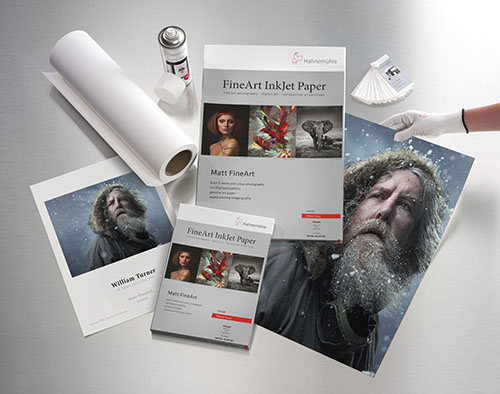
The William Turner by Hahnemühle is one of the most popular papers used in the Giclee printing industry. This is a 310g natural white mould made natural line paper with 100% rag content making it highly archival. It has a slight coarse texture which gives photos and artwork an elegant look. These fine art paper prints (also known as Giclee) are ordered by galleries, individual artists and photographers. The papers and inks are not only archival but use some of the most accurate print technology for full color prints.
- Giclee prints use very expensive archival pigmented inks.
- Highest level of color gamut available in printing (12 color printing).
- Exceptional black & white printing.
- Fade resistant, pigmented inks which provide a superior color range compared to other types of inks. Widely preferred in fine art and photography circles.
- We ONLY use professional grade fine art and photo paper that resist yellowing and aging.
Framing
We offer wood and metal frames, custom cut & joined to order. Each framed print includes hanging hardware and foamcore backer.
Matting
We use conservation grade 100% virgin alpha-cellulose 2 ply mats with white core. Acid-free and lignin-free, these are both face resistant and meet all conservation quality standards set by the Fine Art Trade Guild. Mats are digitally cut for ultimate precision. The window will be 1/8″ smaller than the print dimensions.
Glazing (Acrylic Glass)
We offer custom cut panes of shatter-proof, acrylic glass, to protect your valuable artwork and prints.
Premium Clear
Framing grade clear acrylic is shatter resistant and lightweight.
Reflection Control
With its matte finish, Tru Vue Reflection Control® Acrylic scatters light to diminish unwanted glare.
Conservation Clear
Tru Vue Conservation Clear® Acrylic is a framing industry staple, blocking up to 99% of UV rays for ultimate protection.
Conservation Reflection Control
Tru Vue Conservation Reflection Control® Acrylic scatters and diffuses light to reduce unwanted glare. Blocks up to 99% of UV rays.
Related products
-

KING KONG (1933) Kong & Fay Wray Over New York City Iconic Promotional Art
$38.00 -
BARBARA STEELE – THE LONG HAIR OF DEATH (1964) Long Hair Italian Gothic Photo
$38.00 -
YUTTE STENSGAARD & MICHAEL JOHNSON – LUST FOR A VAMPIRE (1971) Seduction Photo
$30.00 -
KING KONG ESCAPES (1967) Kong Gorosaurus Mechani-Kong Kaiju Promotional Art
$25.00