

KING KONG (1933) New York Escape Rare Pre-Production Concept Art
Limited Edition Photograph (learn more)
In stock
An extraordinary piece of pre-production imagery for KING KONG captures the terrifying instant when the captive giant breaks free in New York and transforms a carefully staged spectacle into absolute chaos. With Kong towering above the interior as shattered restraints and furnishings surround him and terrified spectators scatter in every direction, the artwork visualizes one of the story’s great reversals—the moment civilization discovers that its greatest attraction cannot be controlled.
The scale is magnificent. Kong occupies nearly the entire height of the composition, his enormous arms raised as the surrounding architecture struggles to contain his massive form. Below him, fleeing figures rush toward every available escape while overturned furniture and a fallen spectator intensify the confusion. Every human being becomes a measurement of Kong’s overwhelming size.
When the Eighth Wonder Breaks Free
Produced and directed by Merian C. Cooper and Ernest B. Schoedsack, KING KONG (1933) brought together Fay Wray, Robert Armstrong and Bruce Cabot with Willis O’Brien’s pioneering stop-motion effects and Max Steiner’s landmark musical score, creating one of the foundational works of fantasy and giant-monster cinema.
The New York exhibition represents a crucial turning point in Kong’s story. Removed from Skull Island, transported into civilization and presented before an audience as the “Eighth Wonder of the World,” Kong has been transformed from an untamed living creature into a public spectacle.
Then the spectacle collapses.
That narrative reversal gives this pre-production image extraordinary power. On Skull Island, enormous walls and gates exist to keep Kong separated from humanity. In New York, human beings deliberately place him inside their own world, restrain him and gather around to stare. Once those restraints fail, the difference between exhibition and catastrophe disappears almost instantly.
The artwork communicates that transition brilliantly.
Kong remains the immovable visual center while virtually everything surrounding him is in motion. People flee, chairs overturn, bodies fall and the enormous interior erupts into disorder. The architecture may belong to modern civilization, but Kong once again controls the frame.
Pre-production imagery also offers the serious KING KONG collector something fundamentally different from a conventional film still. Such artwork belongs to the process of visualizing scale, action, environment and dramatic impact before those ideas could be translated into the extraordinarily complex effects photography required for the finished film.
Mario Larrinaga and Byron L. Crabbe were among the artists associated with KING KONG’s visual-development work, helping establish the fantastic environments and dramatic concepts from which the film’s extraordinary world would emerge.
That creative history gives an image such as this another dimension. We are not simply looking back at the finished legend—we are looking into the process of imagining it.
For a collection documenting KING KONG beyond familiar portraits and finished production imagery, this kind of pre-production artwork provides invaluable visual depth. It connects the monster audiences eventually saw with the artists, designers and effects craftsmen who first had to determine how an impossible creature could dominate human architecture, overwhelm a crowd and appear truly gigantic.
Preserved within the KissMeMonster photographic archive, this remarkable reproduction of historic KING KONG pre-production imagery has been carefully restored to retain the intricate architectural detail, expressive crowd figures, dramatic blacks and extraordinary sense of scale surrounding Kong—preserving with renewed clarity a fascinating glimpse into the visual development of one of cinema’s defining monster spectacles.
Product Enquiry
Kodak Professional Endura Paper
Kodak Endura papers provide an incredible amount of detail and smooth transition of tones. Designed for the professional photographer in mind, looking for a more traditional photo print style, Kodak Endura provides an extended print life and color gamut almost at the level of a high end fine art paper print.
Archival Matte Paper
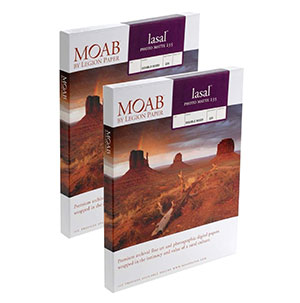
Archival Matte Paper, also known as Moab Lasal Photo Matte, is our house stock fine art paper and is an economical favorite for fine art reproductions and photo prints. It features a smooth surface, heavy weight (230 g, 9.5-mil), neutral white, matte paper engineered for accurate color reproduction that provides high contrast and high-resolution output. This paper is acid-free, making it the perfect choice for both photography & fine art reproductions.
Giclee William Turner Paper by Hahnemühle
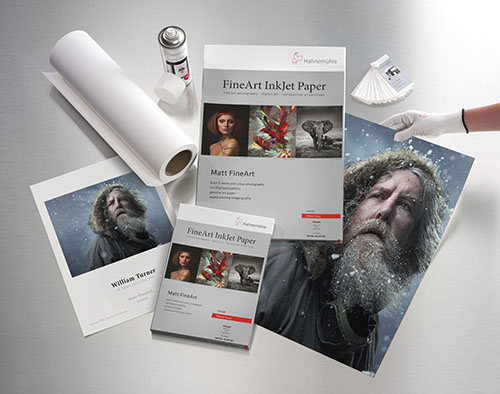
The William Turner by Hahnemühle is one of the most popular papers used in the Giclee printing industry. This is a 310g natural white mould made natural line paper with 100% rag content making it highly archival. It has a slight coarse texture which gives photos and artwork an elegant look. These fine art paper prints (also known as Giclee) are ordered by galleries, individual artists and photographers. The papers and inks are not only archival but use some of the most accurate print technology for full color prints.
- Giclee prints use very expensive archival pigmented inks.
- Highest level of color gamut available in printing (12 color printing).
- Exceptional black & white printing.
- Fade resistant, pigmented inks which provide a superior color range compared to other types of inks. Widely preferred in fine art and photography circles.
- We ONLY use professional grade fine art and photo paper that resist yellowing and aging.
Framing
We offer wood and metal frames, custom cut & joined to order. Each framed print includes hanging hardware and foamcore backer.
Matting
We use conservation grade 100% virgin alpha-cellulose 2 ply mats with white core. Acid-free and lignin-free, these are both face resistant and meet all conservation quality standards set by the Fine Art Trade Guild. Mats are digitally cut for ultimate precision. The window will be 1/8″ smaller than the print dimensions.
Glazing (Acrylic Glass)
We offer custom cut panes of shatter-proof, acrylic glass, to protect your valuable artwork and prints.
Premium Clear
Framing grade clear acrylic is shatter resistant and lightweight.
Reflection Control
With its matte finish, Tru Vue Reflection Control® Acrylic scatters light to diminish unwanted glare.
Conservation Clear
Tru Vue Conservation Clear® Acrylic is a framing industry staple, blocking up to 99% of UV rays for ultimate protection.
Conservation Reflection Control
Tru Vue Conservation Reflection Control® Acrylic scatters and diffuses light to reduce unwanted glare. Blocks up to 99% of UV rays.
Related products
-

KING KONG ESCAPES (1967) King Kong vs Mechani-Kong Rare Kaiju Promotional Art
$25.00 -
PETER CUSHING – FRANKENSTEIN AND THE MONSTER FROM HELL (1974) Baron Frankenstein Portrait
$30.00 -
FAY WRAY – KING KONG (1933) Torn Dress Screaming Glamour Publicity Photo
$38.00 -
PETER CUSHING – THE CURSE OF FRANKENSTEIN (1957) Baron Frankenstein Portrait
$30.00