

LEONARD WHITING – FRANKENSTEIN: THE TRUE STORY (1973) Bloody Severed Arm Photo
Limited Edition Photograph (learn more)
In stock
A startling color image of Leonard Whiting as Victor Frankenstein captures the young doctor with an open leather medical satchel containing a blood-covered severed human arm—an exceptionally graphic and memorable visualization of the forbidden work at the heart of FRANKENSTEIN: THE TRUE STORY.
Photographed from dramatically above as Whiting looks directly upward with remarkable composure, the image transforms a grisly collection of human remains into an elegant yet deeply macabre portrait of scientific obsession.
The overhead composition is exceptional. Whiting’s dark period clothing fills much of the frame, directing the eye toward the warm brown leather satchel beside him. Inside, white cloth creates a stark background for the bloodied arm, making the gruesome contents impossible to overlook. Yet Victor himself appears strangely controlled. The horror is inside the bag; the obsession is written in the man calmly carrying it.
A Darker Vision of Victor Frankenstein
Directed by Jack Smight from a screenplay by Christopher Isherwood and Don Bachardy, FRANKENSTEIN: THE TRUE STORY (1973) stars Leonard Whiting as Victor Frankenstein alongside Michael Sarrazin as the Creature, James Mason as Dr. Polidori, David McCallum as Henry Clerval and Jane Seymour as Prima.
Despite its provocative title, the production is not a literal retelling of Mary Shelley’s FRANKENSTEIN; OR, THE MODERN PROMETHEUS. Instead, it develops its own elaborate interpretation of the Frankenstein mythology while retaining the fundamental obsession at the center of Shelley’s story: the attempt to construct life from the remains of the dead.
This photograph reduces that enormous theme to one disturbing object.
The severed arm makes Victor’s experiments brutally tangible.
Frankenstein imagery frequently concentrates on the finished Creature, laboratory machinery or the moment of creation. Here, the emphasis shifts backward to something more uncomfortable—the physical materials required before that creation can ever occur.
A human body has become raw material.
That gives the photograph considerable visual and narrative power. The elegant leather satchel belongs to the civilized world of the physician and gentleman; what it contains belongs to graveyards, dissection and death. Respectability and transgression occupy the same frame.
Whiting’s expression intensifies that contradiction. Rather than recoiling from the gruesome discovery beside him, Victor looks upward with a serious, controlled gaze. His composure makes the bloodied limb seem less like a shocking interruption than something connected to a larger purpose.
For collectors of Frankenstein cinema, that distinction makes the image especially compelling. It does not simply repeat the familiar iconography established by earlier screen versions. Instead, it visualizes the disturbing process behind the creation of Frankenstein’s being, placing Victor himself—and his willingness to cross the boundary between scientific inquiry and desecration—at the center of the composition.
The photograph also connects to an impressive lineage of British horror craftsmanship. Makeup for the production was handled by Roy Ashton, whose long association with Hammer Film Productions included some of the studio’s most memorable horror makeup work.
For a deeper Frankenstein collection, images such as this expand the mythology beyond the Monster himself. The Creature may ultimately become the consequence everyone remembers, but Victor’s obsession is where the tragedy begins.
A young doctor. A leather medical bag. A severed human arm. And an expression suggesting that the impossible experiment is already more important than the terrible means required to achieve it.
Preserved within the KissMeMonster photographic archive, this exceptional color image has been carefully restored to retain the rich brown texture of the leather satchel, the deep blacks of Leonard Whiting’s period costume, the stark white fabric and disturbing blood detail surrounding the severed arm—preserving the unusual overhead composition and macabre visual character that make this FRANKENSTEIN: THE TRUE STORY image so distinctive.
Product Enquiry
Kodak Professional Endura Paper
Kodak Endura papers provide an incredible amount of detail and smooth transition of tones. Designed for the professional photographer in mind, looking for a more traditional photo print style, Kodak Endura provides an extended print life and color gamut almost at the level of a high end fine art paper print.
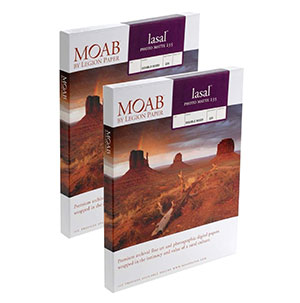
Archival Matte Paper
Archival Matte Paper, also known as Moab Lasal Photo Matte, is our house stock fine art paper and is an economical favorite for fine art reproductions and photo prints. It features a smooth surface, heavy weight (230 g, 9.5-mil), neutral white, matte paper engineered for accurate color reproduction that provides high contrast and high-resolution output. This paper is acid-free, making it the perfect choice for both photography & fine art reproductions.
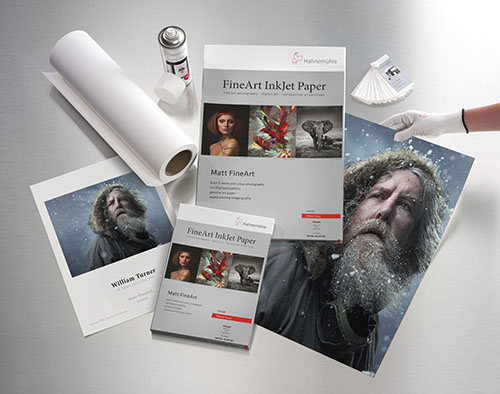
Giclee William Turner Paper by Hahnemühle
The William Turner by Hahnemühle is one of the most popular papers used in the Giclee printing industry. This is a 310g natural white mould made natural line paper with 100% rag content making it highly archival. It has a slight coarse texture which gives photos and artwork an elegant look. These fine art paper prints (also known as Giclee) are ordered by galleries, individual artists and photographers. The papers and inks are not only archival but use some of the most accurate print technology for full color prints.
- Giclee prints use very expensive archival pigmented inks.
- Highest level of color gamut available in printing (12 color printing).
- Exceptional black & white printing.
- Fade resistant, pigmented inks which provide a superior color range compared to other types of inks. Widely preferred in fine art and photography circles.
- We ONLY use professional grade fine art and photo paper that resist yellowing and aging.
Framing
We offer wood and metal frames, custom cut & joined to order. Each framed print includes hanging hardware and foamcore backer.
Matting
We use conservation grade 100% virgin alpha-cellulose 2 ply mats with white core. Acid-free and lignin-free, these are both face resistant and meet all conservation quality standards set by the Fine Art Trade Guild. Mats are digitally cut for ultimate precision. The window will be 1/8″ smaller than the print dimensions.
Glazing (Acrylic Glass)
We offer custom cut panes of shatter-proof, acrylic glass, to protect your valuable artwork and prints.
Premium Clear
Framing grade clear acrylic is shatter resistant and lightweight.
Reflection Control
With its matte finish, Tru Vue Reflection Control® Acrylic scatters light to diminish unwanted glare.
Conservation Clear
Tru Vue Conservation Clear® Acrylic is a framing industry staple, blocking up to 99% of UV rays for ultimate protection.
Conservation Reflection Control
Tru Vue Conservation Reflection Control® Acrylic scatters and diffuses light to reduce unwanted glare. Blocks up to 99% of UV rays.
Related products
-

HAZEL COURT – THE CURSE OF FRANKENSTEIN (1957) White Fur Glamour Rare Hammer Horror Publicity Photo
$30.00 -
INGRID PITT (1971) Rare Topless Tapestry Glamour Portrait Hammer Horror Publicity Photo
$30.00 -
FITZCARRALDO (1982) – Steamship on Mountainside Rare Behind-the-Scenes Photo
$25.00 -
JACK NICHOLSON – THE SHINING (1980) “Here’s Johnny!” Stanley Kubrick Photo
$25.00