

PETER CUSHING & CHRISTOPHER LEE – THE CURSE OF FRANKENSTEIN (1957) Creature Awakens Rare Hammer Horror Photo
Limited Edition Photograph (learn more)
In stock
Peter Cushing and Christopher Lee are captured during one of the most dramatic sequences in Hammer Films’ THE CURSE OF FRANKENSTEIN (1957). Cushing’s Victor Frankenstein turns toward the unexpected sight of his newly awakened Creature, portrayed by Lee, standing upright in the laboratory with its entire body and face still wrapped in white bandages.
PETER CUSHING & CHRISTOPHER LEE - THE CURSE OF FRANKENSTEIN (1957) Creature Awakens Rare Hammer Horror Photo
The composition brilliantly captures the tension preceding the Creature’s horrifying facial revelation. Frankenstein is positioned in the immediate foreground, looking toward his creation as the heavily bandaged figure advances through the laboratory. The Creature’s concealed face makes the moment particularly unsettling: audiences know that something is beneath those wrappings, but Hammer deliberately postpones the full revelation.
As the sequence develops, the Creature raises a hand toward its bandaged face and begins tearing away the wrappings, revealing Christopher Lee’s grotesquely scarred Frankenstein makeup. The gradual unveiling, accompanied by the film’s dramatic atmosphere, helped transform the Creature’s first appearance into one of the defining moments of Hammer’s new approach to Gothic horror.
The photograph is also a superb showcase for the production’s laboratory design. Scientific apparatus, glassware, heavy timbers and the shadowed Gothic interior surround the stark white figure of the Creature, while the contrast between Lee’s bandaged body and Cushing’s comparatively refined appearance reinforces the relationship between creation and creator.
THE CURSE OF FRANKENSTEIN marked the beginning of Hammer’s enormously influential cycle of color Gothic horror films. Directed by Terence Fisher, the film stars Peter Cushing as the brilliant but increasingly ruthless Victor Frankenstein and Christopher Lee as his physically imposing and tragically damaged Creature. Their performances helped redefine Frankenstein for a new generation and established Cushing and Lee as two of the defining figures of British horror cinema.
For collectors, this photograph preserves a pivotal stage in the Creature’s introduction: after animation but before the full face is revealed. The startled Frankenstein, advancing bandaged Creature and richly detailed laboratory combine to create an exceptional visual record of one of the sequences that helped establish the identity of Hammer Horror.
Carefully restored and professionally printed from archival source material, this museum-quality photograph is a distinctive collectible for admirers of Peter Cushing, Christopher Lee, THE CURSE OF FRANKENSTEIN, Frankenstein’s Creature, Terence Fisher, Hammer Films, Hammer Horror and classic British Gothic cinema.
Peter Cushing, who was then best known for his many high-profile roles in British television, had his first lead part in a movie with this film. Meanwhile, Christopher Lee's casting resulted largely from his height (6' 5"), though Hammer had earlier considered the even taller (6 '7") Bernard Bresslaw for the role.
Hammer refrained from duplicating aspects of Universal's 1931 film, and so it was down to make-up artist Phil Leakey to design a new look for the creature bearing no resemblance to the Boris Karloff original created by Jack Pierce. Production of The Curse of Frankenstein began, with an investment of £65,000, on November 19th,1956 at Bray Studios with a scene showing Baron Frankenstein cutting down a highwayman from a wayside gibbet.
The film opened at the London Pavilion on May 2nd, 1957 with an X certificate from the censors. The film was a tremendous financial success and reportedly grossed more than 70 times its production cost during its original theatrical run. In the UK, the film earned theatrical rentals of $1.9 million. According to Kinematograph Weekly the film was "in the money" at the British box office in 1957. According to another account the film made £300,000 in Britain and £500,000 in Japan.
In the US the outstanding box office success was a surprise. In its first week at the Paramount Theatre on Broadway Variety reported,"Curse" Wham $72,000" and noted,"it gave the Par flagship its biggest opening week on straight-film policy in the last two years".
Variety continued to be impressed with its box office numbers as it opened across the US. "Curse" Terrific $30,900" in its first week in Los Angeles with supporting feature X the Unknown. In an era when horror films typically played for one week, Curse was often held over for two and sometimes three weeks in major markets like Boston.
Product Enquiry
Kodak Professional Endura Paper
Kodak Endura papers provide an incredible amount of detail and smooth transition of tones. Designed for the professional photographer in mind, looking for a more traditional photo print style, Kodak Endura provides an extended print life and color gamut almost at the level of a high end fine art paper print.
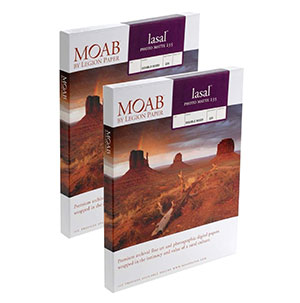
Archival Matte Paper
Archival Matte Paper, also known as Moab Lasal Photo Matte, is our house stock fine art paper and is an economical favorite for fine art reproductions and photo prints. It features a smooth surface, heavy weight (230 g, 9.5-mil), neutral white, matte paper engineered for accurate color reproduction that provides high contrast and high-resolution output. This paper is acid-free, making it the perfect choice for both photography & fine art reproductions.
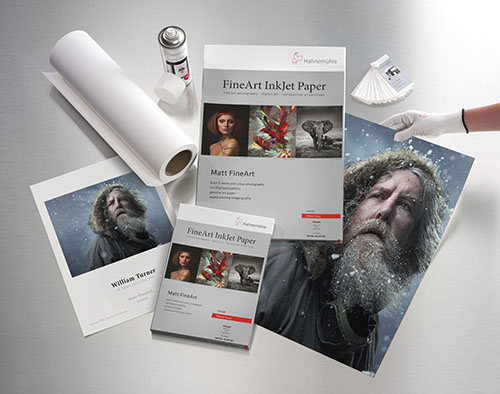
Giclee William Turner Paper by Hahnemühle
The William Turner by Hahnemühle is one of the most popular papers used in the Giclee printing industry. This is a 310g natural white mould made natural line paper with 100% rag content making it highly archival. It has a slight coarse texture which gives photos and artwork an elegant look. These fine art paper prints (also known as Giclee) are ordered by galleries, individual artists and photographers. The papers and inks are not only archival but use some of the most accurate print technology for full color prints.
- Giclee prints use very expensive archival pigmented inks.
- Highest level of color gamut available in printing (12 color printing).
- Exceptional black & white printing.
- Fade resistant, pigmented inks which provide a superior color range compared to other types of inks. Widely preferred in fine art and photography circles.
- We ONLY use professional grade fine art and photo paper that resist yellowing and aging.
Framing
We offer wood and metal frames, custom cut & joined to order. Each framed print includes hanging hardware and foamcore backer.
Matting
We use conservation grade 100% virgin alpha-cellulose 2 ply mats with white core. Acid-free and lignin-free, these are both face resistant and meet all conservation quality standards set by the Fine Art Trade Guild. Mats are digitally cut for ultimate precision. The window will be 1/8″ smaller than the print dimensions.
Glazing (Acrylic Glass)
We offer custom cut panes of shatter-proof, acrylic glass, to protect your valuable artwork and prints.
Premium Clear
Framing grade clear acrylic is shatter resistant and lightweight.
Reflection Control
With its matte finish, Tru Vue Reflection Control® Acrylic scatters light to diminish unwanted glare.
Conservation Clear
Tru Vue Conservation Clear® Acrylic is a framing industry staple, blocking up to 99% of UV rays for ultimate protection.
Conservation Reflection Control
Tru Vue Conservation Reflection Control® Acrylic scatters and diffuses light to reduce unwanted glare. Blocks up to 99% of UV rays.
Related products
-

THE CURSE OF FRANKENSTEIN (1957) Original Belgian Poster Art Peter Cushing Christopher Lee Hammer Horror 15×22
$149.85 -
CHRISTOPHER LEE – DRACULA HAS RISEN FROM THE GRAVE (1968) Staked Dracula Photo
$38.00 -
CHRISTOPHER LEE – HORROR OF DRACULA (1958) Stone Eagle Castle Gothic Photo
$30.00 -
CHRISTOPHER LEE & EWAN HOOPER – DRACULA HAS RISEN FROM THE GRAVE (1968) Carriage Production Photo
$30.00