

RALPH BATES & MARTINE BESWICK – DR. JEKYLL & SISTER HYDE (1971) Iconic Hammer Photo
Limited Edition Photograph (learn more)
In stock
Ralph Bates and Martine Beswick stand side by side in one of the defining publicity images from Hammer’s DR. JEKYLL & SISTER HYDE (1971), an extraordinary portrait that transforms the film’s central idea into a single unforgettable visual statement. Dressed in remarkably corresponding Victorian clothing, patterned neckwear and ornamental brooches, Bates and Beswick appear almost like reflections of one another—two bodies representing the male and female manifestations of the same identity.
Look from one face to the other.
Then back again.
The resemblance is deliberate.
The photograph doesn't merely promote the film—it explains it.
Two Faces of the Same Identity
Directed by Roy Ward Baker, DR. JEKYLL & SISTER HYDE (1971) offered Hammer Films one of its most imaginative reinterpretations of Robert Louis Stevenson’s famous story.
Ralph Bates portrays Dr. Henry Jekyll, whose experiments in extending human life lead him to incorporate female hormones into his research.
The result is not simply a change in personality.
Jekyll physically transforms into a woman—
Sister Hyde, portrayed by Martine Beswick.
As the transformations continue, Sister Hyde develops an increasingly powerful identity of her own.
That premise presented Hammer with an unusual casting challenge.
The audience had to believe that Bates and Beswick could represent different physical manifestations of the same person.
Their natural resemblance helped make the idea work.
This photograph exploits that resemblance brilliantly.
The performers are positioned at almost identical height within the frame.
Both wear dark Victorian clothing.
Both have patterned fabric arranged closely around the neck.
Each costume features an ornamental piece at approximately the same visual point on the chest.
Their dark hairstyles create corresponding shapes around their faces.
Even their expressions are restrained.
Nothing distracts from the comparison.
The photographer wants us to study them.
Bates.
Beswick.
Bates again.
The longer we look, the more correspondences emerge.
And that makes the portrait far more sophisticated than a conventional two-star publicity photograph.
They are not presented as romantic leads.
Not adversaries.
Not simply two characters from the same film.
They are presented as variations of one human being.
That is the collector WHY.
Many publicity photographs require knowledge of the film before their significance becomes apparent.
This one works in reverse.
See the photograph first—
and you already understand something fundamental about the movie.
Two faces.
Two bodies.
One carefully coordinated visual identity.
The costumes are particularly important.
If Bates and Beswick had been dressed very differently, the conceptual connection would weaken immediately.
Instead, the dark fabric creates similar silhouettes while the corresponding neckwear and jewelry encourage the eye to compare one performer directly with the other.
The resemblance is never hidden.
It is the entire point.
That makes this one of those rare publicity photographs in which casting, costume design and photographic composition all serve the same idea.
And for the Hammer collector, there is another fascinating dimension.
DR. JEKYLL & SISTER HYDE arrived during a period when Hammer was pushing familiar Gothic material into increasingly provocative territory.
The Jekyll and Hyde mythology was already deeply established.
Hammer's audacious move was to make the transformation not simply psychological or monstrous—
but male to female.
Bates and Beswick make that audacity visible.
Martine Beswick also carries substantial appeal beyond Hammer.
Before portraying Sister Hyde, she had already become familiar to James Bond audiences through FROM RUSSIA WITH LOVE (1963) and THUNDERBALL (1965), giving the photograph an additional point of interest for collectors whose interests cross between British horror and classic 007 cinema.
But here, she belongs completely to Hammer.
No Caribbean sun.
No Bond glamour.
No Paula Caplan.
Sister Hyde.
And standing immediately beside her is the man whose reflection she effectively becomes.
That is why this photograph deserves such prominence within a collection devoted to the film.
A dramatic scene still can show what Jekyll does.
A transformation image can show what happens to him.
A portrait can preserve either Bates or Beswick individually.
This photograph gives us the entire concept.
Dr. Jekyll.
Sister Hyde.
Male.
Female.
Original.
Alter ego.
Two performers standing side by side—and somehow, one character staring back at us.
Preserved within the KissMeMonster photographic archive, this exceptional color publicity portrait has been carefully restored to retain the corresponding details of Ralph Bates and Martine Beswick’s Victorian costumes, patterned neckwear, ornamental accessories, dark hairstyles and expressive facial features—preserving one of the most conceptually distinctive images associated with DR. JEKYLL & SISTER HYDE and Hammer’s remarkably inventive Gothic cinema.
Product Enquiry
Kodak Professional Endura Paper
Kodak Endura papers provide an incredible amount of detail and smooth transition of tones. Designed for the professional photographer in mind, looking for a more traditional photo print style, Kodak Endura provides an extended print life and color gamut almost at the level of a high end fine art paper print.
Archival Matte Paper
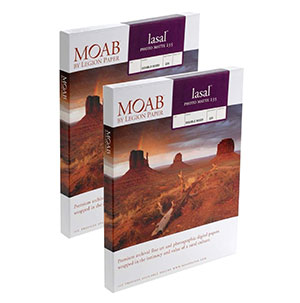
Archival Matte Paper, also known as Moab Lasal Photo Matte, is our house stock fine art paper and is an economical favorite for fine art reproductions and photo prints. It features a smooth surface, heavy weight (230 g, 9.5-mil), neutral white, matte paper engineered for accurate color reproduction that provides high contrast and high-resolution output. This paper is acid-free, making it the perfect choice for both photography & fine art reproductions.
Giclee William Turner Paper by Hahnemühle
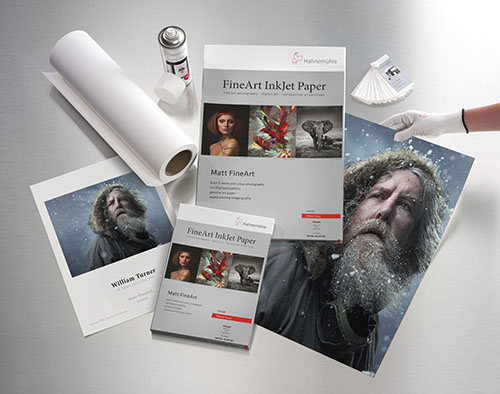
The William Turner by Hahnemühle is one of the most popular papers used in the Giclee printing industry. This is a 310g natural white mould made natural line paper with 100% rag content making it highly archival. It has a slight coarse texture which gives photos and artwork an elegant look. These fine art paper prints (also known as Giclee) are ordered by galleries, individual artists and photographers. The papers and inks are not only archival but use some of the most accurate print technology for full color prints.
- Giclee prints use very expensive archival pigmented inks.
- Highest level of color gamut available in printing (12 color printing).
- Exceptional black & white printing.
- Fade resistant, pigmented inks which provide a superior color range compared to other types of inks. Widely preferred in fine art and photography circles.
- We ONLY use professional grade fine art and photo paper that resist yellowing and aging.
Framing
We offer wood and metal frames, custom cut & joined to order. Each framed print includes hanging hardware and foamcore backer.
Matting
We use conservation grade 100% virgin alpha-cellulose 2 ply mats with white core. Acid-free and lignin-free, these are both face resistant and meet all conservation quality standards set by the Fine Art Trade Guild. Mats are digitally cut for ultimate precision. The window will be 1/8″ smaller than the print dimensions.
Glazing (Acrylic Glass)
We offer custom cut panes of shatter-proof, acrylic glass, to protect your valuable artwork and prints.
Premium Clear
Framing grade clear acrylic is shatter resistant and lightweight.
Reflection Control
With its matte finish, Tru Vue Reflection Control® Acrylic scatters light to diminish unwanted glare.
Conservation Clear
Tru Vue Conservation Clear® Acrylic is a framing industry staple, blocking up to 99% of UV rays for ultimate protection.
Conservation Reflection Control
Tru Vue Conservation Reflection Control® Acrylic scatters and diffuses light to reduce unwanted glare. Blocks up to 99% of UV rays.
Related products
-

PETER CUSHING – FRANKENSTEIN AND THE MONSTER FROM HELL (1974) Intense Close-Up Portrait
$25.00 -
BARBARA STEELE BLACK SUNDAY (1960) Katia Vajda Gothic Bed Mario Bava Publicity Photo
$38.00 -
PETER CUSHING & SUSAN DENBERG – FRANKENSTEIN CREATED WOMAN (1967) Operating Table Photo
$25.00 -
ROBERT HOSSEIN – THE VAMPIRE OF DÜSSELDORF (1965) Night Stalking Rare Crime Noir Photo
$25.00