

SEAN CONNERY & URSULA ANDRESS – DR. NO (1962) Crab Key White Bikini Hideout James Bond 007 Photo
Limited Edition Photograph (learn more)
In stock
An essential image for the serious James Bond collector, bringing together Sean Connery’s original 007 and Ursula Andress in her legendary white bikini during one of DR. NO’s (1962) memorable Crab Key sequences.
Bond and Honey Ryder press themselves against the shoreline embankment as they attempt to remain concealed from Dr. No’s patrol. Few images evoke the beginnings of the cinematic Bond phenomenon quite like Connery and Andress together on Crab Key—making this a distinctive addition to a growing DR. NO or 007 photographic archive.
SEAN CONNERY & URSULA ANDRESS – DR. NO (1962) Crab Key White Bikini Hideout James Bond 007 Photo
The composition beautifully captures the tension between concealment and exposure. Connery holds Andress closely as the pair remain low against the sandy embankment, surrounded by shallow water and the rugged natural terrain of Crab Key.
Andress wears the famous white bikini associated with Honey Ryder’s introduction—an image that became one of the defining visual signatures of the entire James Bond series. Here, however, the costume appears within the developing danger of the story rather than the more familiar introductory imagery of Honey emerging from the Caribbean.
Connery’s protective positioning adds another layer to the photograph. His Bond remains alert while holding Honey close against him, giving the image an unusual combination of suspense, physical intimacy and adventure.
For the Bond collector, that distinction matters. This isn't simply another posed portrait of Connery or another standalone glamour photograph of Andress. It preserves both stars together, in character, on Crab Key, within the film that introduced James Bond to cinema audiences around the world.
DR. NO is a 1962 spy adventure directed by Terence Young and starring Sean Connery as James Bond, Ursula Andress as Honey Ryder, Joseph Wiseman as Dr. Julius No and Jack Lord as Felix Leiter. Adapted from Ian Fleming’s 1958 novel, it became the first entry in the James Bond motion-picture series produced by Harry Saltzman and Albert R. Broccoli.
The story sends Bond to Jamaica to investigate the disappearance of British agent John Strangways. His investigation ultimately leads him to Crab Key, the private island controlled by Dr. No, where Bond encounters Honey Ryder and discovers the secret installation from which No plans to interfere with an American space launch.
Ursula Andress’s appearance as Honey Ryder became one of the defining performances of early Bond cinema. Her emergence from the Caribbean in the white bikini established an enduring piece of 1960s film iconography, while Sean Connery’s performance established the screen identity of James Bond for generations of moviegoers.
DR. NO consequently occupies a unique place within Bond collecting. It contains the beginnings of visual and character traditions that would develop across the franchise while retaining the comparatively raw atmosphere of the series’ first cinematic adventure.
For a collector building a serious archive of early James Bond imagery, this photograph brings several defining elements together in one frame: Sean Connery’s original 007, Ursula Andress, the white bikini, Crab Key and the danger surrounding Dr. No’s island—a compelling photographic record from the film that started the Bond phenomenon.
Carefully restored and professionally printed from archival source material, this museum-quality photograph is a distinctive collectible for admirers of Sean Connery, Ursula Andress, DR. NO, Honey Ryder, James Bond 007 and classic 1960s spy cinema.
Product Enquiry
Kodak Professional Endura Paper
Kodak Endura papers provide an incredible amount of detail and smooth transition of tones. Designed for the professional photographer in mind, looking for a more traditional photo print style, Kodak Endura provides an extended print life and color gamut almost at the level of a high end fine art paper print.
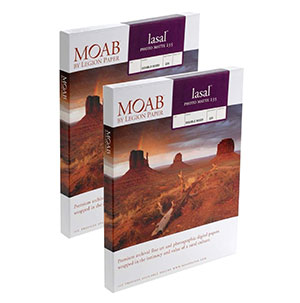
Archival Matte Paper
Archival Matte Paper, also known as Moab Lasal Photo Matte, is our house stock fine art paper and is an economical favorite for fine art reproductions and photo prints. It features a smooth surface, heavy weight (230 g, 9.5-mil), neutral white, matte paper engineered for accurate color reproduction that provides high contrast and high-resolution output. This paper is acid-free, making it the perfect choice for both photography & fine art reproductions.
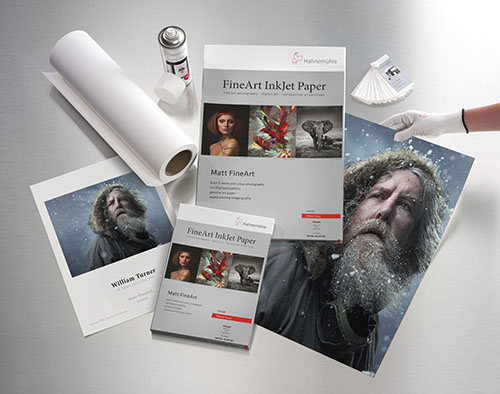
Giclee William Turner Paper by Hahnemühle
The William Turner by Hahnemühle is one of the most popular papers used in the Giclee printing industry. This is a 310g natural white mould made natural line paper with 100% rag content making it highly archival. It has a slight coarse texture which gives photos and artwork an elegant look. These fine art paper prints (also known as Giclee) are ordered by galleries, individual artists and photographers. The papers and inks are not only archival but use some of the most accurate print technology for full color prints.
- Giclee prints use very expensive archival pigmented inks.
- Highest level of color gamut available in printing (12 color printing).
- Exceptional black & white printing.
- Fade resistant, pigmented inks which provide a superior color range compared to other types of inks. Widely preferred in fine art and photography circles.
- We ONLY use professional grade fine art and photo paper that resist yellowing and aging.
Framing
We offer wood and metal frames, custom cut & joined to order. Each framed print includes hanging hardware and foamcore backer.
Matting
We use conservation grade 100% virgin alpha-cellulose 2 ply mats with white core. Acid-free and lignin-free, these are both face resistant and meet all conservation quality standards set by the Fine Art Trade Guild. Mats are digitally cut for ultimate precision. The window will be 1/8″ smaller than the print dimensions.
Glazing (Acrylic Glass)
We offer custom cut panes of shatter-proof, acrylic glass, to protect your valuable artwork and prints.
Premium Clear
Framing grade clear acrylic is shatter resistant and lightweight.
Reflection Control
With its matte finish, Tru Vue Reflection Control® Acrylic scatters light to diminish unwanted glare.
Conservation Clear
Tru Vue Conservation Clear® Acrylic is a framing industry staple, blocking up to 99% of UV rays for ultimate protection.
Conservation Reflection Control
Tru Vue Conservation Reflection Control® Acrylic scatters and diffuses light to reduce unwanted glare. Blocks up to 99% of UV rays.
Related products
-

SEAN CONNERY & ZENA MARSHALL – DR. NO (1962) Miss Taro Kiss James Bond 007 Photo
$25.00 -
SEAN CONNERY & LUCIANA PALUZZI – THUNDERBALL (1965) Legendary Bed Scene Photographers Rare James Bond 007 BTS Photo
$38.00 -
SEAN CONNERY – THUNDERBALL (1965) Rare After-Filming Beach Candid Nassau James Bond 007 BTS Photo
$30.00 -
SEAN CONNERY – THUNDERBALL (1965) Rare Nassau Frogman Suit Behind-the-Scenes Loomis Dean James Bond 007 Photo
$30.00