

UDO KIER & DALILA DI LAZZARO – FLESH FOR FRANKENSTEIN (1973) Laboratory Photo
Limited Edition Photograph (learn more)
In stock
Udo Kier’s Baron Frankenstein stands between two nude human figures inside his extraordinary laboratory in this visually arresting color image from FLESH FOR FRANKENSTEIN (1973), with Dalila Di Lazzaro creating one half of an almost perfectly balanced human tableau. The two figures face one another across the laboratory floor while Frankenstein and his assistant occupy the narrow space between them, producing a bizarrely beautiful composition that can evoke an Adam-and-Eve-like pairing reimagined through the grotesque world of Frankenstein.
The visual symmetry is remarkable.
Male and female.
Human flesh and mechanical apparatus.
Creation surrounded by the machinery of creation.
Whether or not the Biblical resemblance was intentional, the composition invites it—and gives an already extraordinary production image another layer to contemplate.
The Human Body Inside Frankenstein's Laboratory
Directed by Paul Morrissey, FLESH FOR FRANKENSTEIN (1973) transforms the familiar Frankenstein mythology into a deliberately excessive mixture of Gothic horror, satire, sexuality and grotesque spectacle, with Udo Kier delivering an unforgettable performance as Baron Frankenstein.
The laboratory is essential to that visual world.
And this photograph gives us an exceptional view of it.
Rather than isolating the performers in a conventional publicity arrangement, the composition allows the environment to remain fully visible.
Brickwork.
Stone.
Metal structures.
Laboratory equipment.
Cables.
Industrial surfaces.
The setting feels simultaneously ancient and mechanical—a fitting environment for a Baron attempting to manufacture idealized human life.
Against all of that hard material stand two completely exposed human forms.
The contrast is immediate.
Their bodies are visually simple and organic.
Everything surrounding them is constructed, textured and mechanical.
That juxtaposition makes the photograph considerably more interesting than a conventional laboratory still.
Then there is the extraordinary arrangement of the figures.
The man and woman face one another from opposite sides of the composition.
Frankenstein stands partially between them in his white laboratory coat, while his assistant occupies the remaining central space.
Nobody dominates the photograph completely.
Instead, the four bodies create a carefully layered tableau.
For the collector, that is the WHY.
FLESH FOR FRANKENSTEIN contains plenty of outrageous imagery.
Blood.
Bodies.
Surgical experimentation.
Grotesque humor.
But this photograph possesses something almost unexpectedly formal.
It has balance.
Look again at the two figures facing each other.
Removed from the surrounding context, their positioning can suggest the elemental pairing of man and woman—almost an Adam and Eve image.
But this is not Eden.
This is Frankenstein's laboratory.
And that reversal is fascinating.
Instead of humanity created naturally within paradise, the film gives us human bodies surrounded by machinery and observed by a man obsessed with manufacturing life according to his own design.
We should not claim that symbolism as documented production intent.
We don't need to.
The photograph allows the collector to see it.
That is more interesting.
Color strengthens the effect further.
Kier's white laboratory coat immediately identifies Frankenstein within the darker environment, while the natural skin tones of the two standing figures separate them from the browns, grays and metallic surfaces surrounding them.
The eye moves continuously between creator and creations, flesh and machinery, symmetry and disorder.
And unlike the Joe Dallesandro portrait we just examined, which succeeded by stripping the film's extravagant world away, this photograph does precisely the opposite.
It gives us the world.
The laboratory matters as much as the people.
That makes the two photographs excellent companions within a deeper FLESH FOR FRANKENSTEIN collection.
One preserves character through intimacy.
This one preserves concept through composition.
And once the collector notices that strange Adam-and-Eve resemblance, it becomes very difficult to unsee.
Preserved within the KissMeMonster photographic archive, this exceptional color image has been carefully restored to retain the natural tonal detail of the performers, Udo Kier’s contrasting laboratory coat, the elaborate brick and stone environment, surrounding apparatus and remarkable spatial balance of the original composition—preserving a visually fascinating representation of the grotesque world of FLESH FOR FRANKENSTEIN.
Product Enquiry
Kodak Professional Endura Paper
Kodak Endura papers provide an incredible amount of detail and smooth transition of tones. Designed for the professional photographer in mind, looking for a more traditional photo print style, Kodak Endura provides an extended print life and color gamut almost at the level of a high end fine art paper print.
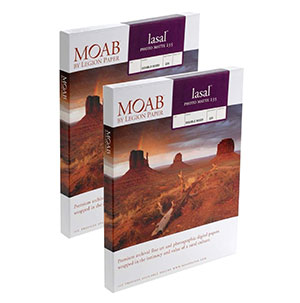
Archival Matte Paper
Archival Matte Paper, also known as Moab Lasal Photo Matte, is our house stock fine art paper and is an economical favorite for fine art reproductions and photo prints. It features a smooth surface, heavy weight (230 g, 9.5-mil), neutral white, matte paper engineered for accurate color reproduction that provides high contrast and high-resolution output. This paper is acid-free, making it the perfect choice for both photography & fine art reproductions.
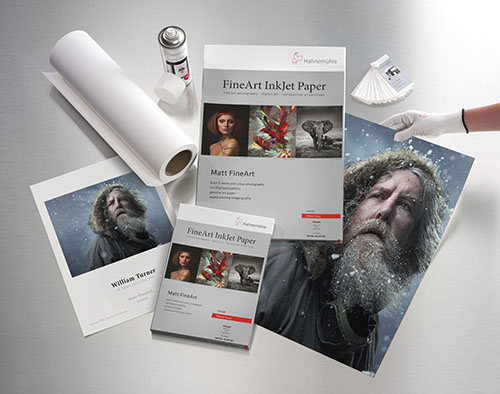
Giclee William Turner Paper by Hahnemühle
The William Turner by Hahnemühle is one of the most popular papers used in the Giclee printing industry. This is a 310g natural white mould made natural line paper with 100% rag content making it highly archival. It has a slight coarse texture which gives photos and artwork an elegant look. These fine art paper prints (also known as Giclee) are ordered by galleries, individual artists and photographers. The papers and inks are not only archival but use some of the most accurate print technology for full color prints.
- Giclee prints use very expensive archival pigmented inks.
- Highest level of color gamut available in printing (12 color printing).
- Exceptional black & white printing.
- Fade resistant, pigmented inks which provide a superior color range compared to other types of inks. Widely preferred in fine art and photography circles.
- We ONLY use professional grade fine art and photo paper that resist yellowing and aging.
Framing
We offer wood and metal frames, custom cut & joined to order. Each framed print includes hanging hardware and foamcore backer.
Matting
We use conservation grade 100% virgin alpha-cellulose 2 ply mats with white core. Acid-free and lignin-free, these are both face resistant and meet all conservation quality standards set by the Fine Art Trade Guild. Mats are digitally cut for ultimate precision. The window will be 1/8″ smaller than the print dimensions.
Glazing (Acrylic Glass)
We offer custom cut panes of shatter-proof, acrylic glass, to protect your valuable artwork and prints.
Premium Clear
Framing grade clear acrylic is shatter resistant and lightweight.
Reflection Control
With its matte finish, Tru Vue Reflection Control® Acrylic scatters light to diminish unwanted glare.
Conservation Clear
Tru Vue Conservation Clear® Acrylic is a framing industry staple, blocking up to 99% of UV rays for ultimate protection.
Conservation Reflection Control
Tru Vue Conservation Reflection Control® Acrylic scatters and diffuses light to reduce unwanted glare. Blocks up to 99% of UV rays.
Related products
-

KING KONG ESCAPES (1967) Kong Gorosaurus Mechani-Kong Kaiju Promotional Art
$25.00 -
CATHERINE DENEUVE – REPULSION (1965) Carol Ledoux Psychological Portrait
$30.00 -
PETER CUSHING – FRANKENSTEIN AND THE MONSTER FROM HELL (1974) Baron Frankenstein Portrait
$30.00 -
CHRISTOPHER LEE – HORROR OF DRACULA (1958) Bloody Lips Fangs Iconic Hammer Photo
$30.00