

HAZEL COURT – HOLIDAY CAMP (1947) Swimsuit Ladder Glamour Publicity Photo
Limited Edition Photograph (learn more)
In stock
Years before Hazel Court became one of the most recognizable women of British and American Gothic horror, the young actress displayed an entirely different screen image in this exceptional black-and-white publicity photograph associated with HOLIDAY CAMP (1947).
Wearing a stylish two-piece swimsuit while posed against a simple wooden ladder, Court combines youthful elegance with unmistakable 1940s pin-up glamour—a particularly fascinating image for collectors because it preserves Hazel Court near the beginning of her film career, long before castles, monsters and Gothic menace became such an important part of her screen legacy.
The pose is wonderfully classic.
Court stands with her ankles crossed, one hand resting naturally along her hip while the ladder rises directly behind her, creating a strong vertical structure through the composition.
Simple setting. Strong pose. Beautiful subject.
Nothing more is required.
Before Hazel Court Became a Gothic Horror Icon
HOLIDAY CAMP (1947), directed by Ken Annakin, marked an important early screen appearance for Hazel Court and introduced audiences to the Huggett family, who would subsequently return in a series of British films.
For the modern collector, however, this photograph acquires another fascinating dimension through hindsight.
We know what Hazel Court's career would become.
We know THE CURSE OF FRANKENSTEIN.
We know THE MAN WHO COULD CHEAT DEATH.
We know THE RAVEN.
We know THE MASQUE OF THE RED DEATH.
But the young woman standing beside this ladder did not yet carry decades of Gothic associations.
That is the WHY.
This is not Hazel Court photographed as a horror heroine.
It is not a later retrospective glamour image of an established star.
It preserves an early Hazel Court, presented through the visual language of postwar British glamour photography.
And the difference is immediately apparent.
The two-piece swimsuit creates a strong graphic silhouette, with the dark fabric contrasting beautifully against Court's skin and the pale background.
The tied and draped construction of the lower portion introduces movement while the structured top gives the costume an unmistakably period character.
Then there are the legs.
Their long vertical lines echo the ladder behind her, while the crossed ankles prevent the pose from becoming rigid.
That is clever composition.
The ladder isn't merely a prop.
It gives the entire photograph architecture.
Its repeating horizontal rungs contrast with Court's figure while providing just enough visual information to make the image distinctive without distracting from her.
The result has the immediacy of a classic pin-up photograph while remaining elegant and controlled.
Court herself appears completely comfortable before the camera.
There is none of the fear or dramatic emotional intensity collectors would later associate with some of her most famous horror performances.
Instead, the image communicates youth, glamour and confidence.
For the serious Hazel Court collector, that contrast makes the photograph especially desirable.
A photograph from THE CURSE OF FRANKENSTEIN can preserve Hazel Court the Hammer heroine.
An image from THE RAVEN or THE MASQUE OF THE RED DEATH can preserve Hazel Court within the world of Gothic horror.
But this photograph gives the collection something those images cannot:
HAZEL COURT BEFORE THE HORROR LEGEND.
That makes it more than simply an attractive swimsuit photograph.
It becomes part of the visual chronology of a career.
And that chronology is what sophisticated collecting eventually becomes about.
The deeper the collection, the more fascinating it is to see transformation.
Early career.
Established actress.
Gothic leading lady.
International horror personality.
Each period adds context to the others.
Suddenly this seemingly straightforward pin-up image becomes historically interesting because the collector knows who this young actress will become.
That is one of archival photography's great pleasures.
We can look backward with knowledge the original audience did not possess.
A moviegoer encountering Hazel Court in 1947 could simply see an attractive young British actress.
The modern horror collector sees something else.
The beginning.
And visually, it remains a terrific photograph independent of that history.
The dark swimsuit.
The pale studio background.
The wooden ladder.
The crossed ankles.
The elegantly arranged pose.
Everything is clean and immediate.
Nothing fights for attention.
Hazel Court owns the frame.
For display alongside her later Gothic imagery, the contrast would be particularly striking.
Place this beside Court surrounded by laboratory equipment, Victorian interiors or macabre Gothic scenery and suddenly the breadth of her screen identity becomes visible rather than merely described.
That is why this photograph belongs in a serious Hazel Court collection.
Not because it repeats the woman collectors already know.
Because it shows them the woman before she became that woman.
Preserved within the KissMeMonster photographic archive, this exceptional black-and-white publicity image has been carefully restored to retain the elegant tonal detail of Hazel Court’s period swimsuit, the strong geometric lines of the wooden ladder and the beautifully controlled character of the original glamour composition—preserving a fascinating early image of an actress who would later become one of Gothic horror cinema’s most recognizable leading women.
Product Enquiry
Kodak Professional Endura Paper
Kodak Endura papers provide an incredible amount of detail and smooth transition of tones. Designed for the professional photographer in mind, looking for a more traditional photo print style, Kodak Endura provides an extended print life and color gamut almost at the level of a high end fine art paper print.
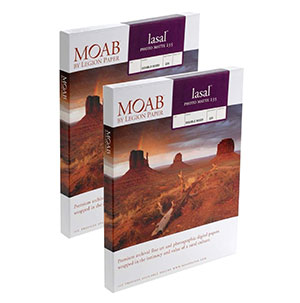
Archival Matte Paper
Archival Matte Paper, also known as Moab Lasal Photo Matte, is our house stock fine art paper and is an economical favorite for fine art reproductions and photo prints. It features a smooth surface, heavy weight (230 g, 9.5-mil), neutral white, matte paper engineered for accurate color reproduction that provides high contrast and high-resolution output. This paper is acid-free, making it the perfect choice for both photography & fine art reproductions.
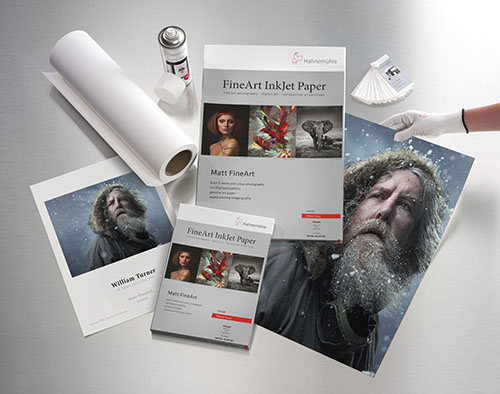
Giclee William Turner Paper by Hahnemühle
The William Turner by Hahnemühle is one of the most popular papers used in the Giclee printing industry. This is a 310g natural white mould made natural line paper with 100% rag content making it highly archival. It has a slight coarse texture which gives photos and artwork an elegant look. These fine art paper prints (also known as Giclee) are ordered by galleries, individual artists and photographers. The papers and inks are not only archival but use some of the most accurate print technology for full color prints.
- Giclee prints use very expensive archival pigmented inks.
- Highest level of color gamut available in printing (12 color printing).
- Exceptional black & white printing.
- Fade resistant, pigmented inks which provide a superior color range compared to other types of inks. Widely preferred in fine art and photography circles.
- We ONLY use professional grade fine art and photo paper that resist yellowing and aging.
Framing
We offer wood and metal frames, custom cut & joined to order. Each framed print includes hanging hardware and foamcore backer.
Matting
We use conservation grade 100% virgin alpha-cellulose 2 ply mats with white core. Acid-free and lignin-free, these are both face resistant and meet all conservation quality standards set by the Fine Art Trade Guild. Mats are digitally cut for ultimate precision. The window will be 1/8″ smaller than the print dimensions.
Glazing (Acrylic Glass)
We offer custom cut panes of shatter-proof, acrylic glass, to protect your valuable artwork and prints.
Premium Clear
Framing grade clear acrylic is shatter resistant and lightweight.
Reflection Control
With its matte finish, Tru Vue Reflection Control® Acrylic scatters light to diminish unwanted glare.
Conservation Clear
Tru Vue Conservation Clear® Acrylic is a framing industry staple, blocking up to 99% of UV rays for ultimate protection.
Conservation Reflection Control
Tru Vue Conservation Reflection Control® Acrylic scatters and diffuses light to reduce unwanted glare. Blocks up to 99% of UV rays.
Related products
-

ROBERT HOSSEIN & MARIE-FRANCE PISIER – THE VAMPIRE OF DÜSSELDORF (1965) Overhead Murder Scene Rare Crime Noir Photo
$30.00 -
PETER CUSHING – THE CURSE OF FRANKENSTEIN (1957) Baron Frankenstein Portrait
$30.00 -
YUTTE STENSGAARD – LUST FOR A VAMPIRE (1971) Nightgown Hammer Horror Photo
$30.00 -
FITZCARRALDO (1982) – Steamship on Mountainside Rare Behind-the-Scenes Photo
$25.00