

INGRID PITT (1971) Rare Topless Tapestry Glamour Portrait Hammer Horror Photo
Limited Edition Photograph (learn more)
In stock
Ingrid Pitt reveals an unexpectedly playful and almost innocent side of her screen persona in this rare circa-1971 black-and-white glamour portrait, posing topless before an enormous ornate floral tapestry while holding dark fabric modestly across the front of her body. With tousled blonde hair framing her face and one finger resting gently against her lips, Pitt looks directly toward the camera with a soft, questioning expression—a fascinating contradiction to the dangerous and commanding women who had already made her an icon of British Gothic horror.
The pose suggests glamour.
The expression suggests innocence.
And putting the two together is what makes the photograph so compelling.
Behind everything is that extraordinary tapestry.
Another Face of Ingrid Pitt
By 1971, Ingrid Pitt had established the performances that would permanently connect her with Hammer Horror.
In THE VAMPIRE LOVERS (1970), she portrayed Carmilla Karnstein, bringing beauty, sensuality and predatory menace to one of Hammer's defining vampire productions.
COUNTESS DRACULA (1971) placed her at the center of another dark Gothic story, further establishing the formidable screen personality that collectors continue to associate with Pitt.
This portrait gives us almost the opposite woman.
No fangs.
No blood.
No threatening expression.
No elaborate film set.
Instead, Pitt turns partly away from the camera, exposing the long line of her bare shoulder and back while holding dark fabric across the front of her body.
Then comes that wonderfully unexpected gesture.
Her finger rests against her lips.
It is such a small detail—
but it changes the emotional character of the entire photograph.
Rather than projecting the confidence of a conventional glamour pose, Pitt suddenly appears playful.
Curious.
Almost coy.
There is an intriguing innocence in the expression that works directly against the sophistication of the composition.
That contradiction is the collector WHY.
The woman collectors know as one of Hammer's most magnetic vampires appears almost like someone pretending she has no idea how provocative the photograph actually is.
And Pitt's hair reinforces that impression.
It isn't rigidly arranged into a formal studio style.
Instead, the blonde waves fall loosely around her face, partially covering one eye and softening her features.
That looseness makes the portrait feel more intimate.
Then the background takes over.
The enormous floral tapestry fills virtually every available space behind Pitt.
Leaves.
Flowers.
Vines.
Dense ornamental patterns.
Against the smooth tonal simplicity of Pitt's skin and the dark fabric she holds, the tapestry becomes an explosion of texture.
That contrast is extremely effective in black and white.
There is no color to separate the elements.
Texture has to do the work.
Soft skin.
Dark fabric.
Flowing hair.
Intricate tapestry.
Each surface has a completely different visual character.
And because the floral design has an unmistakably old-world quality, it subtly reconnects Pitt with the Gothic atmosphere that surrounded so much of her screen career.
The photograph contains no Gothic narrative—yet somehow Pitt still looks perfectly at home within it.
For the collector, that makes the image considerably more interesting than a generic glamour portrait.
It presents the actress outside a specific character while allowing our knowledge of those characters to influence how we see her.
We know Carmilla.
We know the Countess.
We know the dangerous Ingrid Pitt screen persona.
Then we encounter this woman with tousled hair and a finger against her lips.
The contrast makes us look twice.
And that is precisely what a deeper collection should accomplish.
Not fifty photographs repeating the same idea.
Different photographs revealing different aspects of the same performer.
The vampire portraits preserve Pitt's mythology.
The management portraits preserve the professional actress.
This portrait preserves the playful glamour personality that existed somewhere between them.
Even the composition contributes to that ambiguity.
Pitt turns away—
but looks back.
She covers herself—
but poses topless.
The expression appears innocent—
while the photograph is deliberately glamorous.
Everything works through contradiction.
And behind it all, that magnificent tapestry quietly gives the portrait its unmistakable visual identity.
Preserved within the KissMeMonster photographic archive, this rare black-and-white glamour portrait has been carefully restored to retain the delicate tonal detail of Ingrid Pitt's expressive features, the soft texture of her tousled blonde hair, the deep character of the fabric held across her body and the extraordinary floral detail of the ornate tapestry—preserving an unusually playful and sophisticated image of one of British Gothic cinema's most enduring personalities.
Product Enquiry
Kodak Professional Endura Paper
Kodak Endura papers provide an incredible amount of detail and smooth transition of tones. Designed for the professional photographer in mind, looking for a more traditional photo print style, Kodak Endura provides an extended print life and color gamut almost at the level of a high end fine art paper print.
Archival Matte Paper
Archival Matte Paper, also known as Moab Lasal Photo Matte, is our house stock fine art paper and is an economical favorite for fine art reproductions and photo prints. It features a smooth surface, heavy weight (230 g, 9.5-mil), neutral white, matte paper engineered for accurate color reproduction that provides high contrast and high-resolution output. This paper is acid-free, making it the perfect choice for both photography & fine art reproductions.
Giclee William Turner Paper by Hahnemühle
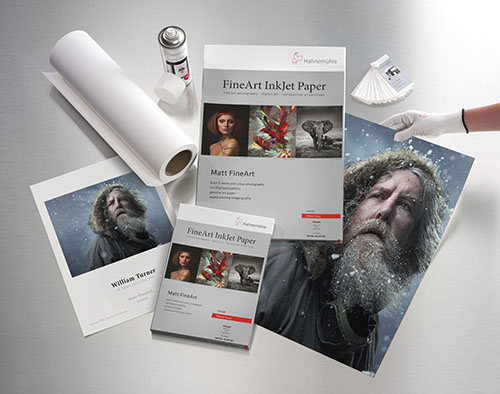
The William Turner by Hahnemühle is one of the most popular papers used in the Giclee printing industry. This is a 310g natural white mould made natural line paper with 100% rag content making it highly archival. It has a slight coarse texture which gives photos and artwork an elegant look. These fine art paper prints (also known as Giclee) are ordered by galleries, individual artists and photographers. The papers and inks are not only archival but use some of the most accurate print technology for full color prints.
- Giclee prints use very expensive archival pigmented inks.
- Highest level of color gamut available in printing (12 color printing).
- Exceptional black & white printing.
- Fade resistant, pigmented inks which provide a superior color range compared to other types of inks. Widely preferred in fine art and photography circles.
- We ONLY use professional grade fine art and photo paper that resist yellowing and aging.
Framing
We offer wood and metal frames, custom cut & joined to order. Each framed print includes hanging hardware and foamcore backer.
Matting
We use conservation grade 100% virgin alpha-cellulose 2 ply mats with white core. Acid-free and lignin-free, these are both face resistant and meet all conservation quality standards set by the Fine Art Trade Guild. Mats are digitally cut for ultimate precision. The window will be 1/8″ smaller than the print dimensions.
Glazing (Acrylic Glass)
We offer custom cut panes of shatter-proof, acrylic glass, to protect your valuable artwork and prints.
Premium Clear
Framing grade clear acrylic is shatter resistant and lightweight.
Reflection Control
With its matte finish, Tru Vue Reflection Control® Acrylic scatters light to diminish unwanted glare.
Conservation Clear
Tru Vue Conservation Clear® Acrylic is a framing industry staple, blocking up to 99% of UV rays for ultimate protection.
Conservation Reflection Control
Tru Vue Conservation Reflection Control® Acrylic scatters and diffuses light to reduce unwanted glare. Blocks up to 99% of UV rays.
Related products
-

PETER CUSHING, INGRID PITT & DAWN ADDAMS – THE VAMPIRE LOVERS (1970) Press Photo
$30.00 -
SYLVIA KRISTEL & CATHERINE RIVET – EMMANUELLE 2 (1975) Intimate Scene Rare Paramount Publicity Photo
$30.00 -
LEONARD WHITING – FRANKENSTEIN: THE TRUE STORY (1973) Bloody Severed Arm Photo
$25.00 -
FITZCARRALDO (1982) – Steamship on Mountainside Rare Behind-the-Scenes Photo
$25.00