

PETER CUSHING – THE CURSE OF FRANKENSTEIN (1957) Black Gloves Portrait
Limited Edition Photograph (learn more)
In stock
A commanding studio portrait of Peter Cushing as Baron Victor Frankenstein reveals the colder, aristocratic authority behind his landmark performance in THE CURSE OF FRANKENSTEIN.
Wearing dark leather gloves with both hands deliberately resting across his top hat, Cushing fixes the camera with an extraordinarily controlled, penetrating gaze—an elegant yet formidable image from the film that established Hammer’s revolutionary new vision of Gothic horror.
Every element contributes to the characterization. Cushing’s immaculate Victorian evening clothes and crisp white cravat convey refinement, while the dark gloves introduce an unusually severe visual detail. His hands rest almost motionless upon the top hat, creating a strong diagonal through the composition as his face emerges above them. Nothing about the pose feels accidental; the restraint itself gives the photograph its intensity.
The Aristocratic Face of Frankenstein
Directed by Terence Fisher, THE CURSE OF FRANKENSTEIN (1957) introduced Peter Cushing as Baron Victor Frankenstein opposite Christopher Lee as the Creature, with Hazel Court and Robert Urquhart. Hammer’s first color Gothic horror film became an international success and inaugurated the studio’s celebrated Frankenstein cycle.
Cushing’s interpretation was fundamental to that success. His Baron was not merely the familiar scientist overwhelmed by an experiment gone wrong. Intelligent, sophisticated, determined and increasingly ruthless, Cushing’s Frankenstein remained the driving personality of the story—a man whose cultivated exterior made his willingness to violate moral boundaries all the more disturbing.
This portrait captures that contradiction beautifully.
There are no bubbling laboratory vessels, electrical machines or grotesque Creature to announce that this is a horror film. Instead, the menace resides almost entirely within Cushing’s extraordinary composure. The formal costume suggests the Victorian gentleman; the black gloves, rigid posture and unwavering expression hint at something considerably darker beneath the surface.
The photograph also provides a fascinating counterpart to more contemplative portraits of Cushing from THE CURSE OF FRANKENSTEIN. Where those images emphasize the Baron’s intellect, this unusually stern composition emphasizes authority and resolve, adding another dimension to the photographic record of the performance that launched Cushing’s long association with Hammer.
For admirers of Hammer’s Frankenstein cycle, that distinction gives the image particular resonance. This is Baron Frankenstein before the laboratory spectacle is even necessary—the character’s intelligence, refinement and dangerous determination communicated through Cushing alone.
Preserved within the KissMeMonster photographic archive, this distinguished black-and-white portrait has been carefully restored to retain the subtle tonal gradations of Cushing’s formal costume, the rich texture of the dark leather gloves and top hat, and the exceptional facial detail that gives his penetrating expression such remarkable presence—preserving a striking photographic record of Hammer’s original Baron Frankenstein.
Product Enquiry
Kodak Professional Endura Paper
Kodak Endura papers provide an incredible amount of detail and smooth transition of tones. Designed for the professional photographer in mind, looking for a more traditional photo print style, Kodak Endura provides an extended print life and color gamut almost at the level of a high end fine art paper print.
Archival Matte Paper
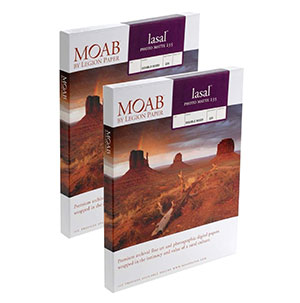
Archival Matte Paper, also known as Moab Lasal Photo Matte, is our house stock fine art paper and is an economical favorite for fine art reproductions and photo prints. It features a smooth surface, heavy weight (230 g, 9.5-mil), neutral white, matte paper engineered for accurate color reproduction that provides high contrast and high-resolution output. This paper is acid-free, making it the perfect choice for both photography & fine art reproductions.
Giclee William Turner Paper by Hahnemühle
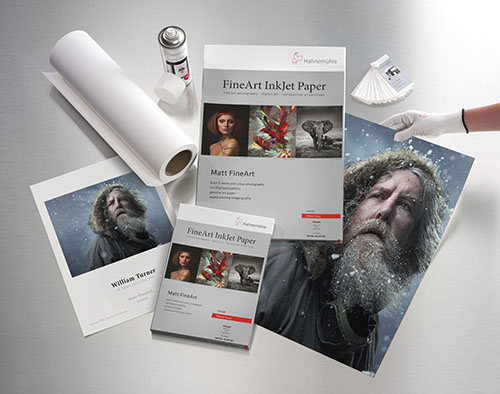
The William Turner by Hahnemühle is one of the most popular papers used in the Giclee printing industry. This is a 310g natural white mould made natural line paper with 100% rag content making it highly archival. It has a slight coarse texture which gives photos and artwork an elegant look. These fine art paper prints (also known as Giclee) are ordered by galleries, individual artists and photographers. The papers and inks are not only archival but use some of the most accurate print technology for full color prints.
- Giclee prints use very expensive archival pigmented inks.
- Highest level of color gamut available in printing (12 color printing).
- Exceptional black & white printing.
- Fade resistant, pigmented inks which provide a superior color range compared to other types of inks. Widely preferred in fine art and photography circles.
- We ONLY use professional grade fine art and photo paper that resist yellowing and aging.
Framing
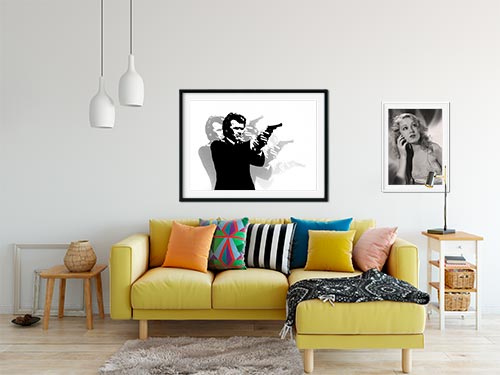
We offer wood and metal frames, custom cut & joined to order. Each framed print includes hanging hardware and foamcore backer.
Matting
We use conservation grade 100% virgin alpha-cellulose 2 ply mats with white core. Acid-free and lignin-free, these are both face resistant and meet all conservation quality standards set by the Fine Art Trade Guild. Mats are digitally cut for ultimate precision. The window will be 1/8″ smaller than the print dimensions.
Glazing (Acrylic Glass)
We offer custom cut panes of shatter-proof, acrylic glass, to protect your valuable artwork and prints.
Premium Clear
Framing grade clear acrylic is shatter resistant and lightweight.
Reflection Control
With its matte finish, Tru Vue Reflection Control® Acrylic scatters light to diminish unwanted glare.
Conservation Clear
Tru Vue Conservation Clear® Acrylic is a framing industry staple, blocking up to 99% of UV rays for ultimate protection.
Conservation Reflection Control
Tru Vue Conservation Reflection Control® Acrylic scatters and diffuses light to reduce unwanted glare. Blocks up to 99% of UV rays.
Related products
-

PETER CUSHING & SANDOR ELÈS – THE EVIL OF FRANKENSTEIN (1964) Laboratory Photo
$25.00 -
PETER CUSHING – TORTURE GARDEN (1967) The Man Who Collected Poe Amicus Horror Portrait Photo
$30.00 -
PETER CUSHING & CHRISTOPHER LEE – THE CURSE OF FRANKENSTEIN (1957) Creature Awakens Rare Hammer Horror Photo
$25.00 -
PETER CUSHING & VERONICA CARLSON – FRANKENSTEIN MUST BE DESTROYED (1969) Script Reading Behind-the-Scenes Hammer Horror Photo
$30.00