

Christopher Lee & Caroline Munro – Dracula A.D. 1972 Laura Bellows Black Mass Aftermath Vampire Attack Hammer Horror Photo
Limited Edition Photograph (learn more)
In stock
Christopher Lee as Count Dracula closes upon Caroline Munro as Laura Bellows in this extraordinary color image from Dracula A.D. 1972, Laura’s head thrown dramatically backward as the ritual blood from the preceding Black Mass covers her exposed throat and chest. Lee’s concentrated expression, visible fangs and the violent contrast between his black costume, Munro’s pale skin and the vivid crimson blood create an exceptionally visceral example of Hammer Horror vampire imagery.
The photograph is especially powerful because it captures the immediate aftermath of the ceremony that restores Dracula to life. Rather than showing an ordinary vampire bite in isolation, the image preserves the precise visual logic of the sequence: Laura has already been drenched in ritual blood during Johnny Alucard’s occult rite, and Dracula then turns upon her after his resurrection. That distinction gives the image a dramatic complexity beyond a conventional attack still.
Caroline Munro’s pose contributes enormously to the photograph’s impact. Her head is arched sharply backward, exposing the blood-smeared throat that becomes the visual center of the composition, while her dark hair and partially visible costume intensify the sense of ritual disorder. Christopher Lee’s Dracula remains close and predatory, his fangs visible and his expression focused, creating a terrifying contrast between Munro’s vulnerability and the Count’s controlled menace.
Released in 1972, Dracula A.D. 1972 brought Hammer’s Dracula series into contemporary London, deliberately fusing the studio’s established Gothic vampire mythology with the fashions, youth culture and occult atmosphere of the early 1970s. The film begins with a nineteenth-century confrontation before shifting a century forward to Dracula’s resurrection through a modern Black Mass.
Directed by Alan Gibson for Hammer Film Productions, the film stars Christopher Lee as Count Dracula, Peter Cushing as Professor Lorrimer Van Helsing, Stephanie Beacham as Jessica Van Helsing, Christopher Neame as Johnny Alucard and Caroline Munro as Laura Bellows. Munro’s Laura becomes tragically central to the film’s supernatural revival sequence.
The Black Mass at St. Bartolph’s Church is one of the production’s most memorable set pieces. Alucard gathers the group in the deconsecrated church and uses ritual blood as part of the ceremony that restores Dracula to life. Once the rite succeeds and panic spreads, Laura is left exposed to the Count and becomes his first victim in the newly revived modern cycle of terror.
The rich Hammer color palette heightens everything. The deep crimson blood, Lee’s black costume and Munro’s pale skin create a violent visual contrast that makes the still instantly arresting. Tight framing eliminates unnecessary background detail, allowing the composition to focus entirely on Dracula, Laura and the horrifying aftermath of the resurrection ritual.
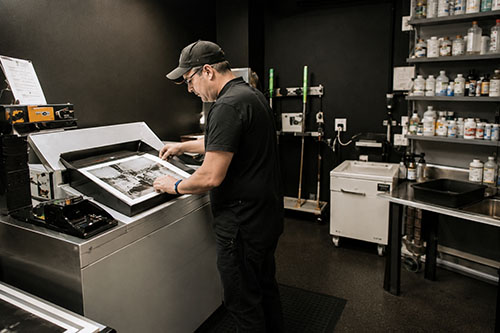
Carefully restored from archival source material and professionally lab-developed, this museum-quality photograph is presented uncropped, preserving the complete image area contained in the archival source. Meticulous restoration recovers natural color balance, facial clarity, blood detail, costume texture and photographic integrity while retaining the intense character of the original color image.
For collectors of Christopher Lee, Caroline Munro and Dracula A.D. 1972, this is an especially powerful piece of Hammer Horror imagery—a vivid Black Mass aftermath still in which Dracula’s visible fangs, Laura Bellows’ blood-covered throat and chest, Munro’s dramatic backward pose and the ritual violence of Dracula’s resurrection combine into one of the film’s most memorable vampire images, making it especially desirable for collectors of Hammer Films, Count Dracula, Caroline Munro photography, British Gothic horror and classic 1970s vampire cinema.
Product Enquiry
Kodak Professional Endura Paper
Kodak Endura papers provide an incredible amount of detail and smooth transition of tones. Designed for the professional photographer in mind, looking for a more traditional photo print style, Kodak Endura provides an extended print life and color gamut almost at the level of a high end fine art paper print.
Archival Matte Paper
Archival Matte Paper, also known as Moab Lasal Photo Matte, is our house stock fine art paper and is an economical favorite for fine art reproductions and photo prints. It features a smooth surface, heavy weight (230 g, 9.5-mil), neutral white, matte paper engineered for accurate color reproduction that provides high contrast and high-resolution output. This paper is acid-free, making it the perfect choice for both photography & fine art reproductions.
Giclee William Turner Paper by Hahnemühle
The William Turner by Hahnemühle is one of the most popular papers used in the Giclee printing industry. This is a 310g natural white mould made natural line paper with 100% rag content making it highly archival. It has a slight coarse texture which gives photos and artwork an elegant look. These fine art paper prints (also known as Giclee) are ordered by galleries, individual artists and photographers. The papers and inks are not only archival but use some of the most accurate print technology for full color prints.
- Giclee prints use very expensive archival pigmented inks.
- Highest level of color gamut available in printing (12 color printing).
- Exceptional black & white printing.
- Fade resistant, pigmented inks which provide a superior color range compared to other types of inks. Widely preferred in fine art and photography circles.
- We ONLY use professional grade fine art and photo paper that resist yellowing and aging.
Framing
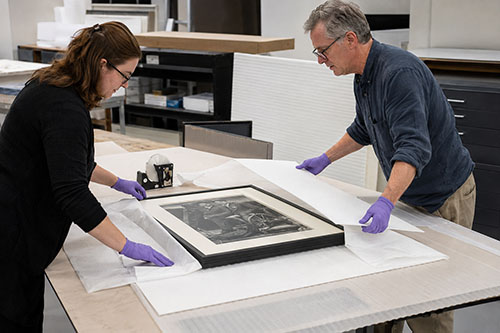
We offer wood and metal frames, custom cut & joined to order. Each framed print includes hanging hardware and foamcore backer.
Matting
We use conservation grade 100% virgin alpha-cellulose 2 ply mats with white core. Acid-free and lignin-free, these are both face resistant and meet all conservation quality standards set by the Fine Art Trade Guild. Mats are digitally cut for ultimate precision. The window will be 1/8″ smaller than the print dimensions.
Glazing (Acrylic Glass)
We offer custom cut panes of shatter-proof, acrylic glass, to protect your valuable artwork and prints.
Premium Clear
Framing grade clear acrylic is shatter resistant and lightweight.
Reflection Control
With its matte finish, Tru Vue Reflection Control® Acrylic scatters light to diminish unwanted glare.
Conservation Clear
Tru Vue Conservation Clear® Acrylic is a framing industry staple, blocking up to 99% of UV rays for ultimate protection.
Conservation Reflection Control
Tru Vue Conservation Reflection Control® Acrylic scatters and diffuses light to reduce unwanted glare. Blocks up to 99% of UV rays.
Related products
-

Circus of Fear (1966) Christopher Lee Australian One-Sheet Artwork 30×41 Fine Art Poster
$149.85 -
Christopher Lee – Dracula Has Risen from the Grave (1968) Count Dracula Bloody Lips Coffin Photo
$30.00 -
Dracula Has Risen from the Grave (1968) Christopher Lee Japanese Theatrical Design Hammer Horror 18×24 Fine Art Poster
$149.85 -
Christopher Lee – Scars of Dracula (1970) Red-Eyed Count Dracula Hammer Horror Photo
$25.00


