

Christopher Lee – Dracula Has Risen from the Grave (1968) Count Dracula Bloody Lips Coffin Photo
Limited Edition Photograph (learn more)
In stock
Christopher Lee lies as Count Dracula inside his open coffin in this haunting color photograph from Dracula Has Risen from the Grave (1968), his pale face, fixed upward gaze and bloody lips isolated against the surrounding darkness. Ornate gold-edged coffin upholstery frames Lee’s head while flashes of the Count’s vivid red cape lining break through the predominantly black composition. The unusual stillness and intimate viewpoint give this image a markedly different character from the film’s more violent Dracula photographs.
The photograph is built around Dracula’s face and the confined geometry of the coffin. Lee lies almost motionless against the pale interior lining, his head turned slightly toward the camera while his eyes remain directed upward. A narrow trace of blood crosses his lips, immediately adding menace to an otherwise restrained composition. The surrounding black fabric of Dracula’s clothing merges with the deep shadows at the edges of the frame, allowing his face to emerge as the principal area of light.
The coffin itself contributes significantly to the image. Its angular rim cuts diagonally across the foreground and encloses Lee within a sharply defined space, while decorative gold trim follows the upper edge near his head. Small brass fittings are visible along the side, and the pale lining beneath him provides a contrasting background for his dark hair and clothing. A strip of brilliant red cape lining appears near the lower left, supplying the strongest color accent in the photograph and immediately reinforcing Dracula’s familiar Hammer screen identity.
Unlike images showing the Count attacking, struggling or exposing his fangs, this Christopher Lee Dracula Has Risen from the Grave coffin photo depends upon stillness. Lee’s expression is controlled and almost remote, yet the blood at his mouth prevents the image from becoming peaceful. The contrast between apparent repose and unmistakable evidence of vampirism creates an eerie tension, suggesting that Dracula may be dormant rather than helpless. That ambiguity is one of the photograph’s greatest strengths.
Directed by Freddie Francis for Hammer Film Productions, Dracula Has Risen from the Grave was released in 1968 and marked Christopher Lee’s third Hammer appearance as Count Dracula, following Dracula (1958) and Dracula: Prince of Darkness (1966). The story begins with Dracula’s frozen body trapped beneath the ice below his castle. When blood from an injured priest reaches him, the Count is revived and returns to pursue vengeance against Monsignor Ernst Mueller, played by Rupert Davies.
The film also stars Veronica Carlson as Maria Mueller, Barry Andrews as Paul, Barbara Ewing as Zena and Ewan Hooper as the priest. Maria becomes central to Dracula’s revenge after the Monsignor places a cross at the entrance to the Count’s castle. The resulting story combines religious imagery, forbidden romance and vampire horror within one of Hammer’s most visually saturated late-1960s Gothic productions.
Cinematographer Arthur Grant gave the film a rich color palette built around deep blacks, warm skin tones and vivid reds, qualities strongly represented in this photograph. The red cape lining, gold coffin trim, pale face and surrounding darkness create a compact but unmistakably Hammer composition.
For collectors of Christopher Lee, Hammer Dracula imagery and classic British horror, the photograph offers a particularly atmospheric view of the Count. Rather than emphasizing physical action, it presents Dracula in his most iconic resting place, enclosed within the coffin and reduced to a few powerful visual details: pale skin, dark clothing, red lining and blood-marked lips.
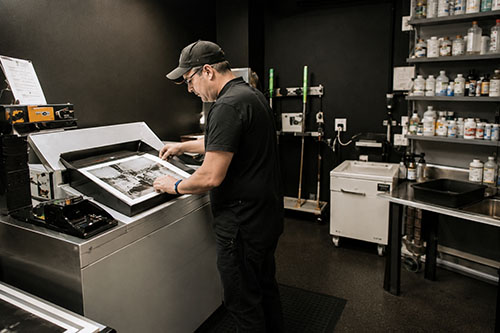
Carefully restored from historic photographic source material and professionally lab-developed, this museum-quality photograph is presented uncropped, preserving the complete image area contained in the source. Restoration recovers Lee’s facial detail, blood at the lips, coffin upholstery, gold trim, brass fittings, dark costume definition and vivid red cape lining while maintaining the natural color balance and authentic character of the historic photograph. The finished photograph contains no AI-generated image content.
Product Enquiry
Kodak Professional Endura Paper
Kodak Endura papers provide an incredible amount of detail and smooth transition of tones. Designed for the professional photographer in mind, looking for a more traditional photo print style, Kodak Endura provides an extended print life and color gamut almost at the level of a high end fine art paper print.
Archival Matte Paper
Archival Matte Paper, also known as Moab Lasal Photo Matte, is our house stock fine art paper and is an economical favorite for fine art reproductions and photo prints. It features a smooth surface, heavy weight (230 g, 9.5-mil), neutral white, matte paper engineered for accurate color reproduction that provides high contrast and high-resolution output. This paper is acid-free, making it the perfect choice for both photography & fine art reproductions.
Giclee William Turner Paper by Hahnemühle
The William Turner by Hahnemühle is one of the most popular papers used in the Giclee printing industry. This is a 310g natural white mould made natural line paper with 100% rag content making it highly archival. It has a slight coarse texture which gives photos and artwork an elegant look. These fine art paper prints (also known as Giclee) are ordered by galleries, individual artists and photographers. The papers and inks are not only archival but use some of the most accurate print technology for full color prints.
- Giclee prints use very expensive archival pigmented inks.
- Highest level of color gamut available in printing (12 color printing).
- Exceptional black & white printing.
- Fade resistant, pigmented inks which provide a superior color range compared to other types of inks. Widely preferred in fine art and photography circles.
- We ONLY use professional grade fine art and photo paper that resist yellowing and aging.
Framing
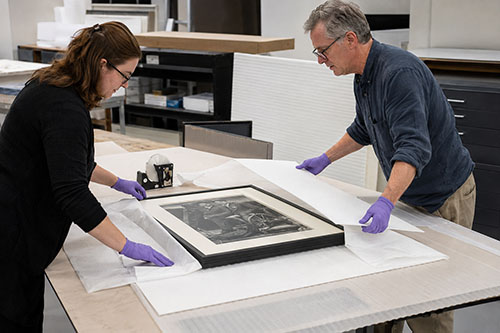
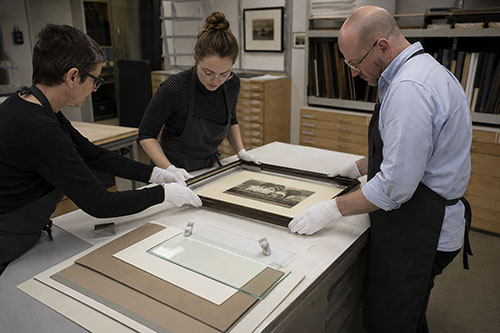
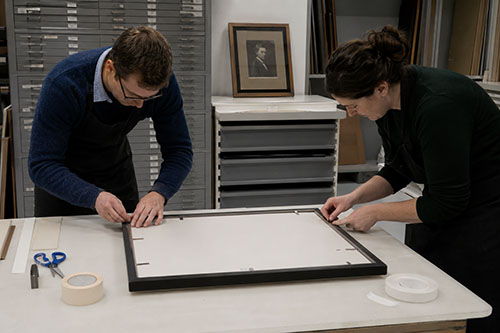
We offer wood and metal frames, custom cut & joined to order. Each framed print includes hanging hardware and foamcore backer.
Matting
We use conservation grade 100% virgin alpha-cellulose 2 ply mats with white core. Acid-free and lignin-free, these are both face resistant and meet all conservation quality standards set by the Fine Art Trade Guild. Mats are digitally cut for ultimate precision. The window will be 1/8″ smaller than the print dimensions.
Glazing (Acrylic Glass)
We offer custom cut panes of shatter-proof, acrylic glass, to protect your valuable artwork and prints.
Premium Clear
Framing grade clear acrylic is shatter resistant and lightweight.
Reflection Control
With its matte finish, Tru Vue Reflection Control® Acrylic scatters light to diminish unwanted glare.
Conservation Clear
Tru Vue Conservation Clear® Acrylic is a framing industry staple, blocking up to 99% of UV rays for ultimate protection.
Conservation Reflection Control
Tru Vue Conservation Reflection Control® Acrylic scatters and diffuses light to reduce unwanted glare. Blocks up to 99% of UV rays.
Related products
-

Ingrid Pitt – Countess Dracula (1971) Countess Elisabeth Nádasdy Laughing in Costume Hammer Gothic Horror Photo
$38.00 -
Sean Connery & Luciana Paluzzi – Thunderball (1965) Fiona Volpe Bedroom Scene Pinewood Studios James Bond 007 Photo
$38.00 -
Martine Beswick – Thunderball (1965) Paula Caplan 007 Bond Girl Tiger-Stripe Swimsuit Bahamas Publicity Photo
$30.00 -
Sean Connery – Thunderball (1965) Scuba Equipment on Bahamas Beach Behind-the-Scenes James Bond 007 Photo
$38.00