

Bela Lugosi – Dracula (1927) Broadway Stage Count Dracula Florence Vandamm Theatrical Photograph
Limited Edition Photograph (learn more)
In stock
Bela Lugosi as Count Dracula extends his sweeping black cape in this extraordinary 1927 Broadway theatrical photograph, dressed in white tie, evening tails and the formal costume that helped establish Dracula’s aristocratic screen identity. Leaning dramatically across the composition with one arm extended, Lugosi is already creating the commanding visual language that would become inseparable from Count Dracula and classic vampire cinema.
The photograph is remarkable because it predates Universal’s famous Dracula by four years. Here, the essential ingredients of Lugosi’s characterization are already present: elegant evening clothes, slicked-back hair, rigid posture, commanding gesture and the enormous dark cape that transforms the Count from an ordinary aristocrat into a supernatural theatrical presence.
Rather than the crypts, cobwebs and Expressionist shadows associated with later Dracula films, this image preserves the character within the practical world of the Broadway stage. A desk, heavy curtains and theatrical scenery remain visible around Lugosi, giving the photograph exceptional documentary value as a record of Dracula before Hollywood transformed him into a cinematic icon.
The Broadway production of Dracula opened at New York’s Fulton Theatre on October 5, 1927, with Bela Lugosi as Count Dracula and Edward Van Sloan as Abraham Van Helsing. Produced by Horace Liveright, the three-act play was written by Hamilton Deane and John L. Balderston from Bram Stoker’s novel and ran for 261 performances, establishing Lugosi with American theater audiences before his move into Hollywood.
Lugosi’s performance was crucial to the production’s identity. His Dracula was sophisticated, controlled and unmistakably foreign, replacing the purely monstrous vampire with a figure capable of entering respectable society while concealing predatory intent beneath aristocratic manners. That interpretation would profoundly influence the public image of Dracula for generations.
When Universal Pictures brought the story to the screen in 1931, Lugosi and Van Sloan both returned to the roles they had played on Broadway. Lugosi’s cinematic performance subsequently became one of the defining characterizations in horror-film history, but photographs such as this preserve the earlier theatrical foundation from which that legendary portrayal developed.
The image is also connected to the extraordinary tradition of Vandamm theatrical photography, which documented Broadway productions and performers during the 1920s and beyond. Florence Vandamm and the Vandamm Studio became leading chroniclers of New York theater, creating costume portraits and production imagery that today form an invaluable visual archive of American stage history.
The black-and-white photography is especially effective here. Lugosi’s white shirtfront and waistcoat stand sharply against the enormous black cape, while the folds of the fabric create a dramatic sweep through the composition. His angled posture and extended arm give the still an almost cinematic sense of movement despite its origins in theatrical publicity.
Carefully restored from archival source material and professionally lab-developed, this museum-quality photograph is presented uncropped, preserving the complete image area contained in the archival source. Meticulous restoration recovers facial clarity, costume texture, cape detail, theatrical-set definition and tonal depth while retaining the historic character of the original black-and-white photograph.
For collectors of Bela Lugosi, Count Dracula and the 1927 Broadway production of Dracula, this is an exceptional piece of vampire and theatrical history—a foundational image in which Lugosi’s white-tie costume, sweeping black cape, dramatic stage gesture and unmistakable aristocratic presence reveal the birth of the characterization he would immortalize in Universal’s Dracula (1931), making it particularly desirable for collectors of classic horror, Broadway history, Universal Monsters and early vampire photography.
Product Enquiry
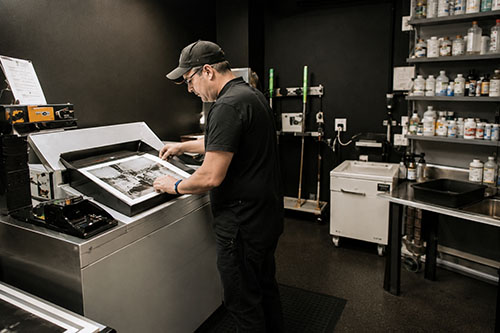
Kodak Professional Endura Paper
Kodak Endura papers provide an incredible amount of detail and smooth transition of tones. Designed for the professional photographer in mind, looking for a more traditional photo print style, Kodak Endura provides an extended print life and color gamut almost at the level of a high end fine art paper print.
Archival Matte Paper
Archival Matte Paper, also known as Moab Lasal Photo Matte, is our house stock fine art paper and is an economical favorite for fine art reproductions and photo prints. It features a smooth surface, heavy weight (230 g, 9.5-mil), neutral white, matte paper engineered for accurate color reproduction that provides high contrast and high-resolution output. This paper is acid-free, making it the perfect choice for both photography & fine art reproductions.
Giclee William Turner Paper by Hahnemühle
The William Turner by Hahnemühle is one of the most popular papers used in the Giclee printing industry. This is a 310g natural white mould made natural line paper with 100% rag content making it highly archival. It has a slight coarse texture which gives photos and artwork an elegant look. These fine art paper prints (also known as Giclee) are ordered by galleries, individual artists and photographers. The papers and inks are not only archival but use some of the most accurate print technology for full color prints.
- Giclee prints use very expensive archival pigmented inks.
- Highest level of color gamut available in printing (12 color printing).
- Exceptional black & white printing.
- Fade resistant, pigmented inks which provide a superior color range compared to other types of inks. Widely preferred in fine art and photography circles.
- We ONLY use professional grade fine art and photo paper that resist yellowing and aging.
Framing
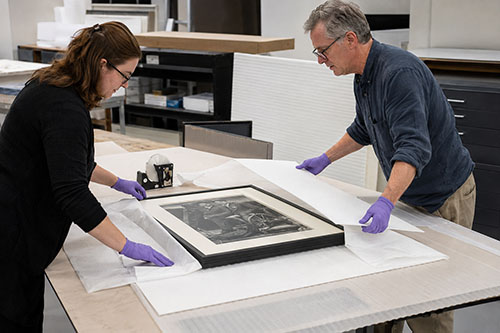
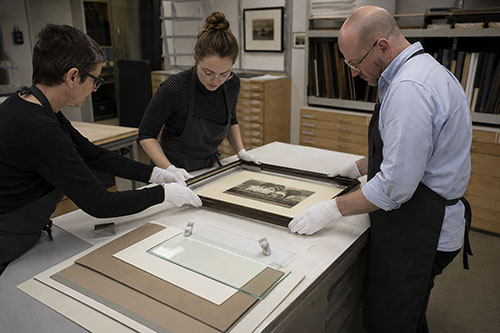
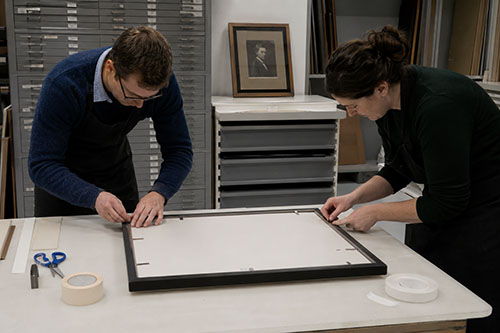
We offer wood and metal frames, custom cut & joined to order. Each framed print includes hanging hardware and foamcore backer.
Matting
We use conservation grade 100% virgin alpha-cellulose 2 ply mats with white core. Acid-free and lignin-free, these are both face resistant and meet all conservation quality standards set by the Fine Art Trade Guild. Mats are digitally cut for ultimate precision. The window will be 1/8″ smaller than the print dimensions.
Glazing (Acrylic Glass)
We offer custom cut panes of shatter-proof, acrylic glass, to protect your valuable artwork and prints.
Premium Clear
Framing grade clear acrylic is shatter resistant and lightweight.
Reflection Control
With its matte finish, Tru Vue Reflection Control® Acrylic scatters light to diminish unwanted glare.
Conservation Clear
Tru Vue Conservation Clear® Acrylic is a framing industry staple, blocking up to 99% of UV rays for ultimate protection.
Conservation Reflection Control
Tru Vue Conservation Reflection Control® Acrylic scatters and diffuses light to reduce unwanted glare. Blocks up to 99% of UV rays.
Related products
-

King Kong (1933) Skull Island Log Bridge Chasm Attack Concept Artwork
$38.00 -
King Kong Escapes (1967) Mechani-Kong Battle Toho Kaiju Promotional Artwork
$25.00 -
The Howling (1981) Werewolf Venetian Blind Shadows Rob Bottin Creature Photo
$25.00 -
Christopher Lee – Horror of Dracula (1958) Bloodied Dracula Reaching Hands Photo
$30.00


