

Kirsten Lindholm – The Vampire Lovers (1970) Fangs at Baron Hartog Behind-the-Scenes Hammer Horror Photo
Limited Edition Photograph (learn more)
In stock
Released in 1970, The Vampire Lovers was produced by Hammer Film Productions and directed by Roy Ward Baker. Inspired by J. Sheridan Le Fanu’s nineteenth-century vampire novella Carmilla, the film stars Ingrid Pitt as Carmilla Karnstein, alongside Peter Cushing, George Cole, Kate O’Mara, Douglas Wilmer, Madeline Smith and Pippa Steel. It became the first entry in Hammer’s celebrated Karnstein Trilogy, followed by Lust for a Vampire and Twins of Evil.
This photograph captures Kirsten Lindholm as the First Vampire confronting Douglas Wilmer as Baron Joachim von Hartog during the film’s memorable opening sequence. Lindholm, credited in the film as Kirsten Betts, appears with fangs bared at close range while Wilmer’s Hartog faces her directly, creating one of the most striking early images in the film.
The prologue establishes the dark history of the Karnstein vampire family and immediately sets the Gothic tone for the story that follows. Baron Hartog’s personal war against the Karnsteins introduces the mythology behind Carmilla’s return and gives the opening scenes an atmosphere of revenge, superstition and supernatural menace.
What makes this photograph especially appealing for collectors is the contrast between beauty and danger that Hammer used so effectively throughout the Karnstein cycle. Lindholm appears elegant and composed, but the visible fangs instantly transform the image into unmistakable Gothic horror. That combination of glamour, costume, expression and supernatural threat became one of the defining visual signatures of Hammer’s female vampire films in the early 1970s.
The wider production framing also gives the photograph a strong behind-the-scenes character. Rather than presenting only a tightly cropped dramatic moment, the image preserves more of the surrounding set and staging, allowing collectors to see how the confrontation was constructed for the camera. This makes the photograph especially interesting as both a film image and a piece of Hammer production history.
The opening sequence is important within The Vampire Lovers because it establishes the Karnstein dynasty before Carmilla begins moving through the aristocratic households at the center of the story. It also introduces Baron Hartog as one of the key figures connected to the family’s destruction, giving this image significance beyond its immediate visual impact.
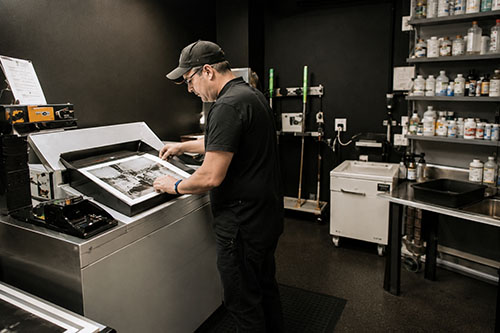
Carefully restored from historic photographic source material and professionally lab-developed, this museum-quality photograph is presented uncropped, preserving the complete image area contained in the source. Restoration recovers facial detail, costume texture, background information, tonal balance and original photographic clarity while maintaining the authentic character of the historic black-and-white image. The finished photograph contains no AI-generated image content.
A memorable addition for collectors of Kirsten Lindholm, Douglas Wilmer, The Vampire Lovers, Hammer Films, Hammer Horror, the Karnstein Trilogy, Carmilla adaptations, female vampire cinema, British Gothic horror and rare behind-the-scenes cinema photography, this photograph preserves one of the most dramatic early moments from the film that launched Hammer’s distinctive Karnstein vampire cycle.
Product Enquiry
Kodak Professional Endura Paper
Kodak Endura papers provide an incredible amount of detail and smooth transition of tones. Designed for the professional photographer in mind, looking for a more traditional photo print style, Kodak Endura provides an extended print life and color gamut almost at the level of a high end fine art paper print.
Archival Matte Paper
Archival Matte Paper, also known as Moab Lasal Photo Matte, is our house stock fine art paper and is an economical favorite for fine art reproductions and photo prints. It features a smooth surface, heavy weight (230 g, 9.5-mil), neutral white, matte paper engineered for accurate color reproduction that provides high contrast and high-resolution output. This paper is acid-free, making it the perfect choice for both photography & fine art reproductions.
Giclee William Turner Paper by Hahnemühle
The William Turner by Hahnemühle is one of the most popular papers used in the Giclee printing industry. This is a 310g natural white mould made natural line paper with 100% rag content making it highly archival. It has a slight coarse texture which gives photos and artwork an elegant look. These fine art paper prints (also known as Giclee) are ordered by galleries, individual artists and photographers. The papers and inks are not only archival but use some of the most accurate print technology for full color prints.
- Giclee prints use very expensive archival pigmented inks.
- Highest level of color gamut available in printing (12 color printing).
- Exceptional black & white printing.
- Fade resistant, pigmented inks which provide a superior color range compared to other types of inks. Widely preferred in fine art and photography circles.
- We ONLY use professional grade fine art and photo paper that resist yellowing and aging.
Framing
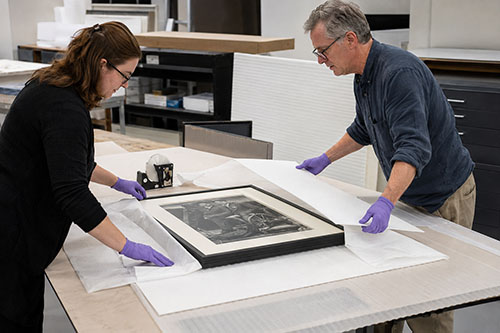
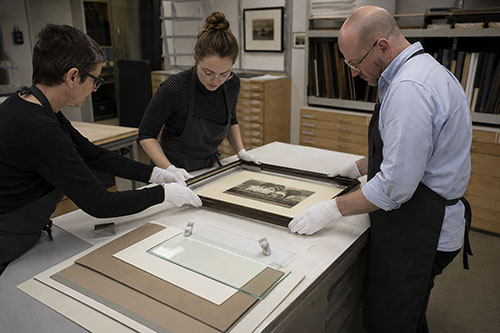
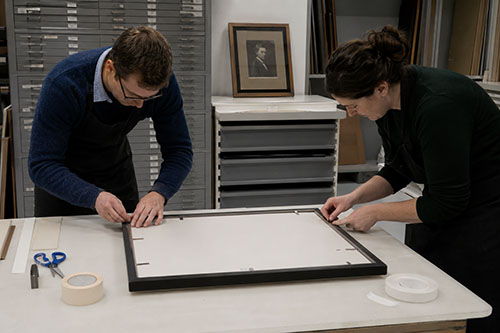
We offer wood and metal frames, custom cut & joined to order. Each framed print includes hanging hardware and foamcore backer.
Matting
We use conservation grade 100% virgin alpha-cellulose 2 ply mats with white core. Acid-free and lignin-free, these are both face resistant and meet all conservation quality standards set by the Fine Art Trade Guild. Mats are digitally cut for ultimate precision. The window will be 1/8″ smaller than the print dimensions.
Glazing (Acrylic Glass)
We offer custom cut panes of shatter-proof, acrylic glass, to protect your valuable artwork and prints.
Premium Clear
Framing grade clear acrylic is shatter resistant and lightweight.
Reflection Control
With its matte finish, Tru Vue Reflection Control® Acrylic scatters light to diminish unwanted glare.
Conservation Clear
Tru Vue Conservation Clear® Acrylic is a framing industry staple, blocking up to 99% of UV rays for ultimate protection.
Conservation Reflection Control
Tru Vue Conservation Reflection Control® Acrylic scatters and diffuses light to reduce unwanted glare. Blocks up to 99% of UV rays.
Related products
-

Barbara Steele – The Horrible Dr. Hichcock (1962) Coffin Confinement Scene Photo
$30.00 -
Christopher Lee – Horror of Dracula (1958) Count Dracula Stone Eagle Low-Angle Photo
$30.00 -
Klaus Kinski – Fitzcarraldo (1982) Brian Sweeney Fitzgerald Jungle Location Publicity Photo
$25.00 -
Martine Beswick, Claudine Auger & Luciana Paluzzi – Thunderball (1965) 007 Bond Girls Bahamas Beach Publicity Photo
$38.00


