

Edwige Fenech – The Strange Vice of Mrs. Wardh (1971) Julie Wardh Reclining Topless Italian Giallo Photo
Limited Edition Photograph (learn more)
In stock
Edwige Fenech appears as Julie Wardh in this striking black-and-white photograph associated with The Strange Vice of Mrs. Wardh (1971), reclining topless across an upholstered sofa with one hand drawn across her chest. Her long dark hair falls around her shoulders as she leans forward, eyes half-closed and expression absorbed, while the elegant interior and softly arranged cushions create an intimate composition. The combination of glamour, vulnerability and psychological distance captures the distinctive tension that made Fenech such a defining presence in Italian giallo cinema.
The photograph is particularly effective because the pose feels contemplative rather than theatrical. Fenech’s reclining figure follows the horizontal line of the sofa, while the library-like background and refined furnishings place Julie within a sophisticated domestic environment. Her expression appears remote and inward-looking, creating an image that connects sensual glamour with the unease and emotional instability running throughout the film.
Released in 1971, The Strange Vice of Mrs. Wardh—originally Lo strano vizio della signora Wardh—was directed by Sergio Martino. Edwige Fenech stars as Julie Wardh alongside George Hilton, Ivan Rassimov, Alberto de Mendoza and Conchita Airoldi. Ernesto Gastaldi was among the screenwriters, with Emilio Foriscot serving as cinematographer and Nora Orlandi composing the score.
The story follows Julie after she returns to Vienna with her diplomat husband while a razor-wielding murderer is attacking women across the city. At the same time, memories of her former lover Jean and the disturbing nature of their relationship begin intruding upon her present life. Murder, desire, suspicion and psychological manipulation gradually become inseparable.
That mixture of eroticism and danger became central to the film’s identity. Rather than functioning simply as decorative glamour, Julie’s sexuality is closely connected with her uncertainty, vulnerability and troubled past. Fenech gives the character a combination of sophistication and emotional unease that makes her the film’s essential point of identification.
The film marked an important early collaboration between Sergio Martino and Edwige Fenech, a partnership that would become closely associated with the Italian giallo cycle of the early 1970s. Its black-gloved menace, elegant interiors, psychological ambiguity and stylized violence helped establish many of the visual and narrative elements collectors now strongly associate with classic giallo.
Internationally, the film circulated under several titles, including Blade of the Ripper, Next! and The Next Victim. Surviving release records also document alternate versions in which nudity and other material were edited differently for particular markets.
For Edwige Fenech, Julie Wardh became one of her defining genre roles and helped establish her enduring reputation as one of the great female icons of Italian thriller and horror cinema. Her combination of glamour, vulnerability and screen confidence made her particularly suited to the giallo’s collision of beauty, desire and approaching violence.
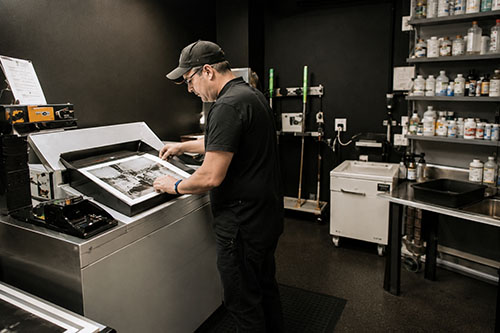
Carefully restored from historic photographic source material and professionally lab-developed, this museum-quality photograph is presented uncropped, preserving the complete image area contained in the source. Meticulous restoration recovers facial detail, hair texture, upholstery, fabric definition, tonal range and shadow detail while retaining the intimate character of the original black-and-white photograph.
For collectors of Edwige Fenech, The Strange Vice of Mrs. Wardh and Italian giallo, this is an especially evocative glamour image—Julie reclining across the sofa, long dark hair framing her face and expression turned inward, preserving the sensuality and psychological unease that define one of Fenech’s most celebrated early-1970s roles.
Product Enquiry
Kodak Professional Endura Paper
Kodak Endura papers provide an incredible amount of detail and smooth transition of tones. Designed for the professional photographer in mind, looking for a more traditional photo print style, Kodak Endura provides an extended print life and color gamut almost at the level of a high end fine art paper print.
Archival Matte Paper
Archival Matte Paper, also known as Moab Lasal Photo Matte, is our house stock fine art paper and is an economical favorite for fine art reproductions and photo prints. It features a smooth surface, heavy weight (230 g, 9.5-mil), neutral white, matte paper engineered for accurate color reproduction that provides high contrast and high-resolution output. This paper is acid-free, making it the perfect choice for both photography & fine art reproductions.
Giclee William Turner Paper by Hahnemühle
The William Turner by Hahnemühle is one of the most popular papers used in the Giclee printing industry. This is a 310g natural white mould made natural line paper with 100% rag content making it highly archival. It has a slight coarse texture which gives photos and artwork an elegant look. These fine art paper prints (also known as Giclee) are ordered by galleries, individual artists and photographers. The papers and inks are not only archival but use some of the most accurate print technology for full color prints.
- Giclee prints use very expensive archival pigmented inks.
- Highest level of color gamut available in printing (12 color printing).
- Exceptional black & white printing.
- Fade resistant, pigmented inks which provide a superior color range compared to other types of inks. Widely preferred in fine art and photography circles.
- We ONLY use professional grade fine art and photo paper that resist yellowing and aging.
Framing
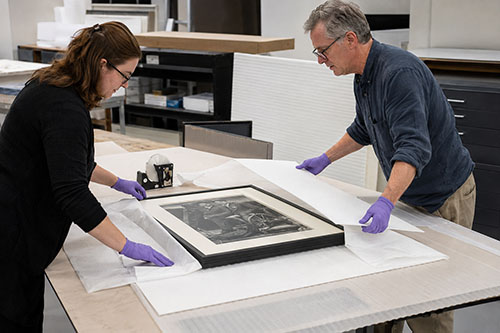
We offer wood and metal frames, custom cut & joined to order. Each framed print includes hanging hardware and foamcore backer.
Matting
We use conservation grade 100% virgin alpha-cellulose 2 ply mats with white core. Acid-free and lignin-free, these are both face resistant and meet all conservation quality standards set by the Fine Art Trade Guild. Mats are digitally cut for ultimate precision. The window will be 1/8″ smaller than the print dimensions.
Glazing (Acrylic Glass)
We offer custom cut panes of shatter-proof, acrylic glass, to protect your valuable artwork and prints.
Premium Clear
Framing grade clear acrylic is shatter resistant and lightweight.
Reflection Control
With its matte finish, Tru Vue Reflection Control® Acrylic scatters light to diminish unwanted glare.
Conservation Clear
Tru Vue Conservation Clear® Acrylic is a framing industry staple, blocking up to 99% of UV rays for ultimate protection.
Conservation Reflection Control
Tru Vue Conservation Reflection Control® Acrylic scatters and diffuses light to reduce unwanted glare. Blocks up to 99% of UV rays.
Related products
-

Ingrid Pitt – Countess Dracula (1971) Countess Elisabeth Nádasdy High-Collar Publicity Photo
$38.00 -
King Kong Escapes (1967) Mechani-Kong Battle Toho Kaiju Promotional Artwork
$25.00 -
Peter Cushing – The Curse of Frankenstein (1957) Baron Victor Frankenstein Top Hat Publicity Photo
$30.00 -
Klaus Kinski – Fitzcarraldo (1982) Brian Sweeney Fitzgerald Leopard Tapestry Publicity Photo
$25.00